
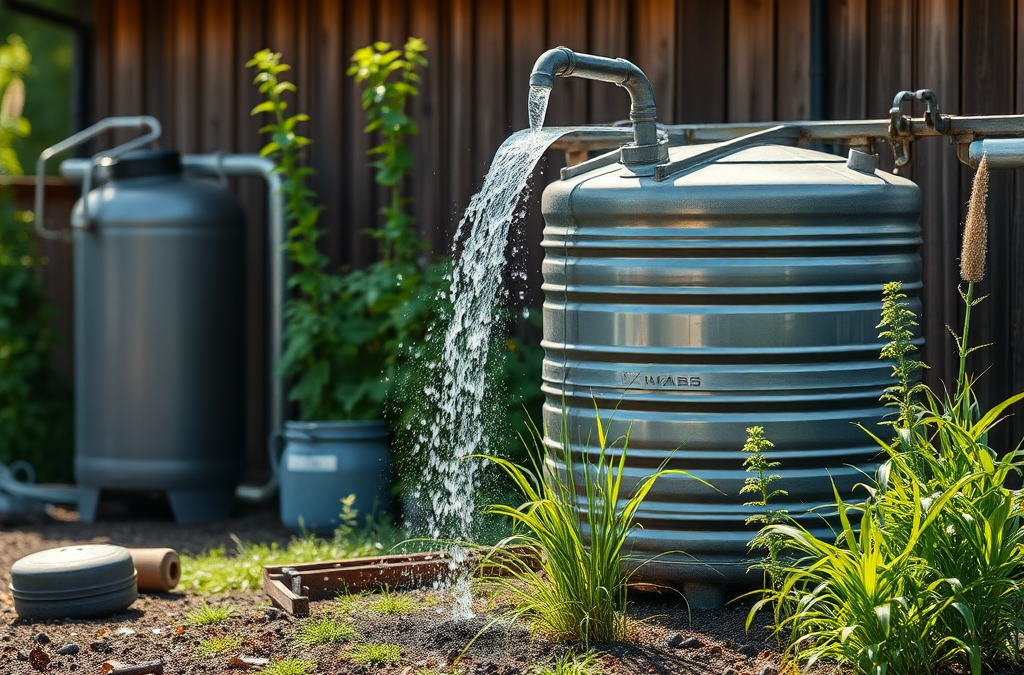
To improve water conservation on your property, implement rainwater harvesting, use drip irrigation, and install permeable paving. These methods not only reduce water waste but also enhance your landscape’s health. By capturing rainwater, you can provide a sustainable water source for your plants, while drip irrigation ensures water reaches the roots where it’s needed most. Permeable surfaces allow water to infiltrate the ground, reducing runoff and supporting groundwater recharge.
Rainwater Harvesting
Rainwater harvesting is a highly effective method for conserving water on your property. By collecting and storing rainwater from roofs and surfaces, you can create a sustainable water supply for irrigation, washing, and even indoor use in some cases. This practice reduces reliance on municipal water sources and minimizes stormwater runoff, which can lead to erosion and water pollution.
To implement a rainwater harvesting system, install gutters and downspouts that direct rainwater into storage tanks or barrels. Ensure these systems are equipped with filters to keep debris and contaminants out of your stored water. The size of your storage system will depend on your rainfall patterns and your water usage needs. It’s important to check local regulations regarding rainwater harvesting, as some areas have specific guidelines.
A common mistake in rainwater harvesting is underestimating the storage capacity needed. Consider your property’s average rainfall and your anticipated water usage to determine the appropriate size of your system. Additionally, regular maintenance of the system, including cleaning gutters and checking for leaks, is essential for optimal performance.
Drip Irrigation Systems
Drip irrigation is a water-efficient method that delivers water directly to the roots of plants, minimizing evaporation and runoff. This system is particularly beneficial for gardens, flower beds, and orchards where precise watering is critical for plant health. By using a network of tubes, emitters, and valves, drip irrigation allows for targeted watering based on the specific needs of different plants.
One of the key advantages of drip irrigation is its ability to reduce water usage by up to 50% compared to traditional watering methods. This not only conserves water but also encourages deeper root growth, leading to healthier plants. To set up a drip irrigation system, map out your garden layout and determine the water requirements of each plant type.
Common pitfalls include improper emitter placement and neglecting to adjust the system for seasonal changes. Regularly monitor your system for clogs and leaks, and consider using a timer to automate watering based on weather conditions.
Permeable Paving Solutions
Permeable paving allows water to infiltrate through the surface, reducing runoff and promoting groundwater recharge. This method is ideal for driveways, patios, and walkways, helping to manage stormwater effectively while providing durable surfaces for everyday use. Materials like permeable concrete, porous asphalt, and interlocking pavers are designed to allow water to pass through.
Incorporating permeable paving not only contributes to water conservation but also helps prevent erosion and flooding in your landscape. It can also reduce the heat island effect in urban areas, making it an environmentally friendly choice. When installing permeable surfaces, ensure proper base materials and drainage systems are in place to facilitate effective water flow.
A common misconception is that permeable paving requires more maintenance than traditional surfaces. While it’s true that occasional cleaning is necessary to prevent clogging, the long-term benefits of reduced runoff and improved water quality far outweigh the maintenance efforts.
Landscaping for Water Efficiency
Landscaping plays a crucial role in water conservation on your property. By selecting drought-resistant plants and designing your landscape to capture rainwater, you can significantly reduce your water consumption. Native plants are particularly effective as they are adapted to your local climate and require less water and maintenance.
Implementing techniques such as mulching can help retain soil moisture, while grouping plants with similar water needs together can optimize irrigation efforts. Creating swales or rain gardens can also enhance water absorption and reduce runoff. These features not only improve water conservation but also add aesthetic value to your property.

One common mistake is overwatering or planting non-native species that require excessive irrigation. Educating yourself about local plant species and their water needs is essential for creating a sustainable landscape. Additionally, consider installing an irrigation system that can be easily adjusted to meet the varying needs of your plants throughout the seasons.
Frequently Asked Questions
What is the most effective way to conserve water at home?
Implementing a rainwater harvesting system is one of the most effective methods for conserving water at home, along with using drip irrigation for gardens.
How can landscaping help with water conservation?
Landscaping with native and drought-resistant plants reduces water needs, while techniques like mulching and rain gardens enhance water efficiency.
Is drip irrigation worth the investment?
Yes, drip irrigation can significantly reduce water usage and promote healthier plant growth, making it a worthwhile investment for gardens and landscapes.
What materials are best for permeable paving?
Permeable concrete, porous asphalt, and interlocking pavers are excellent choices for creating surfaces that allow water to infiltrate.
How can I maintain my rainwater harvesting system?
Regular maintenance includes cleaning gutters, checking for leaks, and ensuring filters are clear to keep the system functioning efficiently.
Conclusion
Improving water conservation on your property is essential for sustainability and efficient resource use. By implementing techniques like rainwater harvesting, drip irrigation, and permeable paving, you can effectively reduce water waste and enhance the health of your landscape. Prioritize native plants and efficient landscaping practices to further optimize your water usage. Taking these steps not only benefits your property but also contributes positively to the environment.


