
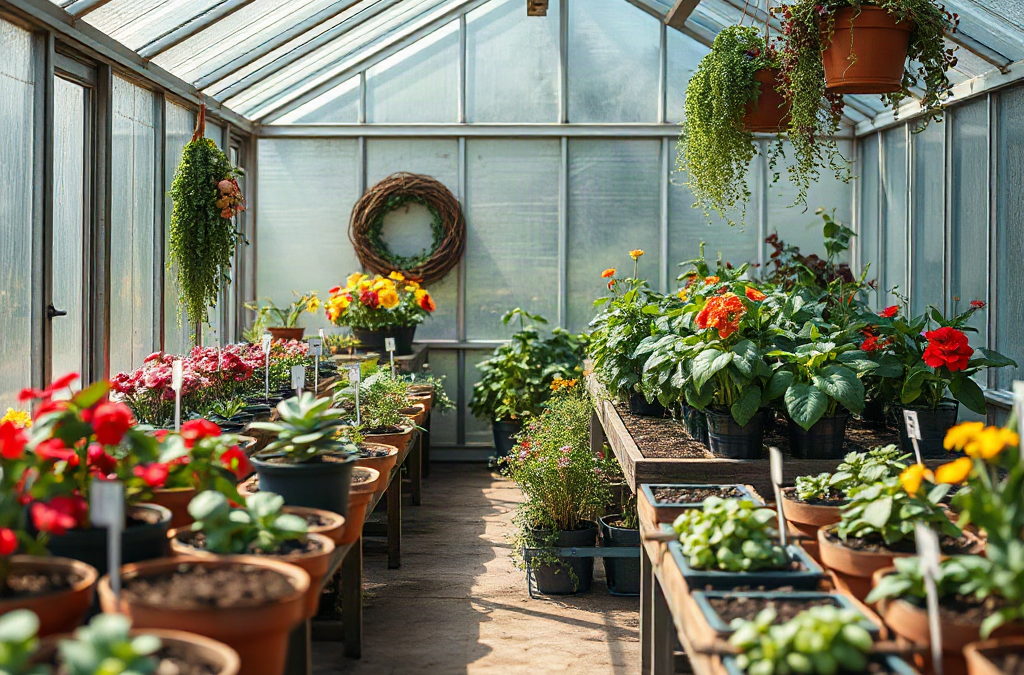
Greenhouse gardening for beginners works through every season when planting follows available light, temperature limits, ventilation needs, and crop tolerance rather than the calendar alone. Use the greenhouse to start seedlings in spring, protect heat-loving crops in summer, extend harvests in fall, and shelter cold-tolerant greens in winter. Vent before the interior overheats, water according to soil moisture rather than habit, and add heat only when a crop’s value justifies the fuel or electricity. A minimum-maximum thermometer, shade cloth, frost fabric, and simple planting records are more useful initially than elaborate automation.
How Does a Greenhouse Change Growing Conditions?
A greenhouse captures solar warmth and blocks wind and precipitation, but it does not automatically create stable growing weather. Sunlight passing through the glazing warms plants, soil, benches, and containers. Those surfaces release heat into the enclosed air, allowing the interior to become much warmer than the outdoor temperature during a sunny day. After sunset, that stored heat escapes through the glazing and air leaks, so an unheated structure may eventually approach the outdoor nighttime temperature.
This day-to-night swing shapes nearly every greenhouse decision. A bright but freezing spring morning can produce warm daytime conditions followed by damaging cold after dark. Conversely, a mild summer day can push an enclosed greenhouse beyond the temperature comfortable for tomatoes, peppers, pollinators, and the gardener. Beginners often assume that glazing alone provides frost protection or that an open door supplies adequate summer cooling. Neither assumption is reliable without observing actual conditions inside the structure.
Place a minimum-maximum thermometer near plant height, away from direct sun, and record the high and low for at least a week before moving valuable seedlings inside. Soil temperature also matters because roots respond more slowly than the air. Warm afternoon air does not mean a cold seed-starting mix has reached a suitable germination temperature. A soil thermometer can clarify why seeds are slow even when the greenhouse feels comfortable at midday.
Light is the other seasonal limit. A greenhouse can protect lettuce from winter wind, but glazing cannot replace hours of daylight lost in late fall. Dirty panels, condensation, surrounding trees, and closely packed plants reduce usable light further. Growth therefore slows in winter even when supplemental heat prevents freezing. Heating a dim greenhouse to summer temperatures can produce weak growth while consuming considerable energy.
Treat the structure as a climate modifier rather than an artificial summer. Check sunlight, nighttime lows, daytime peaks, humidity, and air movement before selecting crops. Signs that the greenhouse is working include compact growth, steady root development, dry foliage by evening, and temperatures that remain within the chosen crops’ tolerance. Persistent condensation, scorched leaves, stretched seedlings, or large unexplained temperature swings indicate that the environment needs correction before more plants are added.
What Should Beginners Grow in Each Season?
Crop selection should follow the greenhouse’s natural seasonal advantage. Spring favors propagation, summer favors protected warm-season crops where heat can be controlled, fall favors harvest extension, and winter favors hardy plants that tolerate slow growth. Attempting to grow the same vegetables all year usually demands more heating, lighting, cooling, and pest control than a first-season grower expects.
Spring: Start Plants Without Rushing Them
Use early spring for onions, brassicas, lettuce, and other cool-tolerant seedlings, then start tomatoes, peppers, cucumbers, and basil when root-zone and nighttime conditions are warm enough. A sunny afternoon is not proof that tender seedlings can remain overnight. If lows are uncertain, keep trays on heat-controlled mats where appropriate, cover a small inner growing area with frost fabric, or carry young plants to a protected location after sunset.
Seedlings moved from a house to a greenhouse still need acclimation. Stronger light and wider temperature changes can stress tender foliage. Begin with shorter greenhouse visits, watch for pale or bleached patches, and increase exposure gradually. Stocky stems and evenly colored leaves show that the transition is proceeding well; leaning, stretching, or scorched tissue calls for changes in spacing, light, or temperature.
Summer and Fall: Use Protection Selectively
Tomatoes, peppers, cucumbers, and eggplants can benefit from rain protection and a longer warm period, particularly in cooler regions. Their advantage disappears if heat builds faster than vents can remove it. Shade cloth, open doors, roof vents, circulation fans, and generous spacing may all be needed. Bush beans or herbs can occupy edges, but overcrowding traps humidity and makes inspection difficult.
For fall, sow spinach, arugula, Asian greens, radishes, scallions, and leaf lettuce early enough to establish before light levels fall sharply. A common mistake is waiting until outdoor frost arrives. Young plants can survive cool conditions, yet they cannot produce a useful canopy quickly under short days. Start fall crops while the greenhouse is still warm, then use the structure to preserve mature plants and extend picking.
Winter: Protect Hardy Crops Instead of Forcing Summer Crops
Cold-tolerant greens, parsley, claytonia, mâche, and some scallions are more realistic winter choices than fruiting tomatoes in an unheated greenhouse. Their growth may pause during the darkest period and resume as daylight increases. Inner hoops covered with frost fabric create a smaller volume around the crop and reduce heat loss without heating the entire building. Harvest on milder days, avoid leaving wet leaves before a freeze, and expect preservation rather than rapid production.
How Do You Control Temperature, Ventilation, and Water?
Temperature control begins with passive measures because they operate before expensive heating or cooling becomes necessary. Roof vents release rising hot air, while lower openings admit cooler replacement air. Cross-ventilation through doors and side vents works better than relying on one opening. Automatic wax-cylinder vent openers can be useful where electricity is unavailable, but they should be tested and kept clear of obstructions.
Vent according to the greenhouse thermometer and crop response, not the outdoor air alone. On a clear spring day, open vents early enough to prevent a steep temperature climb. During summer, ventilation may need support from shade cloth placed outside the glazing, where it intercepts solar energy before that heat enters. Interior shade reduces light but allows more energy into the structure. Fans improve air mixing and leaf drying, although a circulation fan cannot replace enough vent area to discharge accumulated heat.
Heating deserves a crop-by-crop calculation. Protecting a small propagation bench or fabric-covered bed is usually more efficient than maintaining tropical temperatures throughout the greenhouse. Electric heat may offer simple thermostatic control but requires suitable outdoor-rated circuits and safe clearance from water. Combustion heaters require correct installation, ventilation, and manufacturer-directed operation. Never improvise indoor heating with equipment not approved for enclosed use.
Watering changes with weather, container size, and plant growth. Check the growing medium below the surface instead of watering on a fixed daily schedule. Small cell trays can dry quickly during bright spring weather, while large winter containers may stay wet for days. Water thoroughly enough to moisten the root zone, allow drainage, and preferably irrigate early so foliage and walkways can dry before night. Constant shallow watering encourages roots near the surface and leaves lower layers inconsistently moist.
Humidity becomes troublesome when moisture enters faster than ventilation removes it. Condensation dripping from glazing, algae on surfaces, persistent leaf wetness, and musty air are warning signs. Increase plant spacing, remove standing water, direct fans across rather than violently at foliage, and ventilate briefly even during cool weather when conditions permit. Yellowing in wet soil often points toward stressed roots rather than thirst, so adding more water can worsen the problem.
Use a simple control priority: vent excess heat first, add shade when ventilation cannot keep pace, reduce unnecessary moisture, and heat only the protected area that needs it. Automation can reduce missed openings or temperature surprises, but sensors and motors still require inspection. A stuck vent opener on a sunny day can cause more harm than a basic manual vent checked consistently.

A Practical First-Year Greenhouse Plan
A successful first year should establish how the greenhouse behaves on the property before it attempts maximum production. Sun angle, wind exposure, glazing type, air leakage, elevation, and nearby trees make copied planting dates unreliable. Begin with a small crop mix and keep enough open space to reach every tray, inspect leaf undersides, and move plants when conditions change.
Use this compact operating sequence:
- Measure before planting: Record daily high and low air temperatures, note direct-sun hours, and inspect drainage after rain.
- Choose one seasonal purpose: Prioritize spring seedlings, summer fruiting crops, fall greens, or winter protection before adding secondary uses.
- Set response points: Decide when vents open, when shade goes up, which plants receive frost fabric, and when trays move indoors.
- Inspect plants and equipment: Check soil moisture, new growth, pests, vents, fans, heaters, and irrigation connections during each visit.
- Record outcomes: Note sowing, transplanting, harvest, overheating, frost, and pest dates for next season’s decisions.
For example, a beginner primarily raising spring transplants might use half the greenhouse for seedling benches and leave the remainder available for potting and temporary frost protection. Once summer arrives, two tomato plants and several peppers provide a manageable test of ventilation and watering. In late summer, flats of spinach and lettuce can be started while the fruiting crops finish. That sequence reveals the building’s seasonal limits without filling every square foot.
Sanitation and pest observation belong in the routine from the beginning. Remove dead leaves, spilled potting mix, and weeds that can shelter insects or disease organisms. Quarantine purchased plants before placing them beside seedlings. Inspect undersides of leaves and growing tips for aphids, whiteflies, mites, or other pests; enclosed conditions can let a small population expand before outdoor predators reach it. Identify the problem before choosing any control, and follow product labels if a pesticide is used.
Avoid buying complex equipment until records show a recurring need. If seedlings repeatedly become cold only on several spring nights, localized protection may be more sensible than a large heater. If summer highs remain excessive despite fully open vents, exterior shade or greater vent capacity deserves attention before another fan. If plants wilt while the medium remains wet, investigate root condition, heat, and airflow rather than installing more irrigation.
At season’s end, compare crop quality and harvest timing with energy use, labor, and occupied space. Keep the crops that gained a meaningful advantage from protection and move poorly matched crops outdoors. That review turns the greenhouse into a deliberate homestead tool rather than an enclosed area that demands constant correction.
Conclusion
Begin with measurement rather than a greenhouse full of plants. Record daytime peaks, overnight lows, light exposure, and watering intervals, then match a limited crop selection to the conditions the structure can provide economically. Spring propagation and fall harvest extension usually offer straightforward value, while summer demands aggressive ventilation and winter rewards hardy, established crops more than heat-loving plants.
Install dependable vents, keep frost fabric and shade cloth available, and maintain clear access for inspection. Expand only after records identify a genuine constraint, such as insufficient vent area, a persistently cold propagation bench, or containers drying faster than they can be checked. A seasonal greenhouse becomes easier to operate when each crop has a defined purpose and every equipment purchase solves an observed problem.
Frequently Asked Questions
Can an unheated greenhouse be used in winter?
Yes. It can shelter established cold-tolerant greens from wind and precipitation, but interior temperatures may approach outdoor lows overnight. Frost fabric over inner hoops adds localized protection, while growth may slow greatly during short, dim days.
When should greenhouse vents be opened?
Open them before heat accumulates, using a shaded thermometer at plant height as the reference. A clear, cool morning can still produce rapid overheating, so outdoor temperature alone is not a reliable trigger.
How often should greenhouse plants be watered?
Water when the root zone begins to dry, not according to a fixed schedule. Seedling cells may need frequent checks in bright weather, while winter containers can remain moist much longer. Confirm moisture below the surface before irrigating.
Does a beginner greenhouse need electricity?
No. Manual vents, automatic wax vent openers, watering cans, shade cloth, and frost fabric can support basic seasonal use. Electricity becomes useful for thermostatic heat, fans, propagation mats, pumps, or supplemental lighting when a defined crop need justifies them.
What are the easiest greenhouse crops for beginners?
Leaf lettuce, radishes, scallions, herbs, and cold-tolerant greens are manageable seasonal choices. Tomatoes and peppers are also practical in summer if the structure has enough ventilation, spacing, support, and consistent root-zone moisture.

