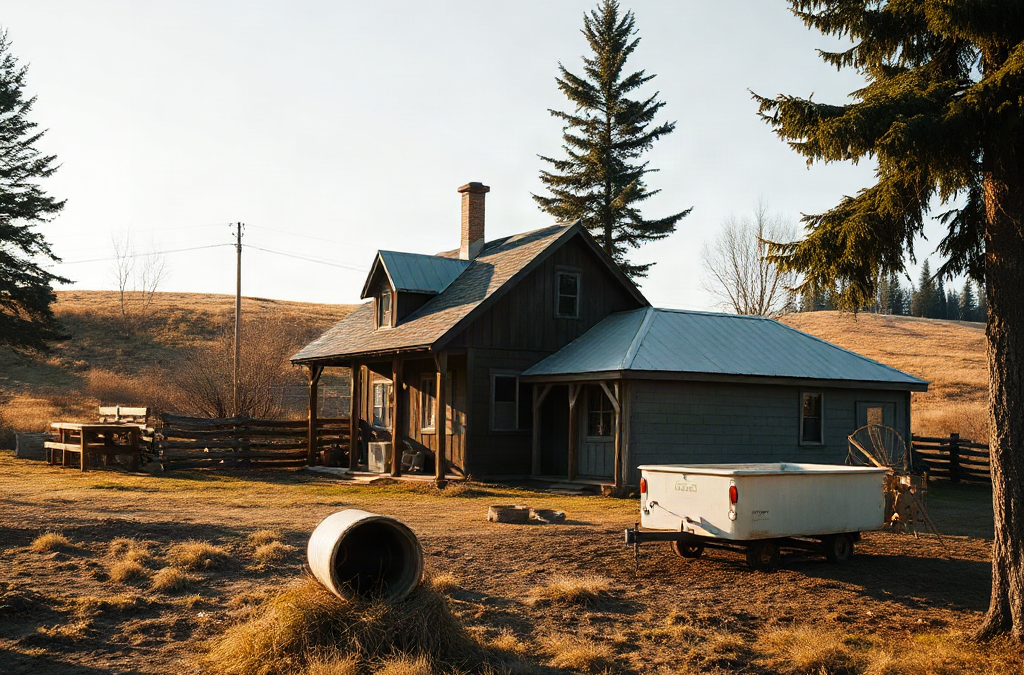
Oregon homesteading laws affecting rural households center on county land-use zoning, lawful water access, building and septic permits, and the distinction between a homestead lifestyle and a legal homestead exemption. A parcel in an exclusive farm use zone may restrict new dwellings, livestock-related construction, commercial activity, or nonfarm uses even when the property appears suitable. Wells, surface-water diversions, onsite wastewater systems, manufactured homes, and accessory structures can each trigger separate state or local requirements. Before buying or expanding, confirm the zoning designation, development history, water authorization, septic approval, and wildfire or access constraints with the relevant county and state agencies.
Land-Use Zoning Sets the Outer Limits
Oregon rural property rights begin with the county’s acknowledged land-use plan and the zoning map, not with the acreage shown in a listing. A parcel may be described as a farm, mini-farm, or homestead while its zoning restricts residential development, commercial activity, division of the land, or the placement of additional dwellings. Exclusive Farm Use (EFU), forest, rural residential, and natural-resource zones can produce very different answers for the same proposed project.
EFU zoning deserves particular attention because Oregon protects agricultural land through statewide planning rules. A buyer who expects to build a second home, operate a customer-facing farm business, or convert a barn into living space may need a use approval rather than a routine building permit. The county may examine the parcel’s soils, historic use, surrounding development, access, and relationship to farm operations. A larger lot does not automatically overcome those restrictions.
For example, a household might purchase 20 acres intending to place a manufactured home near an existing barn. The plan could fail if the parcel lacks a qualifying dwelling history, does not meet the applicable residential standard, or has an existing home that affects eligibility for another residence. A rural-residential parcel may offer more flexibility, but it still may have setbacks, density limits, overlay rules, and road-access requirements.
Ask the planning department for a written zoning summary before relying on a verbal description from a seller or broker. Confirm the allowed uses, conditional uses, minimum lot standards, dwelling status, accessory-dwelling rules, and whether prior approvals run with the land. The common mistake is treating “no HOA” as “no land-use regulation.” Oregon counties can regulate rural uses even when a property has no private association.
Land-use research should also include floodplain, riparian, wetland, wildfire-hazard, and landslide information where applicable. These overlays may not prohibit a homestead, but they can move a building site, increase engineering requirements, or make driveway and utility work more difficult. The practical choice is often between a parcel with fewer acres and a legally established building site versus cheaper acreage whose intended use remains uncertain.
Water, Wells, and Septic Systems Require Separate Checks
Owning rural land in Oregon does not by itself create a right to withdraw unlimited water. A household may rely on a permitted well, a public or shared system, a recorded water right, or a limited exemption, but each arrangement has different limits and documentation. The Oregon Water Resources Department is the primary state source for well records and water-right information, while counties and local health authorities may control parts of onsite wastewater approval.
A domestic well can supply ordinary household needs under applicable rules, yet irrigation, livestock watering, commercial nursery use, or large-scale crop production may raise different questions. A seller’s statement that a well “has never gone dry” is not a substitute for a well report, construction record, flow information, water-quality testing, and confirmation that the proposed use matches the legal authorization. Water quality and legal availability are separate issues: a productive well can still require treatment, and a legal right can still be practically inadequate during a dry season.
Septic approval is equally important. The soil evaluation determines whether wastewater can be treated onsite and where a system may be placed. A parcel with a home may have an approved system sized for that home but no capacity for an accessory dwelling, guesthouse, additional bedrooms, or a commercial kitchen. Adding a bathroom to a barn or converting an outbuilding can create a wastewater problem even if the structure itself appears sound.
A useful pre-purchase file should contain the well log, septic permits, final installation records, maintenance history when available, and any repair or replacement area identified by the county. Compare the records with what is physically present. An unrecorded tank, abandoned drainfield, or disconnected outbuilding may complicate financing, insurance, and future permits.
Households often prioritize a garden before confirming water capacity. That reverses the risk order. First determine the dependable household supply, then estimate livestock and irrigation demand, and only afterward design crops or landscaping. Rain capture may reduce garden demand in some situations, but it should not be assumed to replace a required water source or authorize a use that state law regulates.
Buildings, Livestock, Sales, and Household Enterprises
Oregon’s building rules apply to many rural projects, although the exact permit path depends on the structure, location, use, and local enforcement arrangements. A primary dwelling, manufactured home, electrical work, plumbing, structural alteration, and many accessory buildings may require permits or inspections. Agricultural exemptions exist in limited circumstances, but calling a structure a “farm building” does not automatically remove every requirement.
The intended use matters as much as the construction method. A hay shelter used only for agricultural storage is different from an insulated workshop, guest quarters, rental unit, or public farm store. A building that begins as storage may later receive wiring, plumbing, heat, or sleeping space; that change can trigger code, land-use, and septic concerns. Rural property owners should describe the actual use to the building department rather than seeking approval under a narrower label.
Livestock rules are shaped by zoning, nuisance standards, animal-health requirements, fencing, manure management, and sometimes neighborhood or watershed conditions. Chickens for household eggs may receive different treatment from a dairy, boarding stable, slaughter activity, or commercial poultry operation. Oregon’s agricultural protections do not create a blanket defense for every odor, runoff, noise, or waste-disposal dispute.
Farm stands, direct sales, food processing, agritourism, and home occupations deserve their own review. A roadside stand can involve access, parking, signage, traffic visibility, and land-use rules. Selling shelf-stable produce is not the same regulatory question as preparing refrigerated meals, baked goods, meat, dairy products, or canned foods for customers. The Oregon Department of Agriculture and local environmental-health officials may be relevant depending on the product and process.
Consider two approaches to a new enterprise. A low-volume, appointment-based egg or produce sale may fit within an existing household operation, while a regular public market with employees and customer traffic may require more approvals and infrastructure. The frequent failure is investing in fencing, refrigeration, or a commercial outbuilding before confirming that the use is allowed. A short written inquiry to planning, building, environmental health, and agriculture officials can expose conflicts before money is committed.

A Purchase and Compliance Checklist for Rural Parcels
The safest Oregon homesteading plan treats the property as a set of verified legal and physical systems. A parcel can have attractive soil and a usable house yet fail the household’s plan because a second dwelling is prohibited, water is insufficient, or access prevents emergency response and construction deliveries.
Use a staged review rather than trying to investigate everything at once. Begin with the proposed use, because legal research is only meaningful when officials know whether the household wants one dwelling, multiple generations, livestock, irrigation, sales, workshops, or rental income.
- Identify the governing jurisdiction. Confirm the county, city limits or urban growth boundary, planning department, building authority, and local environmental-health office.
- Verify the parcel record. Match the tax lot, legal description, easements, access, recorded dwellings, prior land divisions, and any development conditions.
- Obtain zoning answers in writing. Ask about dwellings, manufactured homes, ADUs, farm uses, home occupations, events, retail sales, setbacks, overlays, and future division.
- Check water and wastewater. Review well records, water rights or exemptions, testing, septic approval, replacement area, and whether the planned occupants or uses exceed existing capacity.
- Price the physical constraints. Obtain estimates for driveway improvements, fire-safe access, power, drainage, fencing, septic work, well repairs, and required surveys or engineering.
- Condition the transaction when possible. A feasibility period or written contingencies may be more valuable than a quick closing based on informal assurances.
County records and state databases can be incomplete or difficult to interpret, especially when older homes, partitions, or wells are involved. A professional land-use attorney, surveyor, septic evaluator, well contractor, or planner may be warranted for a complicated parcel. That expense should be compared with the cost of buying land that cannot support the intended household arrangement.
Watch for warning signs: a seller discourages agency contact, permits are missing, the driveway crosses an unclear easement, a dwelling is described as “nonconforming” without records, or improvements do not match approved plans. Those facts do not automatically make a property unusable, but they change the risk and should be resolved before construction or financing decisions.
Homestead Protection Is Different From Homesteading Use
Oregon’s homestead protection rules concern legal protection for a qualifying residence and certain equity interests; they do not grant permission to build a house, keep livestock, divert water, or ignore zoning. This distinction prevents a common misunderstanding in rural property discussions. A family may live a self-reliant homesteading lifestyle without receiving a special land-use exemption, while a legally protected homestead may exist on an ordinary town or rural residence.
Homestead protection can involve exemptions or protections in circumstances such as creditor collection, bankruptcy, or estate administration, but the details depend on the statute, the debt, the property, ownership, and the proceeding involved. It should not be treated as a guarantee against foreclosure, taxes, mortgages, liens, or every type of creditor claim. The Oregon Judicial Department, Oregon statutes, and a qualified attorney are better sources for a current legal determination than general homesteading articles.
The practical comparison is straightforward: land-use law answers whether a proposed use is allowed; building and health rules answer whether it can be constructed and operated safely; property and creditor law answers how ownership or equity may be treated. These systems overlap in real life but do not substitute for one another.
For a household planning a move, keep separate folders for zoning, permits, water, septic, insurance, taxes, and estate documents. Record agency names, dates, application numbers, and written conditions. That organization becomes especially useful when adding family members, transferring ownership, applying for financing, or selling the property. The mistake to avoid is using the word “homestead” as if it were a single Oregon legal status covering every rural activity.
Frequently Asked Questions
Does Oregon offer a general homesteading exemption for rural land?
No. Rural households remain subject to land-use, building, water, septic, and environmental rules. Homestead protection is a separate legal issue involving residence and certain creditor or estate circumstances.
Can I build a second home on an Oregon rural parcel?
Possibly, but eligibility depends on zoning, the parcel’s history, existing dwellings, septic capacity, access, and applicable state and county rules. Obtain a written planning determination before relying on the possibility.
Does a domestic well automatically cover garden irrigation?
Not necessarily. Confirm the applicable water authorization and limits with the Oregon Water Resources Department. Household use, irrigation, livestock, and commercial production may not receive identical treatment.
Are farm buildings exempt from Oregon permits?
Some agricultural structures may qualify for limited exemptions, but the exemption depends on the building, use, location, and governing rules. Living space, plumbing, electrical work, and public access can create separate requirements.
Which agency should I contact before buying rural land?
Start with the county planning department, then verify building, onsite wastewater, water, road-access, and agricultural questions with the appropriate local or state office. Ask for written answers tied to the tax lot and proposed use.
Conclusion
Oregon rural households should evaluate a property through several legal systems rather than searching for one broad homesteading permission. Zoning determines whether the intended dwelling, farm activity, sales operation, or land division can proceed; water and septic records determine whether the site can support people and production; permits and safety rules govern construction; and homestead protection addresses a different set of ownership and creditor questions. Before making an offer, define the household plan, verify the tax lot and zoning, inspect well and septic documentation, and request written agency guidance. A parcel with fewer acres but a clear building site, dependable water, approved wastewater capacity, and lawful access may be a stronger homestead choice than inexpensive land with unresolved restrictions.