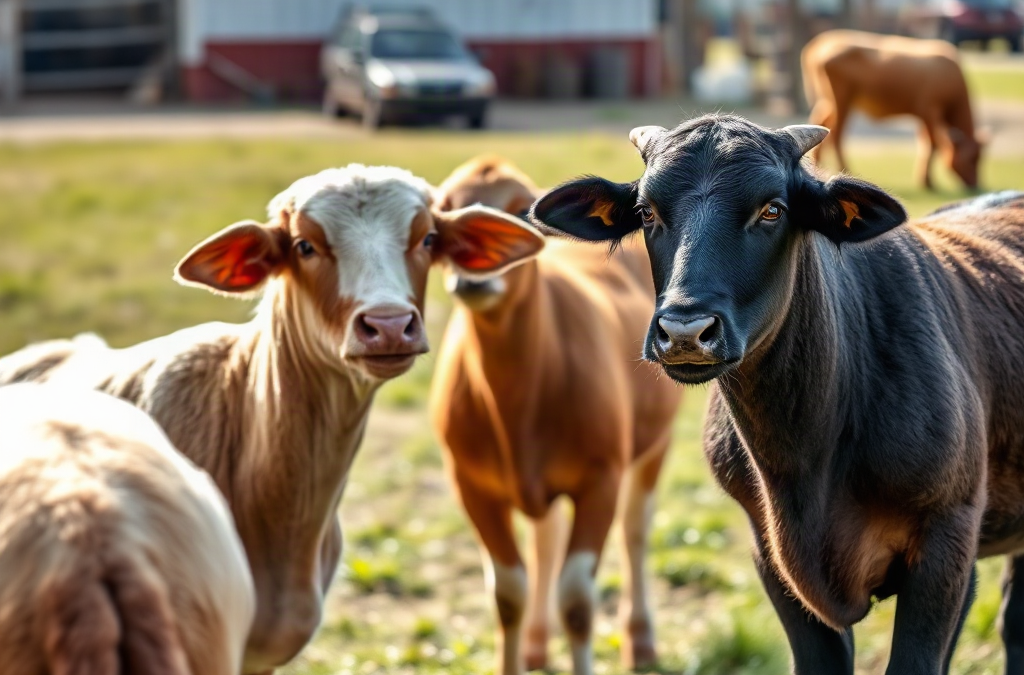
Homesteading livestock: selecting manageable animals means matching species and individual temperament to your fencing, shelter, feed budget, physical ability, and daily schedule. Start with calm animals that fit the acreage and can be safely handled by the people who will care for them, rather than choosing a species for productivity alone. Account for adult size, breeding behavior, escape risk, manure volume, seasonal feed needs, and access to veterinary care before buying. Small poultry or a few sheep may suit a first setup better than cattle, horses, or intact goats, but even smaller stock becomes difficult when fencing, quarantine space, or routine care is inadequate. A trial visit to an established keeper can reveal handling demands that breed descriptions often miss.
Define Manageability Before Choosing a Species
Manageable livestock are not simply small, quiet, or inexpensive to purchase. They are animals whose routine care, containment, handling, and health needs fit the household’s actual capacity. A calm goat can be easier to manage than a nervous sheep, while a few hens may demand less physical strength but still require reliable predator protection and daily attention. The useful question is not which animal is easiest in general; it is which animal remains safe and practical when weather, illness, travel, and busy workdays are included.
Write down the jobs the animals must perform before comparing breeds. Eggs, meat, milk, fiber, weed control, manure, companionship, and breeding each create different workloads. A household seeking occasional eggs may need only a modest flock, whereas milk production brings regular milking, sanitation, offspring management, and a plan for excess production. Animals selected for multiple purposes can be efficient, but mixed goals often lead beginners to acquire more stock than their shelter and feed systems can support.
Physical handling deserves an honest assessment. Can every regular caregiver move an animal into a small pen, inspect its feet, load it into a trailer, or restrain it during a veterinary visit? Adult size and behavior matter more than the animal’s size at purchase. A friendly young steer eventually becomes a powerful animal; an intact male goat may become difficult during breeding season; and a broody or defensive hen can make flock care unpleasant for children.
A practical screening list should include:
- Time available for feeding, observation, cleaning, and seasonal tasks.
- Strength, confidence, and experience among the people handling the animals.
- Reliable fencing, predator control, shelter, water, and feed storage.
- Access to a veterinarian, livestock transporter, processing option, or buyer.
- A plan for breeding, illness, death, aging, and animals that do not meet expectations.
Use the livestock selection criteria as a capacity test, not as a shopping list. If one missing system would make the animals unsafe, fix that system before bringing them home.
Compare Livestock by Daily Work and Risk
Species differ most noticeably in the rhythm of care they impose. Poultry usually offers a relatively accessible entry point because housing can be compact and individual birds are light enough for routine inspection. The tradeoff is vulnerability: inadequate mesh, exposed feed, or a poorly secured coop can invite predators, rodents, and disease. Chickens also produce a steady stream of bedding and manure that must be managed even when egg production declines.
Rabbits may fit limited acreage and can be handled without the infrastructure required for large stock, but heat management, sanitation, breeding control, and careful observation are necessary. Sheep are often physically less imposing than cattle and can work well where grazing and fencing are suitable. They are not maintenance-free: foot care, parasite monitoring, shearing for some types, lambing, and predator protection can create concentrated seasonal labor. Hair sheep may reduce shearing work, but that does not remove health or fencing responsibilities.
Goats are frequently chosen for brush control, yet their reputation for escaping is deserved when fencing is designed only for ordinary grazing animals. They climb, test weak points, and may damage young trees or garden boundaries. Dairy goats add milking and kid-management duties. Cattle can provide substantial food value or grazing utility, but their mass, feed demand, handling risk, and infrastructure requirements make them a poor first choice for a household without suitable equipment and experienced help.
Horses and donkeys require a separate level of planning because their care includes larger facilities, hoof maintenance, dental attention, feed management, and safe handling around powerful bodies. Their usefulness for riding or work does not offset the cost if the household lacks a clear role for them. Livestock should earn their place through a defined purpose rather than occupying acreage because they appear traditional or attractive.
Compare two plausible starts: four hens in a predator-resistant coop or two dairy goats with a milking stand, kidding plan, browse fencing, and daily milking schedule. The goats may provide more products, but the hens impose fewer fixed time commitments. A small flock is not automatically the better choice for every household; someone who cannot tolerate poultry noise, manure, or early morning care may find a different species more workable. The right comparison weighs recurring labor and failure consequences, not purchase price alone.
Evaluate Housing, Fencing, Feed, and Handling
Infrastructure determines whether an animal feels manageable after the novelty fades. Before purchase, walk the property as though the animals already live there. Identify where feed will be stored, how water will be protected from freezing or contamination, where manure will go, and how an animal will be separated for treatment. A shelter that keeps rain off may still fail if it lacks ventilation, drainage, shade, or a dry resting surface.
Fencing should be tested before livestock arrive. Push on gates, inspect corners, look beneath the lowest wire, and consider whether a frightened animal could reach a road, pond, garden, or neighboring property. Goats often need more robust containment than a beginner expects, while poultry require protection from digging predators as well as aerial threats. Temporary electric fencing can expand grazing options, but it is not a substitute for understanding energizer placement, vegetation contact, grounding, and regular inspection.
Feed planning exposes hidden scale problems. Estimate winter forage, purchased feed, mineral access, bedding, and storage space for the number of animals at adult size. Do not calculate only the amount consumed on an ideal summer day. Wet seasons, drought, snow, illness, lactation, pregnancy, and poor-quality forage can all raise demand. A species that appears inexpensive on pasture may become costly when supplemental hay is needed for months.
Handling equipment should match the animal, not the other way around. A small catch pen, secure gate, halter or sorting board where appropriate, gloves for routine work, and a clean isolation area can turn a stressful task into a controlled one. Practice moving an animal through the system before an emergency occurs. If the only way to catch a goat is to chase it around a field, or the only way to inspect a hen is to dismantle the coop, the setup is signaling a design problem.
Weak assumptions cause many avoidable failures. “They have plenty of land” does not prove that grazing is adequate; acreage may be wet, wooded, toxic-plant laden, or inaccessible. “The breed is docile” does not guarantee a calm individual. “A neighbor keeps them easily” may conceal different labor, equipment, climate, or experience. Review guidance from a land-grant university extension, local agricultural agency, or established livestock organization, then adapt it to the site rather than copying another property.
Choose Animals and Build a Low-Stress Start
Buy fewer animals than the maximum your property could theoretically hold. A small starting group creates room to learn feeding patterns, manure handling, fencing weaknesses, and health observation without multiplying every mistake. Select animals that are alert, moving normally, breathing comfortably, and willing to be approached or calmly contained. Ask the seller about age, vaccination and treatment history, diet, breeding status, production records, and known behavioral issues. A transparent seller is more useful than a low price.

Whenever possible, see the animals in their normal environment and observe how they respond to routine handling. Watch whether they crowd gates, strike, bolt, or settle when directed. For poultry, inspect the flock’s cleanliness, ventilation, water access, and signs of respiratory or digestive problems. For sheep and goats, look at body condition, feet, coat or fiber, eyes, and movement, but do not treat a brief visual inspection as a substitute for veterinary advice or appropriate quarantine.
Quarantine new arrivals in a separate, manageable area before mixing them with established stock. This provides time to observe appetite, manure, coughs, lameness, and other changes while reducing the chance of introducing disease. The exact duration and testing needs depend on species, source, local disease conditions, and veterinary guidance. Keep separate tools and footwear where practical, and avoid sharing water or feed equipment during this period.
A staged plan is more reliable than an ambitious launch:
- Complete fencing, shelter, water, feed storage, and isolation space.
- Spend time handling the species at another working homestead or farm.
- Purchase a modest number of animals from a source willing to answer detailed questions.
- Record feed use, labor time, health observations, production, and recurring costs.
- Expand only after the routine remains workable through an inconvenient season.
Measure success by ordinary days, not by a single productive week. The system is working when caregivers can perform inspections without chasing animals, supplies remain available, manure has a destination, and a sick or injured animal can be isolated quickly. If a task repeatedly requires unsafe strength, skipped care, or improvised equipment, reduce the scale or change the species. The homesteading livestock plan should serve the household’s capabilities rather than force the household into an unsustainable routine.
Recognize When a Different Animal Is the Better Choice
Choosing manageable livestock sometimes means choosing no livestock yet. A garden, orchard, compost system, or purchased local product may meet the original goal with less daily exposure to injury, disease, and feed-price changes. This is especially relevant when the intended benefit is occasional meat, seasonal weed reduction, or a small amount of fertilizer rather than a dependable year-round product.
Reconsider the plan if the property lacks secure boundaries, the household travels frequently, or no person can provide care during illness and emergencies. Breeding should also be delayed unless there is a credible plan for offspring, difficult births, surplus males, and animals that cannot remain in the herd or flock. Selling or rehoming livestock is not always easy, and processing access may be limited by distance, scheduling, or local availability.
Compare the desired output with the least complicated route to obtain it. A household wanting a few eggs may prefer hens; a household wanting animal traction may need advanced training, larger facilities, and professional support. A family attracted to goats for brush may discover that mechanical clearing, mulching, or a controlled seasonal rental service better fits its fences and time. These alternatives do not diminish the value of livestock; they prevent a mismatched animal from becoming an expensive obligation.
Before committing, write a one-page operating plan covering daily care, weekly cleaning, seasonal work, emergency contacts, replacement costs, and an exit route. Share it with everyone who will handle the animals. If the plan depends on perfect weather, uninterrupted health, or one person never being unavailable, it is not yet robust. Careful selection protects animal welfare as well as the homesteader’s time, finances, and safety.
For species-specific care standards, consult your state land-grant university extension, local agricultural agency, and a livestock veterinarian before purchasing animals. Those sources can provide regionally appropriate guidance on housing, nutrition, quarantine, parasites, predator management, and humane handling.
Frequently Asked Questions
What is the easiest livestock for a first-time homesteader?
Small poultry are often a manageable starting point because their housing and handling needs are comparatively limited. They still require secure predator protection, daily water and feed, sanitation, and a plan for illness and flock replacement.
Are goats easy to keep on a small homestead?
Goats can fit small acreage, but fencing is usually the deciding challenge. Their browse needs, escape behavior, hoof care, breeding management, and possible milking schedule should be assessed before purchase.
How many animals should a beginner buy?
Begin with the smallest group that meets the animal’s social and welfare needs while leaving capacity for mistakes. Expansion is safer after the daily routine, feed budget, fencing, and emergency plan have worked through a difficult season.
What should I inspect before buying livestock?
Observe movement, breathing, appetite, body condition, feet, eyes, cleanliness, and temperament. Ask about age, health history, diet, treatments, breeding status, and known behavior, and arrange veterinary input when the purchase is significant.
Should beginners breed their homestead animals?
Breeding is best postponed until housing, handling, and health routines are dependable. It adds offspring, difficult-birth risks, seasonal labor, and decisions about surplus animals, so a clear placement or processing plan is needed first.
Conclusion
Manageable livestock are selected by matching adult behavior and care demands to the household’s real resources. Before buying, define the purpose, inspect the property, test the fencing, calculate feed and labor for the hardest season, and confirm that every caregiver can handle the animal safely. Poultry, rabbits, sheep, goats, cattle, and equines each offer different outputs, but none is low-maintenance when infrastructure or emergency planning is weak. Start with a modest number, quarantine arrivals, keep useful records, and expand only when ordinary care remains comfortable rather than merely possible. If the numbers do not work, delaying the purchase or choosing a non-livestock solution may be the most responsible decision. A well-matched animal contributes to the homestead without making its basic routines depend on constant improvisation.