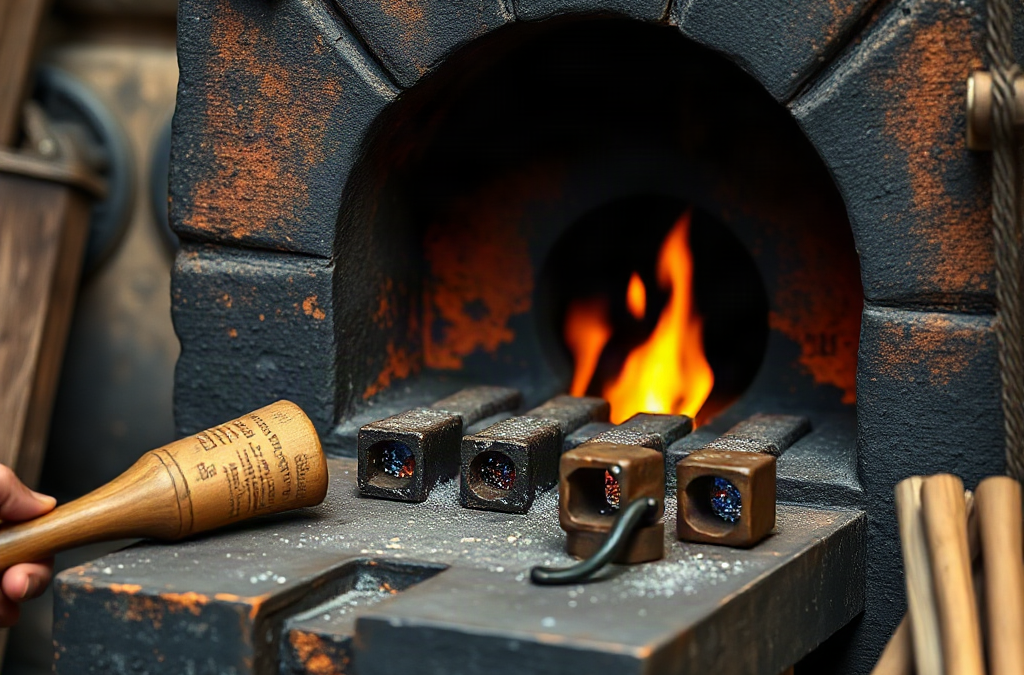
Forge selection for beginner homestead projects should match the workpiece size, available ventilation, fuel supply, and level of heat control the planned jobs require. A single-burner propane forge is usually the most manageable option for hooks, latches, brackets, and small tool repairs because it heats quickly and produces little ash. A solid-fuel forge offers flexible fire size and can accommodate irregular stock, but smoke, sparks, clinker, and fire management add complexity. Choose a chamber that fits the longest heated section rather than the entire workpiece, and budget for tongs, eye protection, fire-resistant surroundings, and safe fuel storage before buying.
What Projects Will the Forge Handle?
The planned work should determine the forge, not the appeal of a particular fuel or traditional design. Common first projects around a homestead include gate hooks, shelf brackets, fire pokers, plant hangers, simple hinges, drawknife tang repairs, and replacement hardware for sheds or animal enclosures. These jobs generally use short heated sections of mild-steel bar, so they do not require a chamber large enough to contain the whole object.
Measure the thickest stock you realistically expect to heat during the first year. A forge that brings 1/4-inch or 3/8-inch bar to forging temperature may be entirely adequate for hooks and light brackets, while thicker hammer heads, axes, or large agricultural parts demand more heat and better temperature uniformity. Attempting those advanced jobs in an undersized forge leads to long heating cycles, heavy scale, uneven deformation, and unnecessary fuel consumption. It may also tempt a new smith to work steel before it is hot enough, increasing effort and producing rough bends or cracks.
Workpiece shape matters as much as thickness. A propane chamber is convenient for straight bar that can pass through front and rear openings. A coal or charcoal fire is easier to shape around a localized area on an awkward piece, such as the corner of a bent strap. Long stock does not automatically require a long forge: only the section being forged needs to be hot, provided the openings support safe handling without damaging insulation or directing flame toward the operator.
Separate true forging jobs from tasks better handled another way. Cold bending may be sufficient for thin strap, while welding, drilling, grinding, or replacing a badly fatigued component may be safer than heating it. Unknown scrap is a poor starting material for critical tools because its alloy, heat treatment, plating, and prior damage are uncertain. Painted, galvanized, oily, or chemically contaminated metal should not be placed in a forge; hazardous coatings and residues can produce dangerous fumes when heated.
A useful project test is to write down five likely items, their stock dimensions, and the length of each heated zone. If most are small mild-steel fittings, prioritize predictable operation and modest fuel use. If the list consists mainly of broad, irregular repairs, an open solid-fuel fire may offer better access. This project inventory prevents buying excess chamber volume that takes longer to heat but provides no practical advantage.
Should a Beginner Choose Propane, Coal, or Charcoal?
Propane provides the simplest repeatable heat for many new homestead smiths, while coal and charcoal offer a fire that can be shaped around unusual work. None is universally best. Fuel availability, outdoor workspace, smoke management, local fire restrictions, and willingness to tend a fire should carry more weight than appearance or tradition.
| Fuel type | Strongest use case | Main tradeoff |
|---|---|---|
| Propane | Small, repeatable hardware and short heating sessions | Fixed chamber limits awkward shapes; burner noise and radiant heat remain concerns |
| Bituminous blacksmithing coal | Localized heat and irregular workpieces | Smoke, clinker, sparks, storage, and fire-tending requirements |
| Lump charcoal | Solid-fuel forging where suitable coal is unavailable | Bulky fuel that burns quickly and throws sparks |
A propane forge starts without building a coke bed, reaches working heat predictably, and leaves no ash or clinker in the firepot. That makes it practical for a 30-minute session spent making a latch or correcting a bent bracket. Its chamber, however, heats everything placed inside. Fine sections may overheat while a thicker area comes up to temperature, and large closed shapes may not fit through the doors. Propane equipment also requires sound hose connections, a suitable regulator, stable cylinder placement, and leak checks performed according to the equipment manufacturer’s instructions.
Coal allows the smith to establish a concentrated hot zone surrounded by cooler fuel. This makes selective heating easier and gives open access from above. Good fire management takes practice: fresh coal is usually converted toward coke around the active fire rather than piled directly onto the work. Poor airflow or excessive blast can oxidize steel rapidly, scatter sparks, and consume fuel without producing a useful fire. Coal quality varies, and ordinary heating coal may contain impurities that make forge operation unpleasant or inconsistent.
Lump charcoal can produce forging heat with adequate depth and controlled air, but it occupies more storage space than its weight suggests and can disappear rapidly under a strong blast. Briquettes containing binders or fillers are less predictable than clean lump charcoal. Both coal and charcoal create carbon monoxide, smoke, hot embers, and fire risk; an open-sided shelter is not automatically safe if the roof traps gases or sparks reach dry vegetation.
Electric induction heating is clean at the point of use and highly controllable, but appropriate machines, coils, electrical service, and cooling arrangements make it a specialized choice rather than the default first forge. For occasional small hardware, propane is usually the lower-complexity route. Choose solid fuel when local fuel is dependable, the site can manage smoke and sparks, and project geometry genuinely benefits from an open fire.
How Much Forge Capacity Is Actually Needed?
A compact forge should heat the working zone evenly without warming a large amount of unused interior. Bigger chambers lose more heat through their walls and openings, while additional burners increase fuel demand and system complexity. A beginner making hooks from small round bar usually gains more from a well-insulated single-burner unit than from a wide two-burner box operated far below its intended workload.
Judge chamber dimensions by cross-section and pass-through access. The chamber must accept the stock plus tongs without scraping fragile insulation, yet excess height and width create dead volume. A rear opening is valuable for long bar because the work can pass through rather than projecting entirely toward the operator. Doors or movable firebricks can reduce an oversized opening, but burner exhaust still needs a clear route; sealing a gas forge tightly can disrupt combustion and create unsafe pressure or exhaust conditions.
Insulation deserves close inspection. Many compact gas forges use ceramic-fiber blanket because it limits heat loss, but exposed fibers should not remain vulnerable to abrasion or direct handling. Follow the forge manufacturer’s instructions for rigidizer, refractory coating, curing, inspection, and repair. Crumbled lining, bare blanket, loose burner fittings, or a flame path aimed directly out of the opening are warning signs, not cosmetic defects. A thick floor or replaceable kiln shelf can protect softer insulation from dropped stock and flux, although forge-welding flux is especially destructive to many linings.

Burner count should reflect chamber volume and intended stock rather than the assumption that more burners are automatically better. Two burners may shorten heating time in a longer chamber and provide a broader hot zone for larger pieces. For short sections, the second burner may simply add noise, radiant heat, and gas use. If a multi-burner model permits manufacturer-approved independent burner operation, it can offer flexibility, but improvised valving or homemade gas-train changes should not substitute for a properly designed system.
Used equipment can be worthwhile when its structure and fuel system are inspectable. Check for cracked refractory, badly rusted shells, damaged hose, uncertain regulators, altered burner mounts, and missing operating instructions. A low purchase price loses its advantage if the lining, burner, and fuel controls all need replacement. Homemade forges can work well, but a first-time buyer should not assume that a burner producing visible flame is correctly tuned. Persistent yellow flames, soot, flame instability, excessive scale, or difficulty reaching an even orange heat indicate that setup, airflow, fuel pressure, chamber openings, or insulation needs attention.
Safety and Buying Checklist for a Homestead Forge
The forge is only one part of a usable smithing station. Its location, fuel arrangement, work support, and shutdown routine determine whether a short repair remains controlled. Install and operate any purchased unit according to its manual, and consult local fire authorities or applicable codes when fuel storage, open flames, burn bans, or outbuildings create uncertainty.
Place the forge on a stable, noncombustible stand with open space around the doors and burner exhaust. Keep hot stock from crossing walkways, and establish a defined cooling area where metal cannot be mistaken for cold scrap. Dry grass, sawdust, hay, fuel cans, lumber stacks, and animal bedding do not belong near the work zone. Ventilation must remove combustion products rather than merely move warm air around the operator. Carbon monoxide cannot be detected reliably by sight or smell, so combustion equipment should never be treated as safe in a closed shop simply because smoke is absent.
Personal protection should suit both impact and radiant heat. Safety glasses protect against scale and grinding debris; hearing protection may be appropriate around burner roar, hammering, or powered tools. Natural-fiber clothing, sturdy footwear, and garments without open cuffs reduce places where hot scale can lodge. Gloves can help with specific handling tasks, but they do not make hot metal safe and may reduce dexterity around rotating or powered equipment. Tongs must grip the chosen stock securely before it enters the fire.
Use this compact purchase check before committing money:
- Match the chamber to actual stock. Confirm that common bar sizes fit with tong clearance and that long work can pass through safely.
- Verify the complete fuel system. Identify the specified regulator, hose, fittings, burner controls, cylinder requirements, and operating instructions.
- Inspect insulation and floor protection. Look for a durable hot face, repairable lining, and a base that tolerates routine stock handling.
- Price the working station. Include tongs, hammer, anvil or suitable striking surface, stand, fire extinguisher, eye protection, and fuel.
- Confirm the site. Resolve ventilation, clearances, weather protection, spark control, and local restrictions before the first firing.
A successful setup reaches a stable working heat without soot, unstable flame, uncontrolled sparks, or rapidly degrading insulation. Work can enter and leave without contacting the burner or forcing the operator into an awkward stance. Stop and investigate if gas odor appears, flames burn back toward the burner inlet, fittings become unexpectedly hot, the lining sheds material, or solid-fuel sparks escape beyond the controlled area. The sensible first firing is an equipment check with no ambitious project attached: observe ignition, warm-up, hot spots, shutdown, and how long surrounding surfaces retain heat.
Frequently Asked Questions
Is a propane forge easier for a beginner than a coal forge?
Usually. Propane offers faster startup and repeatable heat with no ash or clinker, while coal requires fire shaping and more smoke management. Coal may still suit irregular pieces and localized heating better.
Is one burner enough for small homestead projects?
A properly matched single burner is often sufficient for hooks, latches, brackets, and similar work made from modest bar stock. Chamber volume, insulation, and burner design matter more than burner count alone.
Can charcoal be used instead of blacksmithing coal?
Clean lump charcoal can reach forging heat with a suitable firepot and air supply. Expect greater fuel volume, faster consumption, and substantial spark control needs compared with a compact propane forge.
Can a forge be operated inside a barn or closed workshop?
A closed agricultural building can accumulate carbon monoxide and expose hay, dust, lumber, or bedding to ignition. Follow the equipment instructions and local requirements, and obtain qualified guidance for ventilation and placement rather than relying on an open door.
Should a beginner buy or build a first forge?
A documented commercial forge reduces uncertainty around burners, regulators, and chamber design. Building may be reasonable for someone able to evaluate combustion, refractory materials, fuel controls, and ventilation without improvising safety-critical components.
Conclusion
Choose from a written list of likely jobs rather than buying for an imagined future workload. Small hardware and routine repair work generally favor a compact propane chamber with pass-through access, durable insulation, and a documented fuel system. An open coal or charcoal fire becomes more compelling when irregular shapes and localized heating outweigh the extra demands of fuel storage, sparks, smoke, and fire tending.
Before ordering, verify stock clearance, burner capacity, lining condition, replacement parts, and the complete cost of tongs, striking equipment, protective gear, and site preparation. Set up a noncombustible work area, establish a place for hot metal, and conduct the first firing as a controlled equipment test. A modest forge that heats the intended section consistently and can be shut down safely is more useful than an oversized unit that strains the workspace, fuel budget, or operator’s current skills.