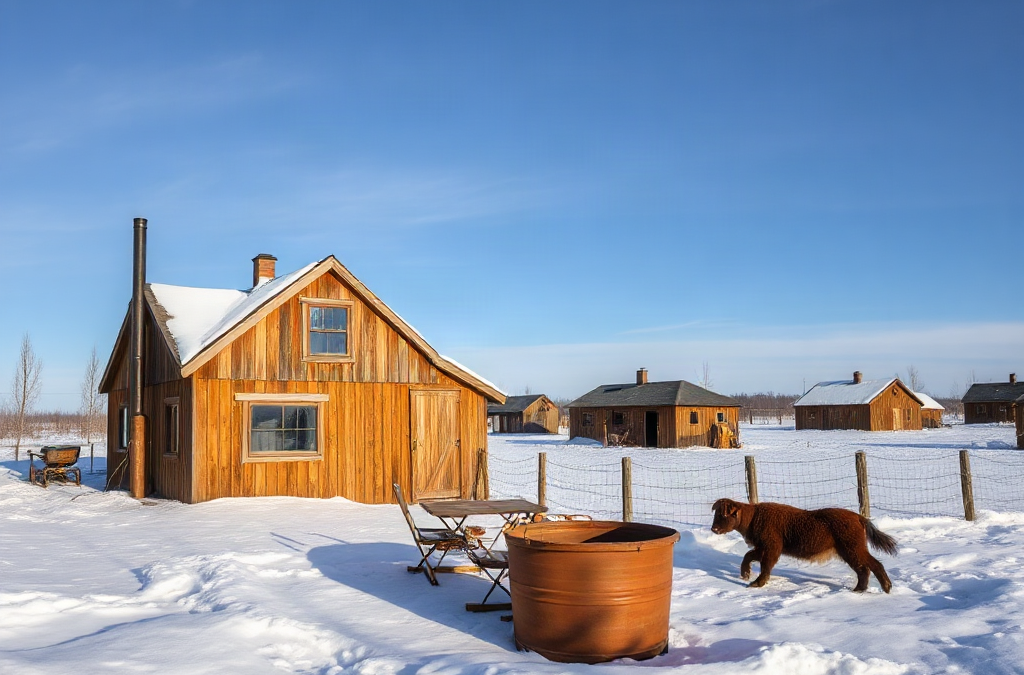
Alaska homesteading succeeds when cold-climate preparation and constraints are addressed through dependable heat, freeze-resistant water, stored food, and year-round access before livestock or major crop expansion. A safe primary heating system needs a tested backup, while wells, tanks, pipes, and drains must remain serviceable during prolonged freezing and power loss. Remote properties also require realistic fuel storage, spare parts, snow removal capacity, and enough supplies to bridge delayed deliveries. Land should be evaluated by winter access, drainage, sun exposure, local growing conditions, and maintenance demands rather than acreage or summer appearance alone.
Evaluate the Property Through a Winter Lens
A parcel that functions well in July may become difficult or unsafe once snow, darkness, frozen ground, and sustained low temperatures arrive. Before buying or developing land, examine whether the road is maintained, where drifting occurs, how emergency vehicles could enter, and whether fuel or building materials can be delivered. A long private driveway is not merely scenic space; it becomes an area that must be plowed, sanded, drained, and repaired with equipment kept operational in the cold.
Topography affects both construction and daily life. Low areas may collect cold air or hold water above permafrost and seasonally frozen soil. South-facing exposure can provide more useful winter light and improve growing conditions, while a heavily shaded site may retain snow and demand more artificial lighting and heat. Soil observed only during summer can conceal poor drainage, shallow bedrock, discontinuous permafrost, or an active layer that shifts as it freezes and thaws. Local excavation experience and site-specific geotechnical advice are more valuable than assumptions based on a neighboring parcel.
Water availability also needs winter verification. Ask how nearby wells perform, whether hauling services operate during storms, and where a storage tank could be placed without creating an unmanageable freeze risk. Surface water should not be treated as a dependable household supply without evaluating seasonal availability, treatment requirements, legal restrictions, and the practical burden of moving it. The cheapest summer arrangement may become the most labor-intensive winter option.
Regional differences within Alaska are substantial. A coastal site may face wind, wet snow, and corrosion, while an Interior location may experience colder, drier conditions and deeper seasonal frost. Snow load, wind exposure, wildfire risk, precipitation, and daylight vary enough that a building package suitable for one community should not automatically be copied elsewhere. Review local records and speak with contractors, drillers, extension personnel, and residents who maintain systems through winter.
A useful pre-purchase inspection should include the road after snowfall, roof and foundation details, chimney condition, fuel access, water source, wastewater arrangement, drainage, communications coverage, and distance to repair services. The common mistake is pricing the acreage while underpricing the systems needed to occupy it. Readers comparing locations can use this Alaska homesteading: cold-climate preparation and constraints reference point to keep winter function ahead of summer appeal.
Build Heat, Power, and Water Systems Around Failure
Cold-climate utilities should remain safe when one component stops working. A primary heater, electric pump, or buried pipe can perform reliably for years, but the consequence of failure is unusually high when roads are blocked and indoor temperatures fall rapidly. Redundancy should therefore focus on critical functions rather than duplicating every convenience.
Heating begins with the building envelope. Air sealing, appropriate insulation, controlled ventilation, protected entrances, and properly installed windows reduce the amount of fuel any heating appliance must consume. Heating a leaky structure with a larger stove or boiler may mask heat loss while increasing fuel use and temperature swings. Combustion equipment requires correct installation, clearances, venting, maintenance, and carbon monoxide detection; local codes, manufacturer instructions, and qualified professionals should guide the work.
A backup heat source should use a realistic energy supply and be operable during an outage. For example, an electrically controlled boiler may need generator support, while a wood stove requires dry firewood, safe storage, chimney care, and someone able to tend it. Portable unvented heaters are not interchangeable with properly installed emergency heat because combustion gases, moisture, oxygen demand, and fire risk must be considered. Test the backup under controlled conditions before winter rather than discovering its limitations during a storm.
Water systems fail at exposed transitions: where a line enters a building, passes through an unheated crawlspace, rises from a tank, or sits motionless near an exterior wall. Burial alone does not guarantee protection because frost depth, disturbed soil, snow cover, and local ground conditions vary. Insulated utility chases, heat trace installed for its approved purpose, accessible shutoffs, drain-down provisions, and temperature monitoring can reduce risk. Any heat tape or cable must be inspected and used according to its listing and instructions.
Power planning should distinguish essential loads from optional ones. List the starting and running requirements of the well pump, heating controls, refrigeration, communications equipment, and necessary lighting before selecting a generator or battery system. A generator that runs lamps but cannot start the pump does not preserve the water system. Fuel age, cold starting, ventilation, exhaust placement, transfer equipment, and routine load testing all affect reliability.
- Check before freeze-up: chimneys, detectors, extinguishers, fuel inventory, generator operation, pipe insulation, shutoffs, heat trace, and spare filters.
- Signs the system is working: stable indoor temperatures, predictable fuel use, flowing fixtures, dry utility spaces, and successful backup tests.
- Warning signs: falling water pressure, frost on pipes, repeated breaker trips, unusual combustion odors, soot, or rapid fuel consumption.
The recurring failure is owning backup equipment without maintaining fuel, parts, instructions, or safe connections. A documented shutdown and restart sequence makes the system easier for another household member to operate when the usual caretaker is unavailable.
Match Food Production to Alaska’s Short Season
Food production in Alaska is shaped by short frost-free periods, cool soils, long summer daylight, wildlife pressure, and the cost of imported inputs. Productive systems use protected growing space and suitable crops without assuming that every household calorie can be raised economically. Storage and purchasing remain part of a resilient food strategy, especially during the first years.
Garden planning should begin with local planting information rather than a statewide calendar. Raised beds may warm and drain faster, but they can dry out and require imported soil. Low tunnels, cold frames, row covers, and greenhouses extend the usable season, yet each introduces ventilation, irrigation, anchoring, and snow-load duties. An overheated greenhouse on a sunny summer day can damage plants as quickly as a cold night, so automatic vents or dependable daily monitoring matter.
Fast-maturing greens, radishes, peas, turnips, carrots, potatoes, and brassicas are common candidates where local conditions suit them. Variety maturity dates are useful comparisons, not promises; cool soil, transplant shock, fertility, and microclimate alter actual performance. Start with a small trial bed and record sowing, transplanting, first harvest, frost injury, and storage quality. Expanding the crops that mature reliably is less costly than filling a large garden with untested varieties.
Livestock add a year-round heat, water, feed, fencing, and manure obligation. Chickens may provide eggs, but winter laying can decline, liquid water must be maintained, and ventilation must remove moisture without creating direct drafts. Larger animals multiply the feed-storage and hauling problem. Pasture visible in summer does not establish the number of animals a property can support through winter; purchased hay quality, storage losses, transport, and a reserve for delayed deliveries belong in the stocking decision.
Food preservation must fit available energy and storage conditions. Root-cellar-style storage requires monitoring because an underground space may freeze, flood, or remain too warm depending on site design. Canning demands tested processes and recipes appropriate to the food and jar size. Freezers offer convenience but create a concentrated power risk, so alarms, backup electricity, and an outage response are prudent.
A sensible first-year sequence is to secure household water and heat, establish a modest protected garden, test storage conditions, and add animals only after winter feed and daily care are solved. The opposite approach—buying livestock first and designing shelter later—turns predictable cold into an emergency. A detailed Alaska homesteading: cold-climate preparation and constraints assessment should treat every animal and heated growing structure as an added winter utility load.
Budget for Access, Supplies, and Daily Winter Work
Operating costs and labor often constrain an Alaska property more than the purchase price does. Fuel, freight, snow removal, vehicle wear, feed, replacement parts, and heated storage recur every year. Remote living may also mean that a minor breakdown consumes a full day because the correct fitting, belt, filter, or electrical component is not available locally.

Build the budget around annual consumption and replacement cycles. Estimate heating fuel or firewood from the actual building, climate, occupancy, and prior records where available. Add generator fuel, plow maintenance, tire needs, chimney service, water treatment, septic work, and delivery charges. Do not treat tools as one-time purchases: batteries lose performance in cold conditions, engines need maintenance, and exposed metal, hoses, and electrical connections deteriorate.
Inventory should be selective rather than indiscriminate. Stock components that are specific to critical systems, difficult to obtain quickly, or likely to fail: pump controls, filters, fuses, shear pins, belts, fluids rated for expected conditions, chimney-cleaning supplies, and plumbing repair materials. Store them where labels remain readable and temperatures stay within manufacturer limits. A shed packed with miscellaneous hardware is less useful than a labeled bin matched to each installed system.
Daily workload deserves the same scrutiny as money. Consider a January morning when drifting snow blocks the animal path, a waterer freezes, the generator will not start, and the household still needs to reach work. Individually manageable chores become a compound failure when they share the same person, vehicle, or energy source. Short routes between the house, fuel, animals, tools, and water reduce exposure and make routine observation more likely.
Communications and emergency access are operational infrastructure. Verify mobile or internet performance at the site rather than relying on a coverage map alone, and maintain a way to receive weather information during an outage. Keep address markers visible, arrange mutual assistance with nearby residents where possible, and understand how long local road clearing commonly takes. Emergency plans should account for household members, animals, medications, and the possibility that travel is less safe than sheltering in place.
A compact readiness review can be performed before each cold season:
- Run the primary and backup heat systems and correct unsafe operation.
- Test power under essential loads rather than at idle.
- Inspect water lines, drains, tanks, pumps, and accessible shutoffs.
- Confirm winter fuel, food, animal feed, medicines, and critical spares.
- Practice snow removal and an overnight outage response before severe weather.
Preparation is failing when routine chores repeatedly depend on emergency measures, supplies run short before normal resupply, or one broken machine disables several essential functions. Reduce commitments, simplify systems, or add capacity before expanding production. Resilience comes from manageable workload and repairable infrastructure, not from accumulating projects.
Frequently Asked Questions
How much land is needed for an Alaska homestead?
Acreage matters less than access, water, usable soil, sun exposure, drainage, and winter maintenance. A smaller serviced parcel may support a garden and poultry more reliably than remote acreage requiring extensive roads and utilities.
What should be prepared first for an Alaska winter?
Prioritize the building envelope, primary and backup heat, protected water lines, essential-load power, fuel, communications, and snow access. Test each system before sustained freezing arrives.
Can solar power run an Alaska homestead year-round?
Solar can contribute useful energy, but winter production varies greatly with latitude, weather, shading, panel angle, and snow. Year-round systems often need carefully sized storage and another dependable energy source.
Which crops are practical in Alaska?
Locally suited, fast-maturing vegetables such as greens, peas, roots, potatoes, and brassicas are common starting points. Crop choice and planting dates should follow the property’s microclimate and regional extension guidance.
Should livestock be added during the first year?
Usually only after shelter, winter water, feed storage, manure handling, fencing, and backup care are operating. A small flock is easier to evaluate than several species with different winter needs.
Conclusion
An Alaska property should be judged by how safely it functions during its hardest weeks, not by what it offers at midsummer. Begin with winter access, a sound building envelope, serviceable heat and water, essential-load backup power, and enough fuel and supplies to absorb delays. Match gardens to local frost patterns and add livestock only when feed, liquid water, shelter, and daily labor are secured.
The next step is a property-specific winter audit. Trace water lines, calculate critical electrical loads, inspect heating equipment, price recurring deliveries, and identify every system with a single point of failure. Correct hazards and simplify chores before increasing production. A smaller operation with tested backups and reachable components is more durable than an ambitious one dependent on uninterrupted power, perfect weather, or immediate access to parts.