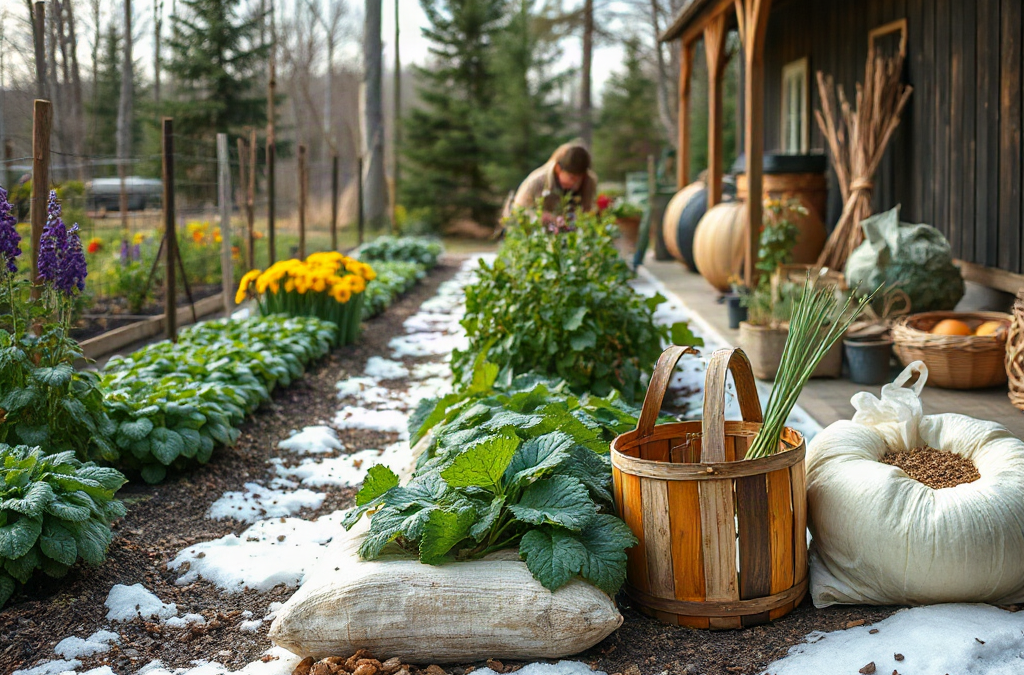
Northern homesteading adapts to short growing seasons by matching crops to local frost dates, starting transplants early, using season-extension structures, and choosing reliable storage crops. Cold soil and late spring frosts can delay planting, while an early autumn freeze may end production before warm-season plants mature. A productive setup combines hardy direct-sown crops such as peas, spinach, and radishes with indoor-started tomatoes, peppers, and brassicas, then protects them with row cover, low tunnels, or an unheated greenhouse. Gardeners should track actual harvest timing rather than relying only on seed-packet days, because cool temperatures can slow growth and reduce the value of late plantings.
Read the Northern Growing Season Correctly
Short-season gardening is governed by more than the number of frost-free days printed on a regional map. Soil temperature, daylight, wind exposure, snowmelt, and the timing of the first autumn freeze determine whether a crop merely survives or produces a useful harvest. A northern plot beside a south-facing wall may warm several days earlier than an exposed field, while low ground can collect cold air and freeze sooner than a nearby slope.
Use local frost dates as planning boundaries, not guarantees. Record when snow leaves, when the soil becomes workable, when overnight temperatures stay above freezing, and when each crop actually begins producing. A simple notebook can reveal that a garden consistently loses a week to wet spring soil or that autumn harvests remain possible well after the first light frost. Those observations are more useful than copying a calendar from a different town.
Seed-packet maturity dates also need interpretation. They commonly assume favorable conditions and may be measured from direct sowing, transplanting, or another starting point. A tomato listed at 70 days may need additional time after transplant shock, especially when nights remain cool. By contrast, peas and spinach can make progress in chilly soil and may be better early-season investments.
Site preparation should prioritize warmth and drainage. Raised beds can shed excess water and warm earlier, but they may also dry rapidly and lose heat overnight. Dark compost-rich soil can improve structure, yet adding large amounts of unfinished organic material before planting may tie up nitrogen or create uneven settling. A sheltered bed, reflective south-facing exposure, and wind protection often matter more than simply expanding garden size.
Readers using Northern homesteading: adapting to short growing seasons methods should identify the limiting factor first. If soil stays cold, improve drainage and use black plastic or clear covers carefully. If frost arrives early, select earlier varieties and protect the crop canopy. Treating every delay as a seed problem leads to unnecessary purchases when the real constraint is shade, wet ground, or cold wind.
Choose Crops That Finish Reliably
Crop selection should favor dependable maturity over an impressive list of possibilities. Hardy greens, peas, onions, potatoes, carrots, beets, turnips, cabbage, and many types of kale can fit northern conditions because they tolerate cool weather or store well after harvest. Warm-season crops such as melons, winter squash, eggplant, and long-season tomatoes need more deliberate scheduling and may be poor choices in an exposed garden without protection.
Variety selection is often more valuable than adding extra fertilizer. Look for early or short-maturity cultivars, cold tolerance, compact growth, and suitability for the intended use. A small early cabbage may produce a usable head before an autumn freeze, while a larger late variety may remain attractive on paper but fail to close in a cool summer. For tomatoes, several early varieties can spread risk better than relying on one supposedly reliable plant.
Compare crops by harvest value, not only by growing difficulty. A bed of early potatoes may supply substantial food even if it occupies the ground for much of the summer. Salad greens can provide repeated small harvests but require frequent sowing and may bolt during a sudden warm spell. Dry beans offer storage value, yet their pods must dry before damp autumn weather arrives. The best mix balances fresh eating, preservation, labor, and failure risk.
A northern garden also benefits from separating “must-have” crops from experiments. Give prime space to food that the household actually uses, then reserve a limited area for a long-season crop or an unfamiliar variety. If a warm-season crop fails twice because the soil never reaches a suitable temperature, replace it with an earlier crop rather than interpreting persistence as proof that the site will eventually cooperate.
- Early window: peas, spinach, radishes, scallions, lettuce, and hardy brassicas.
- Main window: potatoes, beets, carrots, cabbage, bush beans, and early cucumbers.
- Protected window: tomatoes, peppers, basil, melons, and heat-loving squash.
Crop records should include sowing date, transplant date, first harvest, total harvest quality, and the weather problem encountered. That information improves the next year’s choices more effectively than a generic regional planting chart. A crop that matures ten days later than expected may still be worthwhile if protection or earlier indoor starting can close the gap.
Build an Early-Season Starting System
Indoor seed starting gives northern growers control over the first part of the season, but it works only when light, temperature, and transplant timing are adequate. Seedlings raised in a warm room with weak window light may become tall and fragile, then struggle outdoors even though they were started early. A modest shelving setup with suitable supplemental light can produce sturdier plants than an overcrowded sunny windowsill.
Start crops according to their tolerance for transplanting and the time they need before outdoor planting. Peppers and onions generally justify an earlier start than quick-growing cucumbers or squash. Brassicas can be raised for a head start, while peas, carrots, and radishes are usually better sown directly because their roots dislike disturbance or their growth is fast enough without indoor handling.
Hardening off is a separate stage, not an optional final step. Move plants outdoors for short periods, initially in a sheltered location, and increase exposure gradually. Wind and bright sun can damage tender leaves even when temperatures appear safe. A plant that looks healthy indoors may wilt or suffer leaf scorch after one abrupt move outside. Delaying transplanting by a few days is often less damaging than exposing unconditioned seedlings to cold wind.
Use season-extension covers to warm the root zone and reduce wind stress, but monitor them daily. A low tunnel can become excessively hot on a sunny spring afternoon and may trap moisture that encourages disease. Row cover provides frost protection while allowing air and light through, yet it is not a substitute for checking the forecast during a hard freeze. Secure covers against northern winds and leave enough room for plants to grow without rubbing against the fabric.
Indoor starting also has a labor tradeoff. Starting every crop in February can create crowded plants, watering chores, and transplant shock. A staged schedule is more manageable: sow the slowest crops first, then start medium-speed crops, and direct-sow hardy vegetables as soon as the ground permits. Gardeners who want a simpler system may buy a limited number of healthy transplants and use indoor space only for varieties that are expensive or difficult to find locally.
For another planning reference, connect these choices with Northern homesteading: adapting to short growing seasons records from the previous year. The most useful question is not “Can this plant grow here?” but “Which starting method gives this plant enough productive weeks before frost?”
Extend Harvests and Protect Maturing Plants
Season extension is most effective when it protects a valuable crop during a specific vulnerable period. A low tunnel may add useful spring and autumn time for lettuce, greens, and brassicas, while an unheated greenhouse can help tomatoes ripen earlier and later. Neither structure creates unlimited summer heat. If a crop requires sustained warmth, placing it under a thin cover in a cold, shaded location may produce disappointing results.
Choose protection according to the risk. Floating row cover is lightweight and useful against light frost and insects. A low tunnel offers more wind and temperature buffering but requires ventilation and stronger anchoring. A cold frame is convenient for hardening seedlings and growing greens, although its small volume can overheat quickly. An unheated greenhouse extends the calendar but adds cost, snow-load concerns, watering demands, and maintenance.
Thermal mass can moderate temperature swings. Water containers, stone, or masonry absorb daytime warmth and release some of it at night, but they cannot prevent a prolonged freeze. Covers work best when the protected soil has already warmed and when the structure is placed in full sun. Covering plants immediately after sunset may preserve stored heat; waiting until the air is already freezing gives the system less heat to retain.

Autumn protection requires attention to disease and humidity. Leaving a tunnel sealed for days during damp weather can create conditions favorable to fungal problems. Remove damaged leaves, water the soil rather than the foliage, and ventilate whenever temperatures allow. If a plant is still green but not setting or ripening fruit, protection may preserve it without producing a worthwhile harvest; pulling it and planting a cold-tolerant replacement can be the better use of space.
Mulch has a different role from a cover. Straw or leaf mulch can reduce soil-temperature swings and protect root crops from an early light freeze, but applying thick, wet mulch to cold spring soil may delay warming. Use it after the crop is established or when the priority has shifted from rapid spring warming to moisture conservation and autumn protection. The mistake is treating every season-extension tool as interchangeable.
Plan Succession, Storage, and Backup Harvests
Succession planting turns a short calendar into several smaller production windows. Instead of sowing all lettuce at once, plant modest amounts at intervals suited to the expected harvest rate. The same approach works for radishes, spinach, peas, bush beans, and some brassicas. In northern climates, succession timing must account for both spring cold and summer heat: a sowing that succeeds in May may bolt or struggle if repeated unchanged in July.
Use vacant space immediately after an early crop is cleared. Greens can follow peas, and a quick turnip or radish crop may fit after early potatoes, provided the remaining season and soil moisture support it. Do not assume every bed can carry two full crops. A late planting may produce tender leaves but not a mature storage root, so define the intended harvest before using the space.
Storage crops provide insurance when fresh harvests are compressed. Potatoes, carrots, beets, onions, cabbage, and winter squash each require different maturity and storage conditions. A crop harvested too early may store poorly, while one left too long can face frost damage, cracking, or wet-weather disease. Preservation also spreads labor. Freezing greens, fermenting cabbage, drying herbs, and storing roots can prevent a narrow harvest window from becoming a wasteful glut.
A practical annual plan should rank crops in three groups: dependable staples, quick replacements, and experiments. If a tomato planting fails, a second sowing of beans may still produce food, but a second sowing of slow peppers is unlikely to catch up. Keep seed for fast replacement crops and leave a small amount of flexible bed space rather than filling every row in spring.
- Mark the likely last spring and first autumn frost periods.
- Reserve indoor space for slow, tender crops.
- Direct-sow hardy crops as soon as soil conditions permit.
- Install covers before a forecasted cold event, not after damage appears.
- Schedule a replacement crop for every high-risk warm-season planting.
- Record harvest dates and remove varieties that repeatedly miss maturity.
Use Northern homesteading: adapting to short growing seasons as an annual adjustment rather than a fixed recipe. A cooler summer, late snowmelt, or unusually wet autumn can change the best decision. Flexibility is not abandoning the plan; it is preserving the harvest by switching early enough.
Frequently Asked Questions
What vegetables are most dependable in a northern short season?
Peas, spinach, lettuce, radishes, potatoes, carrots, beets, turnips, cabbage, kale, and onions are commonly dependable when matched to local conditions. Early varieties improve reliability.
Should northern gardeners start every crop indoors?
No. Start slow-growing or frost-sensitive crops such as peppers, onions, and some tomatoes indoors. Direct-sow crops that tolerate cool soil or dislike root disturbance, including peas, carrots, and radishes.
Do raised beds always extend the growing season?
Raised beds may warm and drain earlier, but their advantage depends on construction, exposure, and moisture. They can also dry out faster and freeze more quickly overnight.
When should row covers be removed?
Ventilate or remove covers when daytime temperatures rise enough to cause overheating, and check plants for excess humidity. Keep covers in place during cold or windy periods when protection remains useful.
How can a failed warm-season crop be replaced?
Replace it with a fast crop suited to the remaining calendar, such as bush beans, greens, radishes, or turnips. Choose based on the expected harvest date rather than planting another slow crop too late.
Conclusion
Successful northern homesteading depends on treating time, warmth, and frost protection as limited resources. Map the actual conditions of the site, select varieties that can mature within the dependable portion of the season, and reserve indoor space for crops that cannot afford a late start. Use row covers, low tunnels, cold frames, or greenhouse space for specific temperature risks rather than assuming any structure will solve every problem.
Build the garden around reliable crops and storage needs, then use succession planting and replacement beds to recover when weather disrupts the calendar. Keep records of first harvests, missed maturity, soil conditions, and protection results. After two or three seasons, those notes will identify which crops deserve prime space and which should remain experiments. The goal is not to force a southern garden into a northern climate, but to design a harvest system that finishes predictably within the conditions available.