
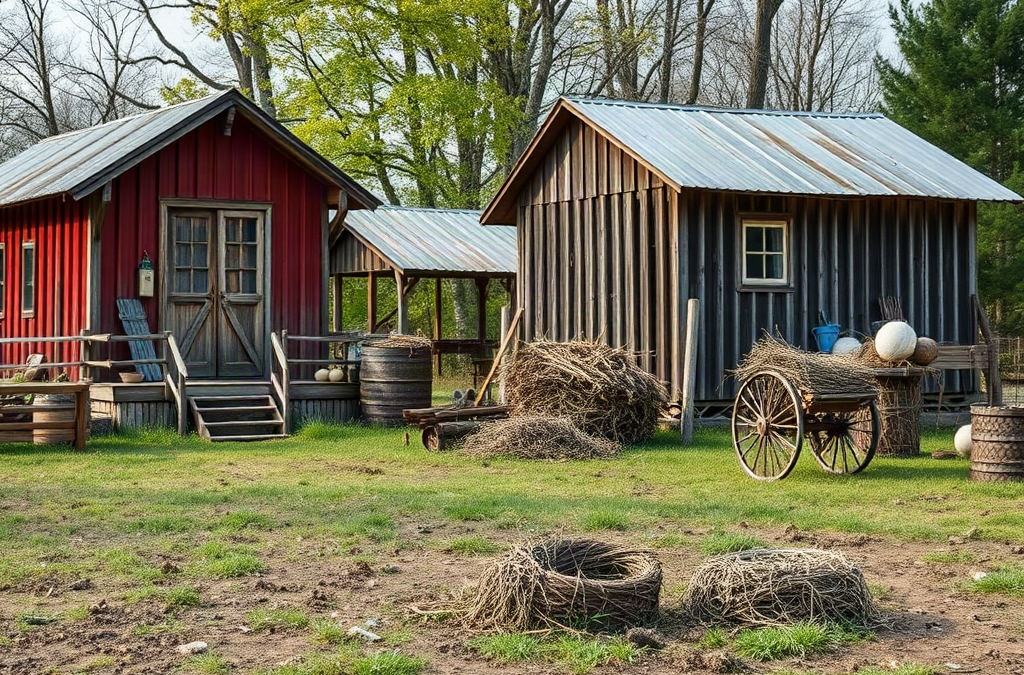
The pros and cons of homesteading before you commit center on whether greater self-reliance justifies the ongoing labor, capital, and uncertainty. Homesteading can provide locally produced food, useful skills, privacy, and a stronger connection to daily work, but it may also bring high startup costs, maintenance demands, unpredictable yields, and fewer convenient services. Test the lifestyle through a small garden, food-preservation project, or weekend property stay before buying land. Check zoning, water access, soil, climate, income needs, and realistic weekly time requirements first, because enthusiasm cannot compensate for unsuitable infrastructure or an unsustainable workload.
What Homesteading Actually Requires
Homesteading is not a single activity or a guaranteed route to complete independence. It is a collection of daily systems involving land management, food production, repairs, storage, household finances, and often animal care. The workload changes with the season rather than disappearing. A garden may demand frequent attention in summer, while winter shifts the focus toward firewood, equipment maintenance, preserved supplies, and planning.
The first useful distinction is between self-reliance and self-sufficiency. A household may grow herbs, preserve tomatoes, keep a few hens, and repair basic equipment without producing every calorie or making every tool. That partial approach can deliver many lifestyle benefits with less risk than attempting to replace nearly all outside services. Someone who buys grain, veterinary care, building materials, or occasional labor is not failing at homesteading; they are choosing a workable level of independence.
Property conditions determine how difficult the plan becomes. A scenic parcel may lack dependable water, usable access roads, productive soil, storage space, or nearby services. Rural land can also require longer travel for work, school, medical appointments, supplies, and equipment repair. Before treating acreage as an opportunity, inspect drainage, sunlight, slope, fencing needs, winter access, utility options, and local rules. A cheap parcel that needs a well, septic system, driveway, outbuildings, and major soil improvement may cost more than a smaller property with sound infrastructure.
Common assumptions fail when the imagined lifestyle contains only productive tasks and omits administration. Record keeping, ordering feed, cleaning tools, managing harvests, arranging repairs, and handling emergencies occupy real hours. Review Pros and cons of homesteading before you commit as a workload question, not merely a lifestyle preference. The strongest plans match the household’s skills, income, health, schedule, and tolerance for unfinished work.
The Most Valuable Benefits
The strongest benefit of homesteading is greater control over selected parts of household life. Growing greens or keeping a small pantry does not eliminate grocery shopping, but it can make food choices more visible and reduce dependence on a single supply routine. A person who preserves beans, freezes garden produce, or bakes regularly gains practical knowledge about seasonality, storage, waste, and household consumption.
Skills are another durable advantage. Learning to sharpen tools, mend fencing, maintain a water system, prune fruit trees, or troubleshoot a small engine can reduce delays and make outside help easier to evaluate. These skills are useful even when a task still requires a professional. For example, understanding basic electrical safety will not qualify someone to rewire a house, but it may help them recognize an urgent hazard and describe the problem accurately.
Homesteading may also improve the relationship between spending and consumption. A household that tracks seed purchases, animal feed, replacement parts, and preserved-food losses can see which projects genuinely save money and which are expensive hobbies. A productive garden may be worthwhile because of freshness, variety, or enjoyment even when its harvest does not beat supermarket prices. Honest accounting prevents a pleasant activity from being misrepresented as a financial strategy.
Daily outdoor work can provide structure and meaningful shared responsibility, especially when household members divide tasks clearly. The benefit weakens when one person carries all the planning and physical labor. A family may enjoy collecting eggs but resist coop cleaning, winter watering, or arranging care during travel. Define ownership of unpleasant jobs before adding animals or expanding production. A smaller system that everyone maintains is more valuable than an ambitious setup that quietly depends on one exhausted person.
These advantages are not automatic. Privacy can become isolation, home-produced food can create food-safety responsibilities, and independence can make emergencies harder if the property is difficult to reach. The practical goal is selective resilience: build systems that improve your household’s life without assuming that outside infrastructure, markets, neighbors, or skilled trades will never be needed.
Costs, Labor, and Hidden Tradeoffs
The financial downside appears before the first harvest. Land, fencing, hand tools, irrigation, storage containers, protective equipment, animal housing, and transport can consume a large budget. Some purchases are durable, while others must be replaced because the first version was poorly sized or unsuited to local conditions. A low-cost starter approach is usually safer: use existing structures, begin with crops suited to the site, and delay specialized machinery until repeated work proves that ownership is justified.
Labor is often the less visible cost. A small flock still needs daily observation, clean water, secure housing, and a plan for predators and illness. A garden requires sowing, weeding, watering, harvesting, preserving, and cleanup. If the household leaves for several days, a reliable caretaker must understand the systems rather than simply stop by. A homestead may offer flexibility, but it does not automatically offer freedom from schedules.
Income and commuting deserve special attention. A remote property can support a slower rhythm while making paid employment, deliveries, education, and healthcare more complicated. Replacing a city rent or mortgage with acreage does not solve the need for dependable cash flow. Budget for fuel, insurance, taxes, repairs, animal losses, failed crops, and professional services. Keep an emergency reserve separate from project money so a broken well pump does not force the cancellation of essential bills.
Opportunity cost can be substantial. Time spent expanding a garden may displace paid work, rest, family activities, or training that would increase income. A household may save on vegetables while spending more on fencing and losing wages during construction. The right comparison is not “homegrown versus store-bought” in isolation; it is the full cost of the chosen system compared with the household’s next-best use of money and time.
Weak plans also underestimate failure. Drought, pests, flooding, equipment breakdowns, animal illness, and poor preservation can reduce a season’s return. Keep backup water, avoid depending on one crop, preserve only what can be stored safely, and learn basic emergency procedures before scaling up. The warning sign is not a single failed project. It is a pattern of adding complexity faster than the household can maintain it.
How to Test the Lifestyle Before Buying Land
A trial period is the most reliable way to replace romantic expectations with evidence. Rent or borrow garden space, grow several crops in containers, preserve a modest batch of produce, and complete routine maintenance through an entire season. The point is not to recreate rural life perfectly. It is to measure whether the work fits your body, schedule, budget, and interest after the novelty fades.
Track actual effort rather than relying on memory. Note time spent watering, shopping for supplies, cleaning, repairing, harvesting, and processing. Record purchases and losses. If a weekend garden repeatedly becomes an abandoned weekday obligation, a larger property will amplify the problem. If the work feels manageable but the budget does not, redesign the scale instead of forcing a land purchase.

A useful test can include the following sequence:
- Produce: Grow a small selection suited to your climate and record yield, pest pressure, and watering demands.
- Preserve: Freeze, dry, or otherwise store a quantity you can use, following current food-safety guidance for the method.
- Maintain: Repair a fence section, tool, raised bed, or irrigation component without buying an elaborate system first.
- Operate: Follow a weekly task schedule during busy periods, not only on convenient weekends.
- Review: Compare total spending and hours with the food, skills, enjoyment, and resilience gained.
Visit properties in different weather conditions and ask practical questions about water, access, internet, waste handling, wildlife, and nearby services. Check official county or municipal information for zoning, building permits, wells, septic requirements, livestock restrictions, and road obligations before making an offer. Rules vary by location, so advice from a distant property owner may not apply to your parcel.
Start with a reversible commitment when possible. A leased plot, urban garden, or small rural rental can reveal more than an online tour. Compare the experience with lower-maintenance alternatives such as buying from local producers, joining a community garden, or installing a compact kitchen garden at your current home. These options may deliver the desired benefits without taking on unsuitable land.
A Practical Commitment Decision
A sound decision weighs capacity before aspiration. Rate your proposed plan against five realities: available cash, dependable income, weekly labor, technical skills, and support during illness or travel. A weakness in one area does not automatically rule out homesteading, but it should reduce the starting scale. Someone with limited time might choose perennial herbs, a freezer-based preservation routine, and a few raised beds rather than livestock and acreage.
Separate “must have” requirements from attractive extras. Reliable water, safe shelter, legal permission for intended activities, manageable access, and a realistic income plan belong in the first group. A greenhouse, tractor, large orchard, workshop, and multiple animal species can wait until the basic systems work. Expanding before proving water delivery, storage, and daily care creates expensive dependencies.
Use a written pre-purchase checklist and attach a cost range to every major assumption. Include inspections, closing expenses, utility installation, fencing, tools, initial soil work, insurance, taxes, fuel, and repairs. Ask what happens if the garden produces poorly for two years, if a vehicle fails, or if paid employment changes. A plan that survives those scenarios is more credible than one built around ideal weather and uninterrupted energy.
The best first project has a clear stopping rule. For instance, grow one season before adding animals, or complete a water and storage plan before expanding planting space. Signs of a healthy approach include consistent task completion, transparent spending, usable harvests, and enough recovery time. Signs to pause include recurring overdue maintenance, borrowing for routine supplies, resentment over task division, or reliance on unsafe shortcuts.
For a broader planning perspective, compare these choices with Pros and cons of homesteading before you commit alongside your own household budget and calendar. Homesteading does not need to be all-or-nothing. A gradual model can preserve income and convenience while adding carefully selected skills and production. That middle ground often provides a better test of fit than an immediate move to a demanding property.
Before purchasing land or building systems, consult your local extension office, county planning department, health department, and relevant utility providers. These sources can clarify site-specific growing conditions, permits, water and septic requirements, and food-safety expectations more reliably than generalized social-media advice.
Frequently Asked Questions
Is homesteading cheaper than ordinary household living?
It may reduce spending on selected foods or services, but startup equipment, land, repairs, feed, fuel, and lost work time can offset those savings. Track full costs before assuming a project is economical.
Can beginners start homesteading without buying rural land?
Yes. Containers, a community garden, food preservation, basic repairs, and small-scale composting can test skills and workload before a property purchase.
What should be checked before buying homestead property?
Verify water, drainage, soil, access, utilities, internet, zoning, building rules, septic suitability, livestock permissions, taxes, insurance, and distance to essential services.
Are animals necessary for a homestead?
No. Animals add food, manure, and routine, but they also create daily care obligations and emergency planning. Begin with plant production or preservation if time is limited.
How can I tell whether homesteading is becoming too demanding?
Repeated overdue maintenance, exhausted household members, rising debt, unsafe shortcuts, and conflict over chores indicate that the system needs to be reduced or redesigned.
Conclusion
Homesteading is most sustainable when it is treated as a set of chosen systems rather than an escape from every outside dependency. The benefits—useful skills, selected homegrown foods, practical resilience, and a more hands-on routine—are real, but so are the costs of land, infrastructure, labor, travel, repairs, and missed income. Test the workload before committing, inspect property conditions carefully, and build a budget that includes failure and professional help. Begin with one manageable project and define what success must look like before expanding. If the trial produces steady work, clear enjoyment, and acceptable costs, a larger commitment may fit. If it creates chronic strain, a smaller urban or part-time model may deliver the better life.


