
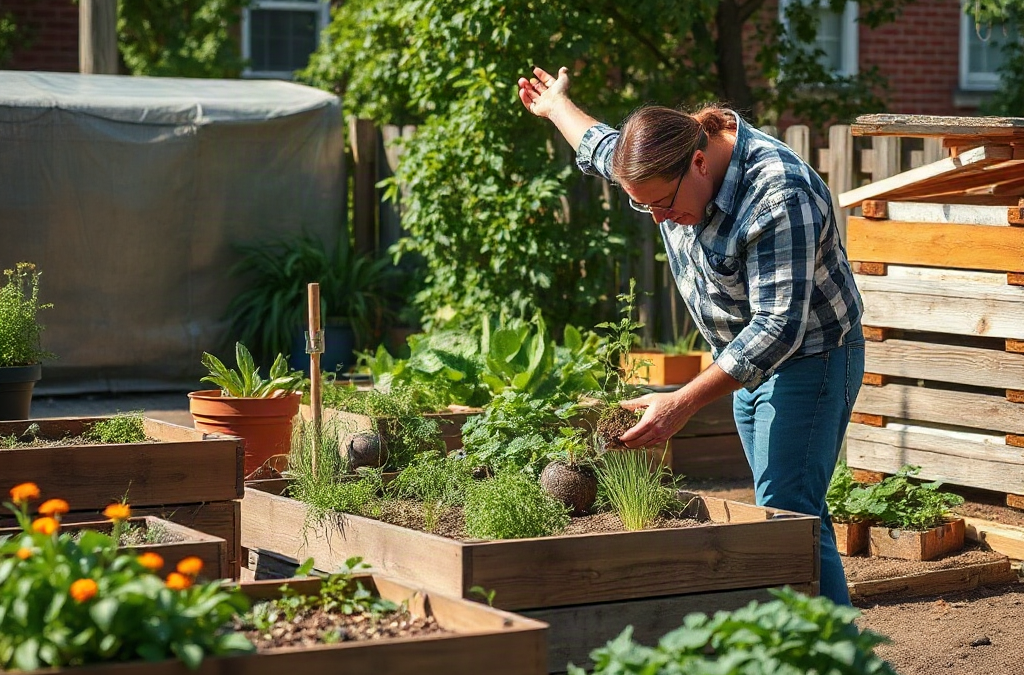
Urban homesteading programs and available support usually come through city food initiatives, county extension offices, community gardens, nonprofit training, utility rebates, and small local grants. These programs can reduce startup costs for raised beds, rainwater management, composting, beekeeping, or small-scale food production, but eligibility often depends on location, property status, income, project type, and local regulations. The most reliable approach is to identify your municipality and county first, then compare official program rules with your site’s zoning, water access, and available space. Avoid assuming that a gardening grant covers livestock, structures, or permanent irrigation; written eligibility details matter more than a program’s promotional name.
Where Urban Homesteading Support Usually Comes From
Urban homesteading support is rarely housed under one national program or single government office. Assistance is more often distributed among municipal sustainability departments, county agricultural extension services, parks departments, food-policy offices, housing agencies, schools, and nonprofit organizations. Each provider tends to address a particular public goal, such as improving food access, reducing stormwater runoff, teaching job skills, or converting neglected lots into productive community spaces.
That structure affects how residents should search. A city may offer garden plots or compost education while the county extension office provides soil testing, horticulture classes, and advice about pests. A neighborhood nonprofit may supply seeds and tools but limit participation to residents of a defined service area. Utility companies sometimes support water-efficient landscaping or rain-barrel projects, while housing programs may focus on vacant lots rather than privately owned yards.
The word “homesteading” can also create a search problem. A program may never use that term even though it supports an urban food-growing project. Search for combinations such as your city name with “community garden,” “urban agriculture,” “food access,” “rain garden,” “compost,” “extension,” or “sustainability grant.” The available support for urban homesteading programs may be listed under environmental services or community development instead of lifestyle programming.
A common mistake is treating a general sustainability initiative as unrestricted household funding. Many programs provide materials, instruction, or shared infrastructure rather than cash. Others reimburse approved purchases only after documentation is submitted. Before investing, ask whether the assistance is available to renters, whether permission from a landlord is required, and whether the project must remain in place for a specified period.
Programs That Match Common City-Based Projects
The best program depends on the project’s public purpose, physical requirements, and ownership arrangement. A small balcony herb garden may fit an educational seed distribution effort, while a backyard rain garden may qualify under stormwater or watershed programming. Matching the project to the agency’s objective improves the application because it explains a recognizable community outcome rather than presenting a broad wish to become more self-sufficient.
Community garden programs are often the most accessible entry point for residents without suitable yards. They may offer a plot, shared water, basic tools, workshops, or reduced fees. The tradeoff is that the gardener must follow site rules about crops, hours, pesticide use, storage, and plot maintenance. A private raised-bed project provides more control but may require the resident to fund lumber, soil, irrigation, and fencing.
Urban agriculture initiatives can support training, market gardens, school gardens, food forests, and neighborhood growing sites. These programs may prioritize projects that serve multiple households or improve access to fresh produce. A proposal for four raised beds at a community center may therefore receive more interest than an identical proposal confined to one private patio, even though the private project is simpler to manage.
Other useful categories include composting education, seed libraries, tool-lending programs, rainwater or stormwater projects, pollinator habitat, and small business assistance for growers. Livestock, poultry, apiaries, and food sales require extra caution because local rules can address setbacks, sanitation, noise, animal numbers, and permits. Do not assume that a program supporting vegetable production also covers chickens or bees.
When comparing options, consider the resource being offered:
- Materials: seeds, compost, soil amendments, plants, barrels, or tools.
- Training: classes, demonstrations, technical consultations, or business instruction.
- Access: a garden plot, vacant lot, greenhouse, water connection, or shared equipment.
- Financial help: a grant, rebate, fee waiver, stipend, or reimbursement.
The wrong assumption is that the largest award is automatically the best fit. A free plot with reliable water and instruction may be more valuable than a small grant that requires upfront spending and complex reporting.
How to Check Eligibility, Rules, and Costs
Eligibility should be checked before designing the project around promised assistance. Read the official program page or application packet for geographic boundaries, deadlines, household requirements, eligible expenses, matching funds, insurance, maintenance obligations, and reporting rules. If the information is unclear, contact the listed program administrator and request a written clarification rather than relying on an informal social media comment.
Property status is often decisive. Renters may need landlord approval for beds, trellises, irrigation lines, or rainwater equipment. Residents in homeowner associations may face separate restrictions. A city-owned lot can require a license or use agreement, and a community garden may assign plots for only one season. These conditions do not make a project impossible, but they change the realistic timeline and the level of control the participant has.
Local regulations should be reviewed independently from program eligibility. A grant administrator may accept an application for a greenhouse, shed, fence, poultry enclosure, or beehive without confirming that the structure or activity complies with zoning and building requirements. Check municipal planning pages, sanitation guidance, water rules, and animal ordinances. The urban support options for food production and conservation should complement lawful site planning, not replace it.
Budgeting exposes another frequent failure point. Assistance may pay for seeds but not soil delivery, or reimburse a rain barrel but not the diverter, platform, overflow route, or installation. A useful budget separates the purchase price from ongoing costs such as water, replacement parts, compost, pest control, seasonal plants, and transportation. If a project depends on a reimbursement, confirm how long repayment may take and whether receipts, photographs, volunteer hours, or progress reports are required.
Compare the program’s administrative burden with the project’s scale. A formal grant may make sense for a neighborhood growing site with several partners. For two containers on a rented balcony, a seed library, library workshop, or tool-lending program may provide better value with fewer obligations. Support is useful only when the conditions remain manageable after the initial award or class ends.
A Practical Application Plan for Limited Space
A strong application begins with a defined site and a modest first phase. Record the growing area, sunlight pattern, water source, surface type, storage limits, and permission status. A six-month plan for containers, herbs, greens, and compost education is easier to evaluate than an undefined proposal covering vegetables, poultry, fruit trees, rain capture, and food sales at once.

Use the project’s constraints to select the right support. A shaded apartment courtyard may benefit from a community plot or a class on shade-tolerant crops rather than a request for a large soil delivery. A sunny rental yard may need portable beds and landlord approval. A rowhouse with drainage problems may be better suited to a rain garden or downspout diversion program than to additional raised beds.
Prepare a compact application packet with a site description, project purpose, simple sketch, budget, maintenance plan, and evidence of permission. Explain who will water, weed, repair equipment, and manage the site during vacations. For a shared project, identify responsibilities by person or organization. Programs often become difficult not because the idea is weak, but because no one has accepted the routine work after installation.
Track results that match the program’s purpose. A food-access initiative may value participating households, harvest distribution, or educational sessions. A stormwater project may focus on the treated area and maintenance activity. A training program may require attendance or completion records. Avoid promising exact harvest volumes or permanent cost savings when weather, pests, water prices, and participation are uncertain.
Use this priority order when several opportunities appear:
- Confirm zoning, permission, water access, and physical feasibility.
- Choose the smallest project that tests the site for one growing season.
- Apply for support that covers the largest unavoidable cost or skill gap.
- Document purchases, photographs, attendance, and maintenance from the beginning.
- Expand only after the first phase proves manageable.
That sequence prevents a common urban homesteading mistake: accepting free materials that create a larger maintenance obligation than the household can sustain. Signs of a workable program include clear rules, a named contact, realistic deadlines, and support that matches the site. Warning signs include vague promises, pressure to buy before approval, unclear ownership of installed equipment, or requirements that are absent from the written terms.
Frequently Asked Questions
Can renters participate in urban homesteading programs?
Often, yes, but permanent installations may require written landlord approval. Portable containers, community garden plots, classes, and tool-lending programs usually create fewer permission issues.
Where should I look for local assistance first?
Check your city sustainability or food-policy office, county extension service, parks department, public library, and established community gardens. Search using your location plus urban agriculture, compost, garden grants, or rain garden.
Do urban homesteading grants pay for backyard chickens or bees?
Not necessarily. Many programs focus on crops, education, or stormwater work, while poultry and bees may involve separate zoning, sanitation, registration, or safety requirements.
What should a small project budget include?
Include materials, delivery, soil or compost, water, tools, repairs, replacement plants, permits if applicable, and the value of recurring labor. Reimbursement programs may require upfront payment.
How can I tell whether a program is legitimate?
Use an official agency or established nonprofit website, verify the administrator’s contact information, read written eligibility terms, and avoid paying for promised funding before approval.
Conclusion
Urban homesteading support becomes easier to use when the project is described in the language of the responsible agency: food access, urban agriculture, stormwater management, waste reduction, education, or neighborhood improvement. Begin with your city and county, confirm permission and local rules, and compare materials, training, site access, and reimbursement rather than focusing only on grant amounts. A contained first phase—such as a community plot, portable beds, composting, or a small rain garden—reveals whether the site and maintenance routine are workable. Keep receipts and records, clarify ownership of installed items, and expand only after the initial project performs reliably. The strongest opportunity is the one whose requirements, costs, and public purpose fit your actual space and available time.


