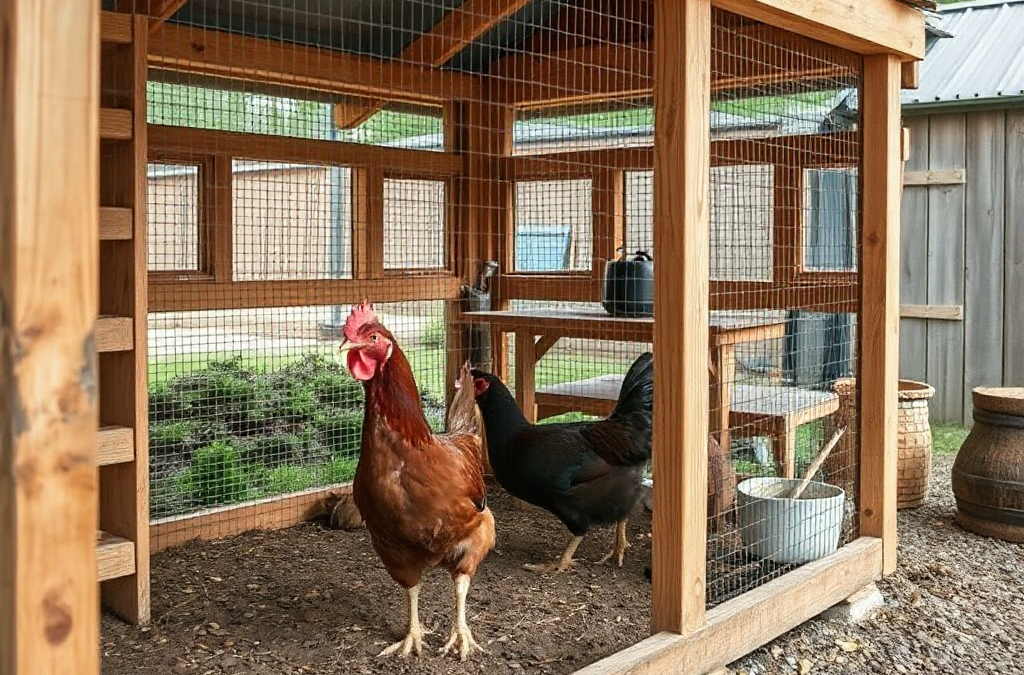
Building an efficient chicken coop involves selecting the right location, ensuring proper ventilation, and incorporating adequate space for your chickens. Start by choosing a well-drained area that receives sunlight while providing shade. Design your coop with sufficient ventilation to prevent moisture build-up and use nesting boxes for egg-laying. Prioritize security features like sturdy locks and predator-proof fencing to protect your flock from threats.
Choosing the Right Location
Selecting the ideal location for your chicken coop is crucial for the health and productivity of your flock. Look for a spot that is well-drained to prevent flooding and mud during wet weather. Ideally, the location should receive a mix of sunlight and shade, as chickens thrive in sunny environments but also need shaded areas to cool off. Additionally, proximity to your home allows for easier management and monitoring of the coop.
Consider the wind direction and prevailing weather patterns when choosing a location. Position the coop to shield it from harsh winds, especially in winter. Another important factor is accessibility; ensure that the site is easy to reach for regular maintenance, feeding, and egg collection.
Essential Features of a Chicken Coop
An efficient chicken coop must include several key features to ensure the welfare of the birds. First, provide adequate space; the general rule is at least 4 square feet per chicken inside the coop and 10 square feet per bird in an outdoor run. This helps prevent overcrowding and stress among the flock.
Ventilation is essential to maintain a healthy environment. Incorporate windows and vents to promote airflow, reducing humidity and ammonia build-up. Additionally, include nesting boxes, ideally one box for every three hens, to encourage laying behavior. Ensure that these boxes are placed in a quiet, dark area of the coop to provide a safe space for the hens.
Security is also critical; use sturdy materials for the coop construction, and include locks on doors to deter predators. Consider using hardware cloth instead of chicken wire for added protection against raccoons and other wildlife.
Designing the Coop Layout
The layout of your chicken coop can significantly impact the efficiency of your flock management. Start with a simple rectangular or square shape, which is easier to build and manage. Divide the interior into distinct areas for roosting, nesting, and feeding. A roosting area should be elevated and away from the nesting boxes, as chickens prefer to sleep in higher places.
Incorporate an outdoor run attached to the coop to allow chickens to forage and exercise. This area should be securely fenced to protect against predators and should include shaded spots for hot days. Regularly rotate the run area to prevent overgrazing and to allow the ground to recover.
Common Mistakes to Avoid
One of the most common mistakes when building a chicken coop is underestimating the space requirements. Overcrowding can lead to stress, pecking order issues, and health problems. Ensure your coop is spacious enough to accommodate your flock comfortably.
Another mistake is neglecting ventilation. Poor airflow can lead to respiratory issues and increased moisture levels, which can harm your chickens. Make sure to plan for adequate ventilation from the start.

To wrap up, avoid using inadequate materials for construction. Chickens can be quite destructive, so use sturdy, weather-resistant materials to ensure the longevity of your coop. Regular maintenance checks will help identify any damage early and keep your chickens safe.
Frequently Asked Questions
What materials should I use to build a chicken coop?
Use weather-resistant materials such as treated wood, metal roofing, and hardware cloth for durability and safety.
How many chickens can I keep in my coop?
Plan for at least 4 square feet per chicken inside the coop and 10 square feet in the outdoor run to ensure comfort and health.
How do I keep my coop clean?
Regularly remove waste and old bedding, and consider using a deep litter method to maintain cleanliness and reduce odors.
What is the best way to protect my chickens from predators?
Use sturdy locks, predator-proof fencing, and hardware cloth for windows and ventilation openings to keep your flock safe.
How can I ensure proper ventilation in my coop?
Incorporate windows and vents placed high in the coop to promote airflow while preventing drafts on the chickens.
Conclusion
Building an efficient chicken coop requires careful attention to location, design, and essential features. Prioritizing adequate space, ventilation, and security will create a safe and productive environment for your flock. Regular maintenance and avoiding common mistakes will further enhance the efficiency of your coop, ensuring your chickens thrive and produce healthy eggs. Start planning your coop today, and enjoy the benefits of raising your own chickens.