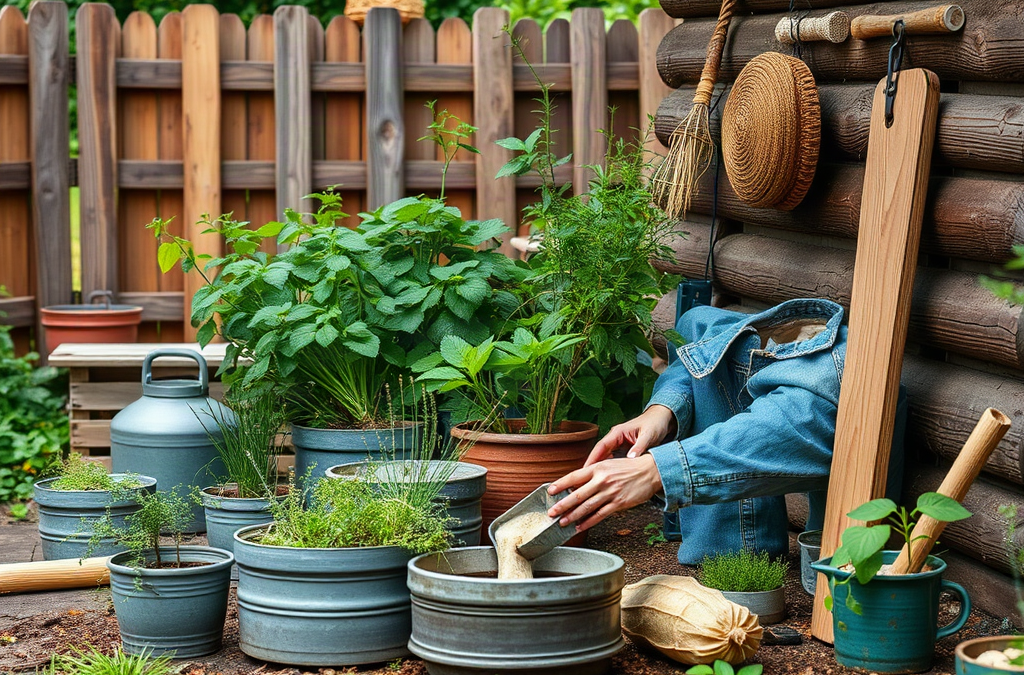
Learn homesteading through hands-on projects by building one useful system at a time, such as a container garden, rainwater-use plan, sourdough routine, simple repair, or compost setup. Projects turn abstract knowledge into repeatable skills because each one requires materials, timing, observation, maintenance, and correction. Begin with work that is inexpensive and reversible, then record what happened before adding livestock, permanent structures, or preservation equipment. A small garden can reveal soil and watering problems, while food preservation teaches sanitation and storage limits. The biggest mistake is starting several demanding projects at once; finish one, evaluate its labor and results, and use those lessons to choose the next project.
What you’ll learn
This guide covers the following practical points:
- Choose Projects That Build Useful Capability — Hands-on homesteading education works best when the project produces a real household result while teaching a transferable skill.
- Build a Practical Learning Sequence — A useful sequence moves from observation and basic care toward systems with greater cost, permanence, or risk.
- Use Small Projects to Test Systems — Small experiments are valuable because they expose system weaknesses before those weaknesses affect a whole season.
- Measure Results, Safety, and Long-Term Fit — A project is successful when its output justifies its recurring labor, risk, and maintenance—not merely when it produces something once.
Choose Projects That Build Useful Capability
Hands-on homesteading education works best when the project produces a real household result while teaching a transferable skill. Growing salad greens develops observation, watering, pest detection, and harvest timing; repairing a gate teaches measurement, tool handling, fastening, and maintenance. A project deserves priority when it solves a current problem, fits the available space, and can be completed without creating a safety or financial burden.
Start by listing recurring household needs rather than shopping for impressive equipment. Fresh herbs, garden vegetables, pantry staples, small repairs, soil improvement, and reduced waste often provide better first lessons than a large livestock purchase. A windowsill herb planter, for instance, exposes light limitations and watering habits quickly. A backyard bed may reveal drainage, compaction, or deer pressure before those problems are multiplied across a larger growing area.
Project size changes the kind of learning you receive. A small batch of pickles teaches preparation, cleanliness, recipe control, and refrigeration limits, while a large preservation session increases the cost of a mistake. A simple hand-tool repair may be slower than hiring someone, but it builds confidence and helps you judge when a job exceeds your ability. The goal is not to avoid outside help; it is to understand the work well enough to make sound decisions.
Choose an early project using four filters:
- Reversibility: Can you stop without losing a major investment?
- Frequency: Will the task recur often enough to build fluency?
- Feedback: Can you see quickly whether the method is working?
- Consequence: Would failure create a serious safety, animal-welfare, or food-storage risk?
A common mistake is selecting a project because it looks self-sufficient rather than because it matches present capacity. A large garden can become an expensive lesson in weeds and harvest overload if the household has limited time. Smaller output with consistent care usually teaches more than ambitious infrastructure left unfinished. The internal resource Learn homesteading through hands-on projects should be treated as an evolving practice, not a race toward maximum production.
Build a Practical Learning Sequence
A useful sequence moves from observation and basic care toward systems with greater cost, permanence, or risk. Begin with a short project that teaches daily attention, continue with one involving planning and recordkeeping, and only then consider projects that depend on reliable infrastructure. This order lets mistakes remain affordable while your judgment improves.
A 30-day sequence might open with a container garden or compost observation project. During the first week, inspect light, drainage, available materials, and the time required for care. During the second, establish a routine and record watering, temperature, plant condition, or decomposition changes. The third week should focus on correction rather than expansion. In the final week, assess output, labor, recurring costs, and whether the project deserves more space.
After that first cycle, a household might add a basic bread routine, a small repair, seed-starting, or a pantry inventory. These projects connect skills: garden waste can inform composting, pantry records can guide planting, and repair experience can improve the design of trellises or storage shelves. The connections matter because homesteading is a network of interdependent chores, not a collection of isolated hobbies.
Match the project to the learning objective
If the objective is food production, grow a crop with a short harvest window and manageable pest exposure. If the objective is preservation, learn refrigerator pickling or dehydration before attempting methods that demand precise equipment and process control. If the objective is animal care, study daily housing, feed storage, predator protection, and veterinary access before acquiring animals. A project should make its hidden workload visible.
Weak assumptions often distort the sequence. Saving seeds does not automatically make a garden independent if varieties are unsuitable or isolation is inadequate. Keeping chickens does not guarantee inexpensive eggs when housing, feed, repairs, and daily care are included. Homemade food is not automatically safer than purchased food; sanitation, temperature control, and storage decisions remain decisive.
Use a simple project record with the date, materials, labor time, weather or conditions, result, failure point, and next adjustment. That record prevents memory from turning an unpleasant task into a falsely simple one. It also helps compare a purchased solution with a homemade one on total effort rather than material price alone. For a related planning reference, use Learn homesteading through hands-on projects when deciding which skill should follow the current project.
Use Small Projects to Test Systems
Small experiments are valuable because they expose system weaknesses before those weaknesses affect a whole season. A raised bed may fail because its location receives inadequate sun, its soil settles, or its irrigation is inconvenient. The lesson is not simply that the crop failed; it is that placement, soil structure, water access, and maintenance time interact.
Consider a first garden on a rental property or compact suburban lot. Containers provide flexibility and make soil problems easier to isolate, but they dry faster and require more frequent attention. An in-ground bed may hold moisture better and offer greater planting volume, yet it is harder to relocate and may need more initial preparation. Neither method is universally superior. Choose containers when mobility and testing matter; choose a permanent bed when the site is dependable and the household can maintain it.
Water projects offer similar tradeoffs. A rain barrel can teach roof runoff, screening, overflow management, and seasonal availability, but it does not replace a dependable household supply and may not suit every local rule or use. A simple watering schedule can reveal whether the real problem is water access or inconsistent observation. Never assume collected water is appropriate for drinking, food washing, or other uses without meeting applicable safety requirements.
Food projects should also begin with limited quantities. Dehydrating a small amount of herbs shows whether the household will actually use the result and whether storage conditions protect quality. Fermentation requires attention to cleanliness, salt or acid conditions, temperature, and signs of spoilage; a beginner should follow a tested process rather than improvise from appearance alone. When a method has meaningful food-safety consequences, official extension or food-preservation guidance is more reliable than casual online substitutions.

Watch for three signals during a trial:
- Working: The output is usable, the routine fits available time, and maintenance is predictable.
- Strained: The project succeeds only when conditions are perfect or requires repeated emergency effort.
- Failing: Safety, animal welfare, structural stability, sanitation, or basic resource access cannot be maintained.
Expansion should follow evidence. Doubling a garden after one pleasant harvest may create excess produce and more weeds; adding animals after reading about care may overlook fencing and holiday coverage. Test the system at the smallest sensible scale, then enlarge the part that worked rather than copying every part of the original setup.
Measure Results, Safety, and Long-Term Fit
A project is successful when its output justifies its recurring labor, risk, and maintenance—not merely when it produces something once. Record harvest weight if useful, but also note usable portions, spoilage, watering time, cleanup, purchased inputs, and interruptions. A low-cost project can still be a poor fit if it consumes scarce time every day.
Safety deserves a separate review. Inspect tools before use, protect hands and eyes where appropriate, keep children and pets away from hazards, and repair unstable structures before adding load. Gardening chemicals, fuel, sharp tools, ladders, power equipment, pressure systems, and preserved foods all require instructions specific to the product and task. Homemade modifications should not be treated as safe simply because they appear simple.
Animal projects require an even higher threshold. Daily care continues during illness, travel, heat, cold, and personal emergencies. Before acquiring animals, confirm shelter, fencing, feed storage, predator control, manure handling, and access to qualified veterinary advice. A small flock may provide useful experience, but it is not a low-maintenance substitute for a garden. Starting with animals because they seem productive can create obligations before basic routines are reliable.
Compare approaches honestly. Buying seedlings may cost more upfront than starting from seed, but it can be sensible when the growing season is short or early attempts are limited by indoor space. Making a shelf may save money only if the builder already has suitable tools and can produce a stable structure. Buying preserves from a trusted source may be preferable to home processing when time, equipment, or process knowledge is inadequate. Self-reliance includes knowing when specialization is the safer choice.
At the end of each project, answer these questions:
- What household need did the project address?
- Which step consumed more time or material than expected?
- What evidence showed success or failure?
- What would change before repeating it?
- Does the next project reduce a bottleneck or merely add another chore?
These answers create a personalized curriculum. A gardener with dependable crops but poor storage should study preservation or pantry rotation next. Someone who grows well but struggles with irrigation should improve water access before adding varieties. The best next step is usually the one that strengthens a weak link in an existing routine. Keep Learn homesteading through hands-on projects tied to observed needs rather than a fixed list of fashionable projects.
For technical details on gardening, preservation, animal care, and safe tool use, consult local university extension services, state agriculture departments, USDA materials, and manufacturer instructions. These sources can provide region-specific planting information, tested preservation methods, and guidance that informal project descriptions may omit.
Frequently Asked Questions
What is the best first homesteading project?
Choose a small project with visible feedback, such as container herbs, compost observation, a pantry inventory, or a basic repair. Match it to a household need and available time.
How long should a beginner test a project?
Test long enough to observe the project’s normal maintenance cycle. A 30-day trial works for many routines, while gardens and seasonal projects require observation across the relevant growing or weather period.
Should beginners start with livestock?
Usually not unless shelter, fencing, feed storage, daily care, and backup coverage are already dependable. Plant and repair projects let beginners build useful judgment with fewer welfare consequences.
How can I tell whether a project is worth expanding?
Review usable output, total labor, recurring costs, maintenance demands, and failure points. Expand only when the routine remains manageable under ordinary disruptions.
Are homemade methods always cheaper?
No. Include tools, materials, failed attempts, storage, cleaning, and labor. Buying a service or product may be more sensible when safety, time, or specialized equipment is involved.
Conclusion
Hands-on learning becomes effective when each project has a clear purpose, a manageable scale, and a review point. Begin with work that produces useful feedback: grow a limited crop, improve a repair, track pantry use, or test a modest compost system. Record labor and failure points instead of judging success only by output. Delay permanent infrastructure and livestock until daily routines, safety controls, and backup arrangements are credible. When a project works, expand the specific process that proved reliable; when it fails, treat the result as information about time, site, materials, or maintenance. A deliberate sequence builds practical competence without forcing the household to absorb every risk at once.