
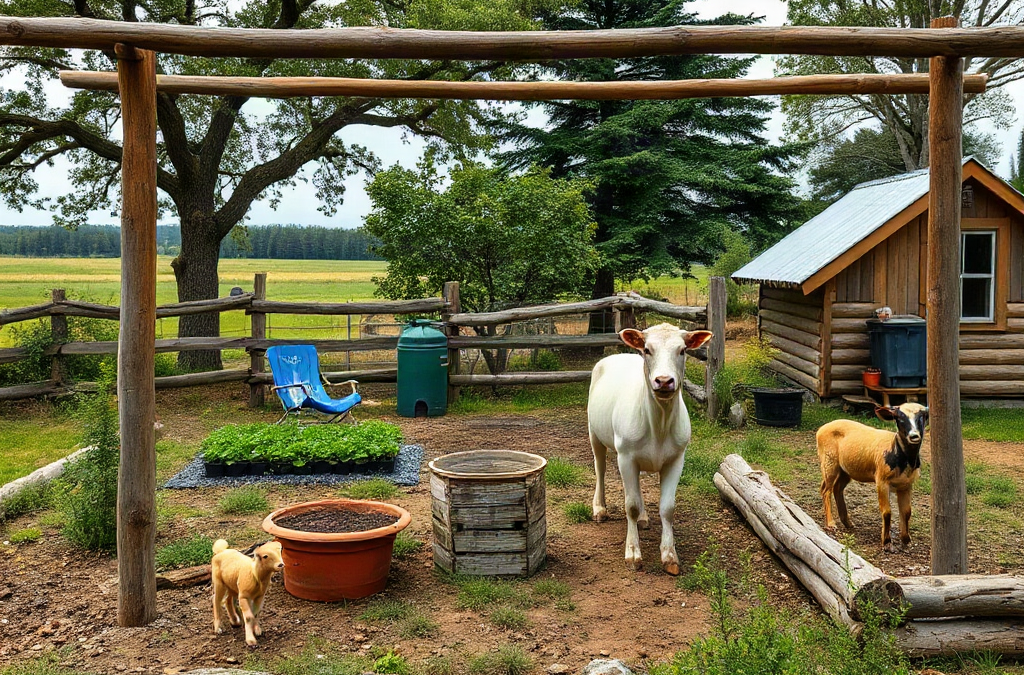
Amish lifestyle practices relevant to homesteaders include seasonal food preservation, durable hand-tool use, disciplined household routines, and cooperative labor, but they work best as adaptable principles rather than a complete lifestyle template. Canning, fermentation, root-cellar storage, and bulk cooking can reduce waste when matched to local harvests and safe food-handling guidance. Hand tools may lower fuel dependence, yet they demand maintenance, physical effort, and realistic time planning. Shared work arrangements can make large tasks manageable, although privacy, geography, and community relationships differ from one homestead to another. Homesteaders should adopt one practice at a time, measure its labor and cost, and retain modern equipment where it improves safety or reliability.
Adaptable Principles Behind Amish-Inspired Homesteading
Amish communities are diverse, and practices vary by district, household, church affiliation, location, and relationship with technology. A homesteader can still learn from recurring themes such as resourcefulness, seasonal planning, repair, modest consumption, and cooperation without treating Amish life as a single universal blueprint. The useful question is not whether a household can copy every custom, but which principle solves a genuine problem on its land.
For example, a family with a large garden may gain more from planning preservation capacity before planting than from purchasing additional acreage. A household with limited storage may find that drying herbs and storing squash suits its conditions better than building a full root cellar. The mechanism is straightforward: decisions made before a busy season reduce rushed purchases, spoiled produce, and preventable labor bottlenecks.
Romantic assumptions can create poor results. Reduced electricity does not automatically mean lower costs, and hand labor is not automatically healthier or more efficient. A gas-powered tool may be the sensible choice for an older homesteader, a steep property, or a short weather window. Likewise, a modern freezer can protect food quality and reduce pressure on a family that lacks reliable canning time.
Use Amish lifestyle practices relevant to homesteaders as a source of design ideas, not as a standard for judging your household. Begin with one measurable aim: lower food waste, reduce repair costs, improve emergency readiness, or create more dependable routines. That keeps the experiment practical and respectful.
Food Preservation and Seasonal Household Planning
Seasonal food preservation works because it turns a short harvest into a planned supply of meals, ingredients, and animal feed. Amish households are often associated with canning, pickling, drying, freezing, baking, and cellar storage, but the underlying practice is broader: use abundance when it arrives and organize it before the next workload begins. Homesteaders can apply that logic with the preservation methods their space, equipment, and skills support.
Match the method to the food rather than choosing a technique for tradition alone. Tomatoes may be canned using tested instructions, while herbs can be air-dried or frozen, apples can become sauce or dried slices, and firm root crops may store well under suitable cool, dark conditions. Fermented vegetables require appropriate salt ratios, clean equipment, and attention to temperature. Low-acid foods require pressure-canning methods designed for that category; improvised processing is not a reasonable shortcut.
A practical example is a household that plants more green beans than it can eat fresh. Instead of waiting until the harvest overwhelms the kitchen, it can decide in advance how many meals will be frozen, how much will be preserved using a tested method, and what portion will be shared or sold where permitted. That plan protects time and reduces the common failure of producing crops without having a preservation system ready.
Bulk cooking also fits this approach. A large pot of beans, soup, or grain-based meals can supply several dinners, but storage capacity and reheating safety still matter. Freezing may be more suitable than canning for some prepared foods. Keep an inventory with dates, quantities, and intended uses; otherwise preserved food can become hidden waste. The goal is not a full pantry at any cost, but a rotation system that reflects what the household actually eats.
Readers comparing approaches can find related planning ideas through Amish lifestyle practices relevant to homesteaders. Prioritize safe, repeatable methods over impressive volume, and consult university extension or government food-preservation guidance when processing decisions carry a food-safety risk.
Hand Tools, Repair, and Appropriate Technology
Hand tools have a place in homesteading because they are quiet, repairable, and usable during fuel shortages or power interruptions. Hoes, broadforks, scythes, pruning saws, hand planes, and well-maintained axes can handle specific jobs effectively. Their value comes from fitting the task, not from eliminating every powered tool.
Tool choice changes the work mechanism. A sharp hoe can disturb young weeds quickly in loose soil, while a broadfork may loosen a compacted bed without turning the entire soil profile. A scythe can cut grass under conditions where a mower is inconvenient, but it requires sharpening, correct body mechanics, and practice. Poor technique turns a supposedly simple tool into a source of fatigue, slow output, or injury.
Maintenance is often more important than ownership. Store metal tools dry, remove soil after use, oil suitable surfaces, replace damaged handles, and sharpen cutting edges before they become difficult to control. A homesteader who spends a few minutes maintaining a pruning saw may avoid tearing branches and creating larger plant wounds. Repair also extends useful life, but replacement is sometimes safer when a handle, blade, or fastener has become structurally unreliable.
Consider a two-tier system rather than a purity test. Use hand tools for daily garden work and small repairs, while reserving a tractor, electric saw, or powered splitter for heavy material, time-sensitive weather, or tasks that exceed safe human capacity. The comparison should include purchase price, fuel, storage, maintenance, labor hours, and physical strain. A low-energy method that consumes an entire planting window may undermine the harvest it was meant to support.
One common mistake is buying traditional-looking equipment before testing the job. Borrow or rent a tool when possible, complete a small section, and record time, comfort, and result. That trial reveals whether the tool suits your soil, body, terrain, and schedule better than a modern alternative.
Shared Labor, Buying Habits, and Community Boundaries
Cooperative labor can make homesteading more resilient because some jobs are too large, infrequent, or specialized for one household. Harvest days, barn repairs, fencing, firewood processing, and large preservation sessions become more manageable when people contribute labor, equipment, skills, or food. The benefit comes from coordination and reciprocity, not from assuming that every rural community operates like an Amish settlement.

A useful arrangement is specific and limited. Several households might schedule one cider-pressing day, share a bulk order of jars, or exchange labor during a harvest window. Agree beforehand on timing, responsibilities, equipment care, transport, and what happens if weather changes. Clear expectations prevent the resentment that can follow vague promises such as “we will help sometime.”
Buying less and buying for durability is another recurring lesson. A homesteader might compare a disposable livestock feeder with a repairable one, or choose a standard fastener available at local hardware stores rather than a proprietary part. Durable goods still have a cost, and paying more upfront is not automatically wise if the item is poorly matched to the workload or difficult to maintain.
Community dependence also has limits. Neighbors may live far away, have different schedules, or prefer different levels of involvement. Privacy, liability, transportation, and food-allergy concerns can affect shared activities. Keep enough capacity to handle essential tasks alone, especially animal care, water access, and basic food storage. Cooperation should add resilience rather than become a single point of failure.
Start with a small exchange that has a clear finish line. A shared tool library may work for people who can track checkouts and maintenance; it may fail when tools disappear or no one accepts repair responsibility. Written notes, honest accounting, and respectful boundaries are more useful than copying an idealized image of community life.
A Realistic Adoption Plan for Modern Homesteads
The safest way to borrow Amish-inspired practices is to test them against the homestead’s actual constraints. Begin with a baseline: weekly food waste, fuel use for a selected task, hours spent on repairs, or the number of preserved meals consumed each month. Without a baseline, a change may feel virtuous while adding cost and workload.
Use a short trial for one practice. A household might preserve one crop using a tested method, use hand tools for a defined garden bed, or organize one cooperative workday. Track labor, failures, maintenance, storage, and the result that matters. If the preserved food is not eaten, the tool causes recurring strain, or the work exchange is one-sided, revise the plan rather than defending it.
- Choose a real problem: target waste, fuel dependence, equipment cost, or seasonal overload.
- Set a capacity limit: account for available time, storage, strength, weather, and household skill.
- Keep a modern backup: retain safer or faster equipment for urgent and heavy work.
- Review the outcome: compare cost, labor, reliability, and satisfaction after the trial.
A beginner may gain more from a written harvest calendar and a few reliable tools than from attempting an extensive low-technology system. An experienced homesteader may be ready to coordinate shared equipment or expand preservation, but greater scale increases sanitation, scheduling, and storage demands. The approach that works for a multi-generational farm may not suit a small rental property or a single-person household.
Look for signs of success that are concrete: fewer spoiled vegetables, easier repairs, a manageable workload during peak season, and supplies that are used before they deteriorate. Warning signs include chronic fatigue, unsafe shortcuts, unpaid labor expectations, neglected animal care, or equipment that sits unused. For additional topic-specific context, consult Amish lifestyle practices relevant to homesteaders, then adapt the idea to your own legal, physical, financial, and social circumstances.
For preservation safety and agricultural decision-making, use current publications from university extension programs, the USDA, and state food-safety authorities. These sources provide tested processing procedures and region-specific guidance that should take priority over informal recipes or generalized accounts of traditional practice.
Frequently Asked Questions
Which Amish practice is easiest for a new homesteader to try?
Seasonal planning is a low-cost starting point. Create a harvest calendar, decide how each crop will be eaten or stored, and test one preservation method before expanding production.
Do homesteaders need to stop using electricity to follow these ideas?
No. The transferable principles are restraint, repair, planning, and appropriate technology. Electricity may improve food safety, accessibility, and reliability for many households.
Are Amish food-preservation methods automatically safe?
No. Safety depends on the food, acidity, equipment, processing method, cleanliness, and storage conditions. Use current tested instructions, especially for low-acid foods.
How can a homesteader use shared labor without creating conflict?
Define the task, schedule, contribution, equipment responsibility, and backup plan before work begins. Start with a small exchange and keep records when tools or money are shared.
When are hand tools a poor choice?
They may be unsuitable for heavy materials, steep terrain, urgent weather windows, or users facing physical limitations. Compare total labor and safety rather than choosing equipment for its appearance.
Conclusion
Amish-inspired homesteading is most useful when treated as a set of adaptable decisions: preserve food according to what the household eats, maintain tools before they fail, buy for repairability, and use cooperation with clear boundaries. These practices can reduce waste and strengthen routines, but they also demand time, physical effort, storage, and honest evaluation. Choose one problem to solve, establish a simple baseline, and run a limited trial with modern safety measures intact. Keep the parts that produce a measurable improvement and discard those that create strain without a meaningful return. Respect for Amish diversity matters as much as practical judgment; imitation should never replace local conditions, household needs, or responsible food and equipment practices.


