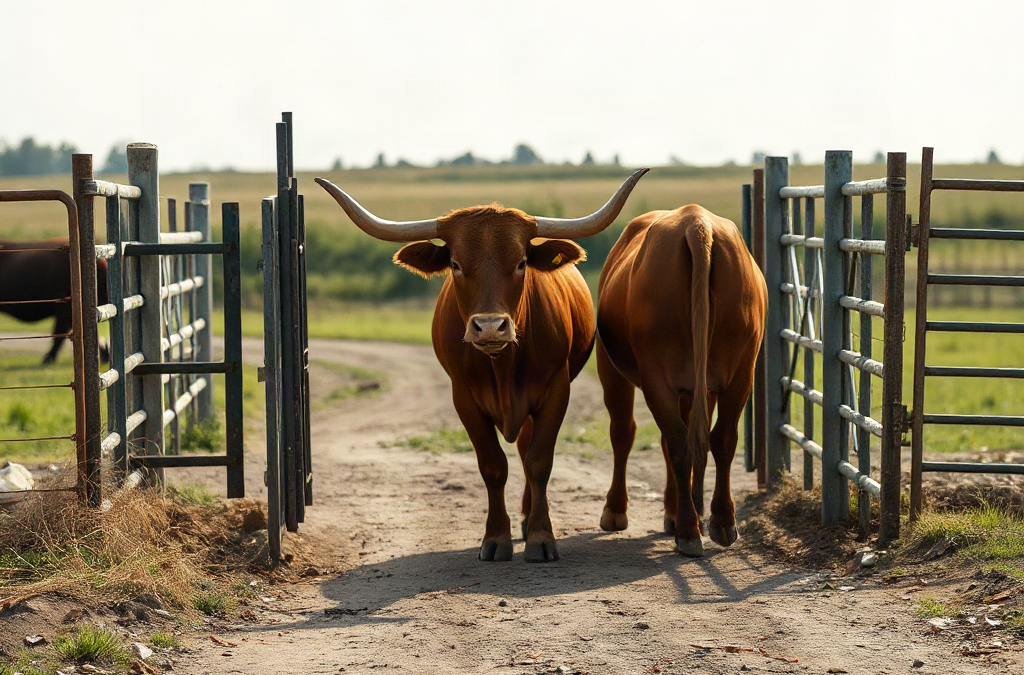
Longhorn cattle for beginners need usable forage acreage, secure fencing, and handling facilities designed around wide horn spans rather than cattle numbers alone. Stocking capacity should be based on local forage production, seasonal recovery, water access, and a drought reserve because a fixed acres-per-animal rule can quickly overstock poor ground. Wide alleys, open-sided gates, non-slip footing, and calm pressure-and-release movement reduce horn collisions and handler risk. Before buying cattle, confirm pasture capacity with a local extension or grazing adviser, build a pen that permits safe sorting, and arrange veterinary support for health, transport, and emergency decisions.
What you’ll learn
This guide covers the following practical points:
- Calculate Usable Pasture Space — Pasture capacity comes from grazeable forage, not the property’s total acreage.
- Build Fences, Water, and Paddocks — Perimeter security deserves priority over elaborate rotational infrastructure.
- Design Handling Areas for Wide Horns — Handling equipment sized only for conventional hornless cattle can become a dangerous bottleneck.
- Move Longhorns Calmly and Safely — Calm movement relies on position, release of pressure, and enough time for cattle to identify the opening.
Calculate Usable Pasture Space
Pasture capacity comes from grazeable forage, not the property’s total acreage. Woods, ponds, buildings, steep banks, lanes, sacrifice areas, and inaccessible corners may contribute little or nothing to the grazing budget. Soil productivity, rainfall, plant species, animal size, and grazing season then determine how much of the remaining land can support cattle without steadily weakening the sod.
A single acres-per-head figure is therefore a weak purchasing rule. Productive improved pasture may carry more animals than dry, thin, or brush-covered ground, while the same field can support fewer cattle during drought or winter dormancy. Begin with a local estimate from an extension office, conservation specialist, or grazing adviser, then verify it by tracking forage height, ground cover, regrowth, and hay use.
Use a simple forage budget before choosing herd size. The figures below show the planning process rather than a stocking recommendation.
| Planning Input | Illustrative Amount | How to Use It |
|---|---|---|
| Total property | 20 acres | Starting boundary only |
| House, lanes, pond, and holding area | 5 acres | Subtract from grazing land |
| Usable pasture | 15 acres | Ask a local adviser how much forage it can produce |
| Contingency | One paddock or another planned reserve | Protect against slow regrowth, mud, or drought |
In this hypothetical property, the calculation is 20 total acres minus 5 non-grazing acres, leaving 15 usable acres. That result does not establish the number of longhorns the land can carry; it defines the acreage that should be evaluated. If cattle repeatedly graze plants close to the soil, trails widen, bare patches appear, or hay feeding begins earlier each season, stocking pressure is exceeding current forage supply.
Build Fences, Water, and Paddocks
Perimeter security deserves priority over elaborate rotational infrastructure. Longhorns may respect well-built fencing, but unfamiliar cattle can test boundaries after unloading, when separated from companions, or when feed is visible across the fence. Inspect wire condition, brace assemblies, gate latches, washouts, and places where cattle could reach over or push beneath the fence.
Fence design must account for horns as well as body size. Narrow gaps around gates, feeders, and water points can catch a horn or leave an animal unable to turn comfortably. Avoid loose wire, protruding hardware, and improvised openings that invite cattle to reach through. Electric offset wire may discourage fence pressure, but it does not compensate for a failing perimeter or poor grounding.
Water placement influences how evenly cattle use pasture. A reliable source should remain accessible without forcing the herd through deep mud or a narrow dead end. Check flow and storage under peak demand rather than assuming a trough that looks adequate while full will refill fast enough. A failed float valve or empty tank can become urgent, especially in hot weather.
Multiple paddocks can improve grazing control by allowing plants time to regrow, yet subdivision alone does not create forage. Move cattle according to plant recovery and soil condition, not a rigid calendar. Leaving animals too long produces repeated bites on preferred plants; moving too quickly without sufficient rest merely spreads the same grazing pressure across more fields.
Design Handling Areas for Wide Horns
Handling equipment sized only for conventional hornless cattle can become a dangerous bottleneck. Mature longhorns need enough lateral and overhead clearance to pass without striking posts, hinges, rails, or other animals. A cow that fits by body width may still be unable to enter a narrow chute comfortably because her horn span changes how she approaches and turns.
Plan a collection area, smaller sorting pen, escape route for people, and gates that can be operated without standing in the animal’s path. Solid-sided panels can reduce outside distractions, while non-slip footing helps cattle maintain balance. Gates should swing freely, latch positively, and avoid sharp corners where several animals can crowd together.
Standard squeeze chutes and head restraints vary widely, and not every model accommodates broad horns. Discuss the actual horn spans, animal sizes, and intended procedures with the equipment manufacturer and cattle veterinarian before purchase. A setup suitable for calves may not remain suitable as the herd matures. Veterinary procedures may require specialized restraint or a different facility arrangement.
A common failure is building the permanent chute first and discovering that cattle cannot enter the approach alley naturally. Mock up panel positions before setting posts. Walk the route from pasture to pen and look for abrupt turns, shadows, dangling objects, reflective surfaces, and narrowing spaces. If cattle hesitate at the same location, investigate what they see instead of applying more force.

Move Longhorns Calmly and Safely
Calm movement relies on position, release of pressure, and enough time for cattle to identify the opening. Approach the edge of the group’s flight zone at an angle, step back when animals move correctly, and avoid trapping yourself between cattle, fences, and gates. Longhorns need additional turning room because a quick head movement can sweep a much larger area than their body occupies.
Work small groups when facilities are limited. Crowding a pen may seem faster, but horns can strike rails, neighboring cattle, or a handler reaching across a gate. Keep dogs, shouting, and unnecessary spectators away from the working area unless the cattle are already accustomed to them. Never wrap a rope around a hand or body, and do not attempt close restraint without suitable equipment and experienced help.
Behavior should become more predictable after several quiet passes through the facility. Productive signs include cattle entering without prolonged stopping, maintaining space, and settling shortly after release. Repeated turning back, bunching at one point, climbing pressure, slipping, or charging gates indicates a design or handling problem. Stop and correct the cause rather than rehearsing panic.
Temperament varies among individuals and bloodlines. Horns do not automatically make an animal aggressive, but they magnify the consequence of careless proximity. Beginners should favor cattle with known handling histories and avoid keeping an animal that repeatedly threatens people. Sudden behavioral change may also warrant veterinary assessment, particularly when pain, illness, calving, or injury is possible.
Prepare Before the Cattle Arrive
Readiness means being able to contain, observe, feed, water, and separate an animal on the first day. New owners often buy cattle before testing gates or establishing a quarantine and sorting plan. That reverses the safest order: facilities should be functional before a trailer enters the property.
- Measure every narrow point. Compare gates, alleys, feeders, and restraints with the expected body size and horn span.
- Test containment. Repair weak fencing, secure latches, energize and test electric components, and close unused openings.
- Verify water delivery. Fill troughs, test refill rates, and prepare a backup for outages or frozen lines.
- Set aside a separation area. Provide a way to isolate new, injured, sick, or incompatible cattle without creating a dead-end pen.
- Plan professional support. Identify a cattle veterinarian, transport option, feed supplier, and experienced local handler before an urgent need arises.
Start with fewer animals than the estimated maximum carrying capacity. A small initial group gives the owner time to observe forage demand, manure distribution, fence behavior, water use, and winter feed needs. Avoid keeping a single bovine alone merely to simplify stocking; cattle are social animals, so herd composition and companionship need to be considered alongside acreage.
Records make expansion decisions more reliable. Note pasture entry and exit dates, rainfall, hay purchases, body condition observations, health events, and areas where ground cover declines. Add cattle only after the land and facilities have demonstrated adequate capacity through difficult periods, not simply because grass was abundant at purchase time.
Frequently Asked Questions
How many acres does one longhorn need?
No universal acreage figure is reliable. Use grazeable acres, local forage production, seasonal conditions, animal size, and a drought reserve to establish a conservative stocking rate.
Can longhorn cattle be kept on a small homestead?
They may fit a small property when forage, fencing, water, winter feed, manure management, and safe handling space are adequate. Limited acreage often requires fewer animals and more purchased feed.
Do longhorns need special fencing?
They need sound livestock fencing without loose wire, unsafe gaps, or protrusions that can catch horns. Gates and feeding areas also require enough clearance for comfortable turning.
Will a standard cattle chute work for longhorns?
Not necessarily. Confirm horn clearance, animal size, restraint method, and veterinary access with the manufacturer and veterinarian before relying on any chute or headgate.
Are longhorn cattle safe for beginners to handle?
Calm, well-socialized animals can be manageable, but wide horns increase the space and safety margin required. Beginners benefit from experienced help and should not keep cattle that repeatedly threaten handlers.
Conclusion
Successful longhorn ownership begins with a conservative forage budget and facilities that accommodate horns at every turn. Measure usable pasture, protect a feed reserve, test water and fencing, and observe how cattle move through temporary panel layouts before installing permanent equipment. Begin with a manageable group, record pasture and handling results, and involve a cattle veterinarian and local grazing adviser before problems become urgent. Expansion should follow demonstrated land capacity and safe behavior, not a rough acreage assumption.