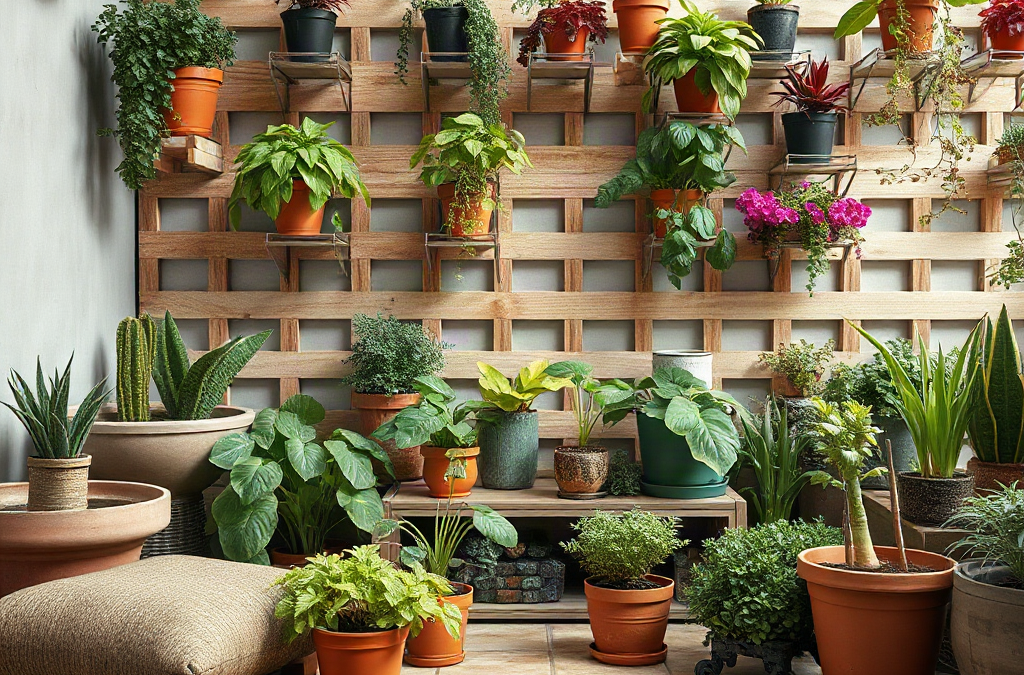
Patio gardening for beginners works best when containers are matched to mature root size and vertical space is reserved for climbing or trailing crops. Place sun-loving vegetables where they receive at least six hours of direct light, use containers with drainage holes and fresh potting mix, and check moisture frequently because pots dry faster than garden beds. Anchor trellises before vines become heavy, and keep large containers near walls or corners that can safely bear their weight. Begin with a few productive plants—such as cherry tomatoes, lettuce, herbs, and pole beans—rather than filling every available surface at once.
What you’ll learn
This guide covers the following practical points:
- How Should You Assess Patio Growing Conditions? — A patio should be evaluated as a collection of small growing zones rather than one uniform space.
- Which Containers and Potting Mix Work Best? — Container size should follow the mature plant’s root demand, not the size of the seedling at purchase.
- How Can You Use Vertical Space Safely? — Vertical growing is most effective when it moves compatible plants upward without blocking light, overloading a railing, or creating an unstable structure.
- Select Crops and Build a Workable Layout — A beginner patio garden is easier to manage when it combines a few frequently harvested crops with one or two larger plants.
How Should You Assess Patio Growing Conditions?
A patio should be evaluated as a collection of small growing zones rather than one uniform space. A wall may reflect heat onto nearby pots, a railing may cast afternoon shade, and an overhang may prevent rain from reaching containers directly beneath it. Observe the area several times during a clear day and note where direct sunlight falls in the morning, at midday, and late in the afternoon.
Most fruiting crops, including tomatoes, peppers, cucumbers, and beans, perform best in the brightest locations. Leafy vegetables and many culinary herbs tolerate less direct light, although deep shade usually produces thin growth and weak harvests. Six or more hours of direct sun is a useful target for sun-loving vegetables, but temperature also matters. A west-facing paved patio can become hot enough in summer to stress roots even when the plant above the container appears well placed.
Wind changes the layout as much as sunlight does. Upper-level balconies and exposed patios may dry pots quickly, shred broad leaves, or push unsupported containers over. Place heavier pots on the windward side only if they are stable, and move delicate greens or basil into a more sheltered position. A slatted screen can reduce wind pressure without creating the turbulent gusts associated with a completely solid barrier.
Before adding large planters, consider weight, access, and drainage. Wet potting mix is much heavier than dry mix, and a mature plant adds more load. Renters and balcony gardeners should follow property rules and seek qualified guidance if structural capacity is uncertain. Water must also have somewhere appropriate to drain; runoff should not stain a neighbor’s wall, flow across a walkway, or remain trapped against a building.
Make a simple site record before buying plants:
- Light: Record approximate hours of direct sun in each usable location.
- Exposure: Mark hot walls, strong wind corridors, and rain-sheltered areas.
- Practical access: Leave room to water, prune, harvest, and open doors.
- Restrictions: Confirm railing, hanging-basket, runoff, and weight requirements.
A common mistake is arranging pots for appearance alone. A symmetrical display can place identical plants in very different microclimates. Let growing conditions determine the first layout, then refine the visual arrangement within those limits.
Which Containers and Potting Mix Work Best?
Container size should follow the mature plant’s root demand, not the size of the seedling at purchase. Lettuce, chives, and compact herbs can grow in relatively shallow planters, while tomatoes, eggplants, cucumbers, and other large crops need substantially more root volume. Larger pots hold moisture more steadily and buffer roots from rapid temperature changes, but they cost more, weigh more, and are difficult to relocate once filled.
Every growing container needs unobstructed drainage holes. A decorative pot without an outlet may hold water around roots, reducing the air available in the root zone. If a decorative outer pot is used, place a draining nursery pot inside it and empty collected water after irrigation. Do not assume that a layer of gravel solves poor drainage; it does not replace a functional route for excess water to leave.
Use a commercial potting mix intended for containers rather than digging soil from the yard. Potting mixes are formulated to retain useful moisture while preserving air spaces. Garden soil commonly compacts in a pot, drains unpredictably, and may bring weed seeds or soilborne problems onto the patio. A fresh mix is especially valuable for seedlings and shallow-rooted greens, which respond quickly to uneven moisture.
| Container Type | Useful For | Main Tradeoff |
|---|---|---|
| Plastic or resin pot | Most herbs and vegetables | Lightweight, but may tip when supporting tall crops |
| Glazed ceramic pot | Stable displays and perennial herbs | Heavy and potentially vulnerable to freezing conditions |
| Fabric grow bag | Seasonal vegetables and flexible layouts | Can dry quickly, especially around exposed edges |
| Window or railing planter | Greens, parsley, chives, and compact flowers | Limited root volume and secure mounting required |
Match shape to use as well as root depth. A broad planter works well for cut-and-come-again lettuce because many plants can share the surface. A deep, stable pot is a better choice for a staked tomato. Mint is best kept in its own container because its spreading roots can crowd neighboring herbs. Rosemary prefers a mix and watering routine that does not leave its roots continuously wet, so pairing it with moisture-demanding basil is inconvenient.
Oversizing every pot is not automatically better. A small seedling in a very large volume of persistently wet mix may be harder to water correctly, while an undersized pot may need irrigation several times during hot weather. Beginners get more consistent results by choosing moderate-to-large containers with visible drainage, then grouping plants with similar moisture needs.
How Can You Use Vertical Space Safely?
Vertical growing is most effective when it moves compatible plants upward without blocking light, overloading a railing, or creating an unstable structure. Trellised pole beans, compact cucumbers, peas, and indeterminate tomatoes can produce from a narrow footprint, while wall-mounted shelves can hold small herb pots. Vertical space does not create more sunlight or root volume, so each plant still needs an adequately sized container and a position suited to its light requirements.
Install trellises and stakes when containers are planted. Pushing a support into a root-filled pot later can damage roots, and tying a mature vine to an improvised support often creates a top-heavy planter. A freestanding trellis should be wide enough at the base to resist tipping. Supports attached to walls must suit the wall material and expected plant load; a wet vine carrying fruit catches considerably more wind than an empty frame.
Plant orientation prevents one vertical crop from undermining the rest of the garden. Place tall supports where their shadows will not cover sun-loving plants during the brightest part of the day. On a compact patio, a trellised cucumber positioned behind heat-tolerant herbs may work well, while the same trellis placed directly in front of peppers may reduce flowering and fruit development.
Different vertical systems solve different problems. A trellis uses height for climbing crops. Tiered shelves increase display area for small pots but may shade lower levels and make watering awkward. Hanging baskets free floor space, yet they dry quickly and must be mounted securely. Pocket planters can hold shallow-rooted herbs or greens, but their small soil volume makes moisture consistency difficult in hot or windy conditions.
A practical vertical arrangement might use one large floor pot with a firmly anchored bean trellis, two medium containers of peppers in front, and a wall shelf holding thyme and chives. The beans gain height without occupying another large floor area, while the smaller plants remain reachable. By comparison, stacking many tiny pots from floor to ceiling creates frequent watering work and may leave lower plants in shade.
Inspect ties and supports weekly as vines extend. Use broad, flexible ties that hold stems without cutting into them, and leave room for growth. Leaning stakes, stretched ties, exposed roots, and a pot that rocks in the wind are early warnings that the support or container is inadequate. Correcting instability before fruit develops is safer and easier than rebuilding a loaded structure.
Select Crops and Build a Workable Layout
A beginner patio garden is easier to manage when it combines a few frequently harvested crops with one or two larger plants. Herbs, loose-leaf lettuce, radishes, and green onions give useful harvests from modest containers. A compact pepper or cherry tomato adds a longer-season crop, while pole beans or a small-fruited cucumber can use a trellis. Select varieties described as compact, patio, bush, or container-suitable when floor space and support height are limited.

Crop choice should reflect eating habits rather than maximum theoretical yield. A pot of basil used weekly may be more valuable than a large zucchini plant that consumes much of the available area. Likewise, a gardener who cooks with parsley and chives can keep those plants near the door, reserving the sunniest outer edge for fruiting vegetables. Fast crops such as lettuce can be replanted after harvest, but they may become bitter or bolt quickly during hot weather.
Use a restrained first-season layout instead of filling every gap. One workable plan for a sunny patio includes a large trellised container for a tomato, another for pole beans, a broad planter of salad greens, and separate medium pots for basil, parsley, and a pepper. This layout allows each crop to be reached and inspected. If only four hours of sun reaches the patio, replace the tomato and pepper with additional leafy greens, parsley, chives, or other crops that tolerate partial sun more readily.
Keep these priorities in order:
- Reserve the brightest stable positions for fruiting and climbing crops.
- Give large plants enough root volume before adding more varieties.
- Group containers with similar watering needs.
- Maintain a clear route for watering, pruning, and harvesting.
- Add another pot only after the existing group is manageable.
Companion planting claims should not override physical requirements. Two plants may be described as good companions but still perform poorly together if one shades the other or if their roots compete in a cramped pot. Combining plants is most practical when they have compatible light, moisture, and root needs. A tall tomato with shallow lettuce around the edge may work briefly in mild weather, but the lettuce can struggle as the tomato canopy expands and temperatures rise.
Success is visible in compact new growth, normal leaf color, stable moisture, and harvests appropriate to the crop. Long pale stems indicate insufficient light; repeated wilting may point to an undersized pot, root congestion, wind exposure, or inadequate watering. Use those signals to adjust the layout rather than automatically adding fertilizer.
Water, Feed, and Monitor Container Plants
Container plants should be watered according to the moisture in the pot, not a fixed calendar alone. Push a finger into the upper layer of potting mix and lift smaller pots to judge their weight. Water thoroughly when the root zone is beginning to dry, continuing until excess moisture drains from the bottom. A small daily splash can wet only the surface while leaving deeper roots dry.
Weather, crop size, and container material alter watering frequency. A mature tomato in a fabric bag on a windy patio may need attention much sooner than rosemary in a glazed pot in morning sun. Hot spells can require daily checks, while cool, cloudy conditions slow water use. Saucers protect surfaces but should not leave most vegetable containers standing in water for extended periods.
Nutrients also leave containers through drainage and plant uptake. Many commercial potting mixes contain a starter fertilizer, so read the package before adding more. Once that supply is depleted, use a fertilizer labeled for edible container plants and follow its directions. More fertilizer does not compensate for poor light or restricted roots; excessive feeding can produce weak growth, damage roots, or reduce flowering in some crops.
Inspect leaves, stems, and the undersides of foliage while watering. Small pest populations are easier to address than a widespread infestation. Remove badly damaged leaves when appropriate, wash off light populations of soft-bodied pests with water, and identify the problem before applying any product. If a pesticide is considered, confirm that its label permits use on the specific edible crop and follow all directions.
Keep the patio clean by collecting fallen leaves, removing failed plants, and washing reusable containers before the next planting. Do not reuse potting mix automatically when a crop suffered from an unidentified root or disease problem. Mix that remains structurally sound after a healthy crop may be refreshed for some uses, but compacted or poorly draining material is better replaced.
Track recurring problems rather than treating every symptom separately. If a pot wilts each afternoon and recovers after watering, it may need more soil volume or afternoon protection. If the mix remains wet for days while leaves yellow, inspect drainage and reduce watering. These observations reveal whether the limiting factor is water, light, roots, temperature, or nutrition.
Frequently Asked Questions
What vegetables are easiest to grow on a patio?
Loose-leaf lettuce, radishes, green onions, compact peppers, cherry tomatoes, and pole beans are practical choices. Match each crop to available sunlight and use larger containers for tomatoes, peppers, and climbing plants.
Can vegetables grow on a patio with only four hours of sun?
Yes, but crop selection becomes narrower. Lettuce, parsley, chives, and some leafy greens generally tolerate partial sun better than tomatoes, peppers, cucumbers, or beans, which usually need brighter conditions for productive flowering and fruiting.
How often should patio containers be watered?
Check them daily during warm or windy weather, but water only when the root zone is beginning to dry. Pot size, plant maturity, exposure, and container material make a fixed watering schedule unreliable.
Can garden soil be used in patio pots?
Potting mix is the better choice because it maintains drainage and air space in a confined container. Garden soil may compact, drain poorly, and introduce weeds or soilborne problems.
Which plants work well in a vertical patio garden?
Pole beans, peas, small-fruited cucumbers, and indeterminate tomatoes can be trained upward on strong supports. Herbs and greens also fit shelves or wall planters, provided their containers remain accessible for watering.
Conclusion
A productive patio depends more on sound limits than on the number of pots it can hold. Map sunlight, wind, drainage, access, and safe weight before purchasing containers. Give large crops adequate root volume, use fresh potting mix with open drainage holes, and install stable supports before climbing plants need them.
Begin with several crops that fit both the site and the kitchen: perhaps herbs and greens for frequent harvests, plus one tomato, pepper, bean, or cucumber suited to the available sun. Check moisture instead of watering by habit, inspect supports as plants gain weight, and treat weak growth as a signal to reassess light, roots, or drainage before adding fertilizer. Expand only after the first arrangement remains easy to water, reach, and maintain.
Additional Resources
Authoritative Sources
- Vertical Gardening
agnr.usu.eduBy T Haines — Vertical gardening is a measure to use space efficiently. Why grow a vertical garden? • Maximizes space and food production. • Raises plants off the ground ... Read more