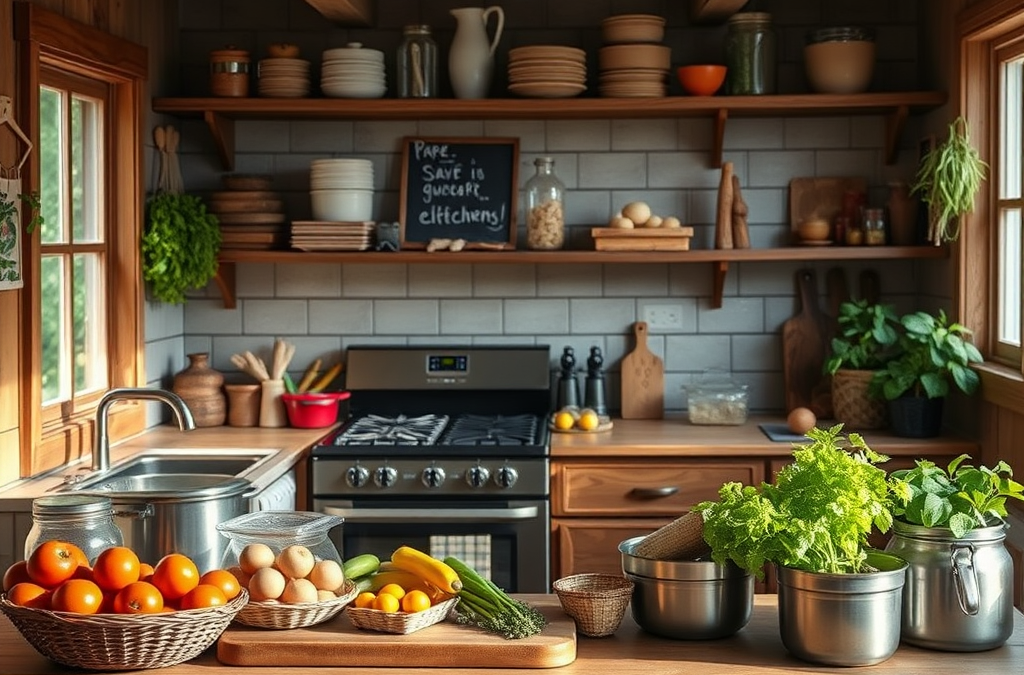
To create a self-sufficient kitchen, begin by growing your own herbs and vegetables that align with your family’s dietary preferences. Focus on easy-to-grow crops like tomatoes and leafy greens, which can significantly reduce your dependence on store-bought produce. Implement food preservation methods such as canning and fermenting to extend the shelf life of seasonal harvests. Additionally, invest in energy-efficient appliances to minimize your kitchen’s environmental impact while maximizing food preparation efficiency. By establishing a diverse garden and utilizing preservation techniques, you can enjoy fresh ingredients year-round and enhance your kitchen’s sustainability.
Planning Your Self-Sufficient Kitchen
Establishing a self-sufficient kitchen begins with careful planning. Assess your cooking habits and dietary preferences to determine what foods you will need to grow and preserve. Consider factors such as available space, climate, and the seasonal availability of produce. A well-thought-out plan helps optimize your efforts and resources.
Identify the types of vegetables, fruits, and herbs that you and your family consume regularly. This will help you prioritize what to grow in your garden. Additionally, consider how much space you have available for gardening, whether it’s a backyard, balcony, or even indoor containers. Understanding your space constraints will guide you in selecting the right plants that can thrive in your environment.
Another key aspect of planning is creating a timeline for planting and harvesting. Research the best planting times for your region to ensure optimal growth. This will help you maximize your yield and ensure that you have a steady supply of fresh ingredients throughout the year.
Growing Your Own Food
Growing your own food is a cornerstone of a self-sufficient kitchen. Start with easy-to-grow crops such as herbs, tomatoes, and leafy greens. These plants not only provide fresh ingredients but also contribute to your kitchen’s sustainability by reducing reliance on store-bought produce.
Consider using companion planting techniques to enhance growth and deter pests. For example, planting basil alongside tomatoes can improve tomato flavor and repel harmful insects. Furthermore, creating a diverse garden can boost biodiversity and improve soil health.
As your gardening skills develop, you can expand to more challenging crops like root vegetables or fruit-bearing plants. Always monitor your garden for pests and diseases, and employ organic solutions when possible to maintain a healthy environment.
Food Preservation Techniques
Effective food preservation is essential for maintaining a self-sufficient kitchen. Techniques such as canning, freezing, and fermenting allow you to extend the shelf life of seasonal produce and reduce waste.
Canning is a popular method for preserving fruits and vegetables, allowing you to enjoy summer harvests throughout the winter. Learn the basics of water bath canning and pressure canning to safely store your homegrown foods. Make sure to follow proper guidelines to ensure food safety and quality.
Freezing is another effective preservation method. Blanch vegetables before freezing to retain their color, texture, and nutrients. Label and date your frozen produce to keep track of freshness. Fermentation can also be an exciting way to preserve food while enhancing its nutritional value; consider making sauerkraut, pickles, or yogurt.
Energy Efficiency in the Kitchen
To truly achieve a self-sufficient kitchen, energy efficiency is crucial. Invest in energy-efficient appliances that consume less electricity while performing essential functions. Look for Energy Star-rated products that meet energy efficiency standards.
Consider using alternative cooking methods such as solar ovens or slow cookers that consume less energy. Additionally, practice batch cooking to minimize energy use by preparing multiple meals at once, allowing you to save time and resources.

Lastly, incorporate sustainable practices such as composting kitchen scraps to enrich your garden soil. This not only reduces waste but also creates a closed-loop system where your kitchen waste contributes to your food production.
Frequently Asked Questions
What are the first steps to creating a self-sufficient kitchen?
Start by planning your kitchen layout, assessing your cooking habits, and identifying the types of food you want to grow and preserve.
How can I grow food in a small space?
Utilize container gardening, vertical gardening, and choose high-yield crops that thrive in small spaces, such as herbs and salad greens.
What are some effective food preservation methods?
Common methods include canning, freezing, fermenting, and dehydrating, each with unique processes to extend the shelf life of food.
How can I make my kitchen more energy-efficient?
Invest in energy-efficient appliances, utilize alternative cooking methods, and batch cook to reduce energy consumption.
What common mistakes should I avoid when starting a self-sufficient kitchen?
Avoid overplanting and underestimating space; focus on a manageable variety of crops and learn proper preservation techniques to minimize waste.
Conclusion
Creating a self-sufficient kitchen is a rewarding journey that enhances your culinary experience and promotes sustainability. By planning effectively, growing your own food, mastering preservation techniques, and optimizing energy use, you can build a kitchen that supports your needs while minimizing your environmental impact. Start small and gradually expand your efforts, focusing on what works best for your lifestyle. With dedication and creativity, you can enjoy the benefits of a self-sufficient kitchen for years to come.