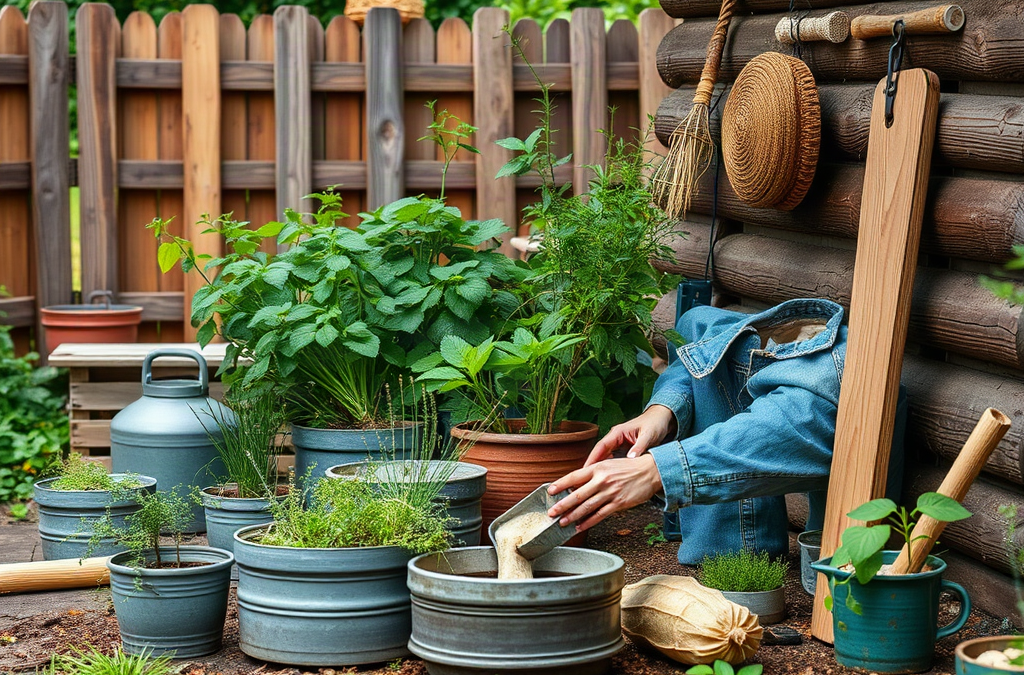
Homesteading your home through everyday production means converting routine household work into useful outputs such as preserved meals, herbs, seedlings, cleaning supplies, repairs, and reusable materials. The most effective method is to match production to your household’s actual consumption, available space, time, storage, and seasonal conditions. A small kitchen system for broth, fermented vegetables, dried herbs, or bread may deliver more dependable value than an ambitious garden that exceeds available labor. Track what the household buys repeatedly, choose one manageable production cycle, and build safe storage and sanitation into the process. The common mistake is producing impressive quantities without a clear use, which creates waste, clutter, and avoidable costs.
What you’ll learn
This guide covers the following practical points:
- What Everyday Household Production Actually Includes — Everyday production turns ordinary domestic tasks into deliberate systems that supply part of a household’s recurring needs.
- Choosing Outputs That Earn Their Space and Time — The strongest projects address frequent, expensive, perishable, or inconvenient purchases.
- Building Reliable Kitchen and Garden Cycles — Reliable production depends on cycles that connect preparation, use, replenishment, and cleanup.
- Managing Storage, Safety, and Seasonal Constraints — Storage determines whether household production becomes a resource or a liability.
What Everyday Household Production Actually Includes
Everyday production turns ordinary domestic tasks into deliberate systems that supply part of a household’s recurring needs. It may include growing salad greens, baking bread, saving viable seed, making stock from kitchen scraps, repairing clothing, mixing a simple household cleaner, or preserving surplus produce. The defining feature is not rural location or total independence; it is repeated output that replaces a purchase, reduces waste, or improves resilience.
A useful starting point is to examine the home as a set of consumption patterns. A family that buys yogurt every week may benefit from learning cultured dairy preparation, while a household that rarely cooks from scratch may gain more from freezer meals and dried seasoning blends than from a large vegetable plot. Production works when it follows demand. Growing unfamiliar crops simply because they appear traditional can leave a gardener with abundant food nobody wants to eat.
Home production also has hidden inputs. Seeds, fuel, jars, replacement parts, cleaning time, water, refrigeration, and failure rates all affect the result. A loaf of bread is not automatically cheaper than a purchased loaf if ingredients spoil or repeated failures consume hours. Conversely, a batch of tomato sauce may be worthwhile because it uses peak-season produce, fits existing meals, and can be portioned efficiently.
Think of the household as a small workshop rather than a collection of isolated hobbies. Compost can support garden fertility; garden herbs can supply cooking and drying projects; vegetable trimmings can become stock; repaired containers can support storage. Homesteading your home through everyday production becomes more manageable when each activity has a clear connection to another need.
Choosing Outputs That Earn Their Space and Time
The strongest projects address frequent, expensive, perishable, or inconvenient purchases. Start with a short household inventory: foods bought at least twice a month, disposable items used repeatedly, ingredients often wasted, and small repairs postponed because replacement seems easier. These observations reveal better opportunities than a generic homesteading checklist.
Compare projects by usable output rather than production volume. A window ledge that yields fresh chives for most of the year may provide more practical value than a crowded container garden requiring daily watering. A freezer stocked with labeled soup portions may be more useful to a working household than a complicated canning schedule. The best first project is usually boring, repeatable, and connected to an existing routine.
Space changes the decision. Renters may favor sprouts, herbs, fermentation, mending, cooking, and balcony containers. Homeowners with a yard can add perennial herbs, fruit bushes, composting, and protected growing areas. A larger property does not automatically improve results; it can increase mowing, irrigation, fencing, and maintenance before producing anything edible.
Use a simple priority test before committing:
- Demand: Will the household use the output regularly?
- Fit: Does the project suit available light, tools, storage, and labor?
- Repeatability: Can it be maintained during busy weeks?
- Risk: What happens if a batch fails, freezes, molds, or attracts pests?
For example, a household with limited freezer space may choose dehydrated herbs and shelf-stable dry goods rather than bulk frozen vegetables. Someone with abundant fruit but little time may arrange a single harvest-day processing session instead of attempting several small batches. Homesteading your home through everyday production should reduce pressure on the household, not turn every evening into a second shift.
Building Reliable Kitchen and Garden Cycles
Reliable production depends on cycles that connect preparation, use, replenishment, and cleanup. In the kitchen, a practical cycle might begin with a weekly meal plan, continue with one stockpot or baking session, and end with labeled portions placed where they will actually be used. In the garden, the cycle includes sowing, thinning, harvesting, preserving, seed handling, and preparing the bed for the next crop.
Batching reduces setup costs, but only when the batch size matches household demand. Making twelve jars of one condiment may seem efficient, yet it creates poor value if the family uses only one jar a year. Smaller batches are often sensible during the testing stage. Record the recipe, yield, preparation time, storage method, and whether the household finished the product. That record turns preference into evidence.
Garden production benefits from staggered timing rather than one dramatic planting day. Leafy greens can be sown in intervals so that harvests arrive gradually. Herbs can be harvested before flowering when that suits their intended use, then dried in small quantities. A garden that produces moderate amounts across several weeks is usually easier to eat and preserve than one that delivers everything at once.
Kitchen and garden systems should have fallback options. If seedlings fail, a household can buy transplants or shift to herbs. If bread baking becomes impractical, purchased bread can remain part of the plan while the household produces spreads, soup, or preserved vegetables. Independence is not measured by refusing outside supplies; it is measured by knowing which supplies matter most and having workable alternatives.
A common mistake is adding projects faster than routines can absorb them. Choose one production cycle, run it through a full season or several weeks, then review the results. Signs of a sound system include predictable use, manageable cleanup, accurate labeling, and enough time left for ordinary household responsibilities. Persistent clutter, abandoned batches, and emergency purchases signal that the process needs reduction rather than expansion.
Managing Storage, Safety, and Seasonal Constraints
Storage determines whether household production becomes a resource or a liability. Food needs appropriate temperature, moisture control, packaging, dates, and rotation. Dried goods may absorb humidity, frozen foods can suffer quality loss from poor packaging, and fresh produce may deteriorate because it was harvested before the household had a use for it. A production plan is incomplete until it explains where the output will go.
Use storage methods suited to the product and your ability to monitor it. A refrigerator is useful for short-term leftovers and some prepared foods, but it is not a substitute for tested preservation procedures. Freezing is often accessible, although it depends on reliable power and limited capacity. Dehydration saves space but requires thorough drying and moisture-resistant storage. For shelf-stable canning, follow current tested instructions from university extension services or other recognized food-safety authorities rather than improvising processing times.

Sanitation and labeling deserve ordinary, repeatable procedures. Clean work surfaces before processing, keep raw and ready-to-eat foods separate, label contents and dates, and inspect stored products before use. Do not taste food that shows suspicious mold, fermentation outside the intended process, damaged seals, or an unusual odor. Saving money or avoiding waste never justifies taking an uncertain food-safety risk.
Seasonality affects both supply and workload. Summer may bring more garden output than the kitchen can handle, while winter shifts attention toward indoor cooking, repairs, seed planning, and inventory rotation. A household with limited preservation experience should select crops that mature at different times or buy modest quantities from local growers for processing practice. This can be more realistic than planting a large area and discovering that harvest coincides with travel or work demands.
Storage failure often begins before harvest. Overwatering, bruising, unsuitable containers, and poor airflow shorten the useful life of produce. Check these causes before blaming the preservation method. Homesteading your home through everyday production works best when production volume, processing capacity, and storage capacity remain balanced.
Measuring Progress Without Creating More Work
Measure household production by dependable usefulness, not by how many activities appear on a property. Track finished products used, purchases avoided, food discarded, hours spent, and supplies consumed. A simple monthly note may show that a small herb planter supplies enough seasoning for regular meals, while an elaborate crop takes more water and attention than its harvest justifies.
Review both financial and nonfinancial results. Producing something may be worthwhile because it improves meal convenience, uses food that would otherwise be discarded, teaches a child a practical process, or provides a backup during a supply interruption. It may be poor value when it requires specialized equipment, creates excess inventory, or replaces a cheap item with a time-intensive substitute.
Use a staged approach. First, identify one repeated need. Next, test a small quantity with tools already available. Then record the outcome and adjust the method before buying equipment or increasing scale. Only expand after the task fits normal life. A household that successfully dries herbs for two seasons has stronger evidence for buying a larger dehydrator than a household that has merely imagined future harvests.
Failure is useful when it reveals a specific constraint. Bolting greens may indicate unsuitable timing or heat exposure. Spoiled leftovers may indicate oversized batches. A neglected repair project may show that the required tools or skill level are mismatched to the home. Replace the failed assumption, not just the failed item: grow less, preserve sooner, choose a simpler recipe, or outsource a technical repair.
The next sensible step is a seven-day observation period. Record what the household buys, throws away, runs out of, or repeatedly postpones. Select one response that can be completed with existing space and equipment. That narrow experiment provides a sounder foundation for a broader home production system than purchasing supplies for several untested projects.
For food preservation, gardening, composting, and household production decisions, consult publications from land-grant university extension programs, the USDA, and local public agencies. These sources commonly provide tested preservation methods, crop timing information, sanitation guidance, and region-specific growing advice. Use current instructions for any process where temperature, acidity, moisture, or storage conditions affect safety.
Frequently Asked Questions
Does homesteading require owning rural land?
No. Apartment kitchens, balconies, patios, and shared garden spaces can support cooking, seed starting, herb growing, repairs, preservation, and waste reduction. The useful scale is the one the household can maintain.
What should a beginner produce first?
Choose a frequently used item that needs little space and has a forgiving process, such as dried herbs, freezer meals, bread, sprouts, or simple mending. Start small and record actual use.
Is home production always cheaper?
No. Equipment, ingredients, utilities, labor, spoilage, and failed batches affect cost. Home production often makes more sense when it uses surplus, replaces frequent purchases, or provides convenience and resilience.
How can a household avoid producing too much?
Estimate consumption before planting or processing, use smaller test batches, label inventory, and schedule production around available storage. Expand only after the household consistently uses the output.
What is the most common mistake?
Starting several ambitious projects at once. A narrow, repeatable system with clear storage and cleanup requirements usually produces more lasting value than a broad collection of neglected activities.
Conclusion
Homesteading at home becomes practical when production follows real household demand. Begin with repeated purchases, wasted ingredients, postponed repairs, or seasonal needs, then choose one small output that fits your time, space, tools, and storage. Test the process before investing in equipment or increasing volume. Keep records of labor, yield, use, waste, and failures so decisions reflect household experience rather than idealized self-sufficiency. Give particular attention to sanitation, labeling, moisture, temperature, and safe preservation methods. A compact system that reliably supplies herbs, meals, repairs, or preserved ingredients can be more valuable than a larger operation that creates clutter and unfinished work. Let actual use determine what you add next.