Finding Land and Securing Practical Access
Usable access matters more than the headline acreage. Rural property may be offered as a house with adjoining ground, a bare field, a smallholding assembled from separate parcels, or land occupied under a lease or informal arrangement. Each form creates different limits. A house and garden may provide services but little agricultural space, while an inexpensive field may lack legal access, potable water, electricity, storage, or permission for the structures needed to use it.
Ownership is not the only route. A multi-year lease can let a new grower test soil, markets, workload, and local conditions without tying up capital in a purchase. The weakness is that orchards, drainage works, fencing, polytunnels, and soil improvement require time to repay their cost. Short or insecure occupation discourages those investments. Written terms should establish the exact boundaries, vehicle access, water use, responsibility for fencing and drains, permitted activities, and what happens to tenant-funded improvements when the agreement ends.
For a purchase, inspect the folio and map through the appropriate legal process rather than assuming that visible hedges match the registered boundary. Confirm whether the entrance belongs to the parcel, whether another party holds a right of way, and whether narrow lanes can accommodate deliveries, livestock trailers, emergency vehicles, or construction traffic. A gate that admits a car may still be unsuitable for hay, compost, aggregate, or a septic-service vehicle. Solicitors, engineers, planners, and other qualified professionals may be needed for transaction-specific advice.
Planning status also deserves early attention. Agricultural use does not automatically mean that a dwelling, cabin, shed, access entrance, wastewater system, or polytunnel may be installed without review. Requirements vary with the development, location, scale, and local authority. Ask the planning authority about the proposed use before treating bare land as a future homesite. Existing buildings should also be checked for authorised use and structural condition rather than valued solely because they appear convertible.
A practical first inspection should establish:
- Tenure and boundaries: what is included, who controls it, and how long access is secured.
- Physical entry: lane width, gate width, turning room, gradients, and year-round surface condition.
- Services: drinking water, electricity, communications, wastewater options, and firefighting access.
- Restrictions: rights of way, easements, protected features, planning history, and neighbouring uses.
The common mistake is pricing land by area while treating access and services as details to solve later. Retrofitting a road, borehole, wastewater arrangement, or electrical connection can change the economics of a seemingly cheap parcel. Readers comparing routes into Homesteading in Ireland: land access and growing conditions should compare total setup obligations, not purchase price alone.
Reading Soil, Drainage, and Exposure Before Committing
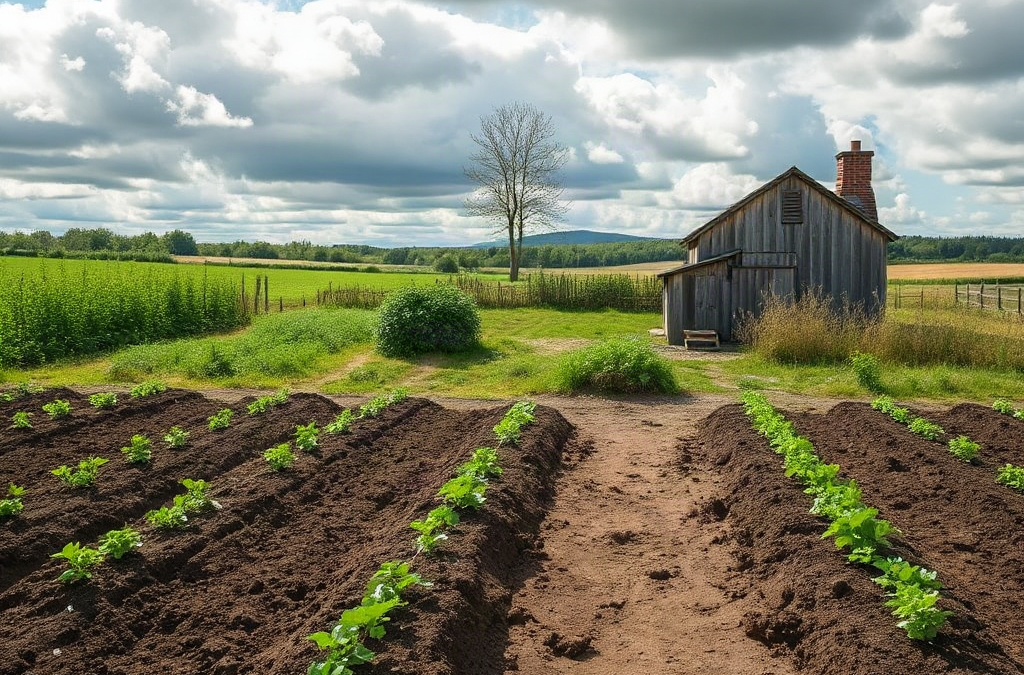
Irish growing ground can vary sharply within one field. A slope may drain readily while a hollow remains saturated; deep mineral soil may sit beside shallow ground over rock; and a sheltered corner may warm earlier than an exposed ridge. A single soil label or summertime viewing cannot reveal these differences. Walk the entire parcel after sustained rain and again during a drier period if the decision timetable allows.
Surface clues provide a useful first screen. Standing water, soft gateways, rushes, grey or mottled subsoil, open drains running at capacity, and machinery ruts can indicate prolonged wetness. Wet soil contains less air around roots, slows spring warming, limits grazing, and compacts easily under hooves or tyres. Drainage may improve some sites, but an outlet is essential: water cannot be removed effectively if there is nowhere lawful and practical for it to go. Peaty or very poorly drained ground may require a different enterprise rather than an expensive attempt to make it behave like dry horticultural soil.
Dig inspection pits in several representative places, subject to permission and underground-service safety. Observe topsoil depth, texture, stones, rooting, smell, moisture, and the depth at which water or dense subsoil appears. Laboratory soil testing can then assess characteristics such as pH and plant nutrient status. Results should be interpreted for the proposed crop; pasture, brassicas, potatoes, fruit bushes, and woodland do not have identical requirements. Adding fertiliser without a test may waste money or worsen nutrient losses from saturated ground.
Wind exposure changes what otherwise suitable soil can support. Atlantic weather can tear leaves, increase lodging, cool polytunnels, dry transplants, and deform young trees. Existing hedges, landform, buildings, and woodland may provide valuable shelter, although tall barriers can cast shade and compete for moisture. New shelter planting takes years to become effective, so an established sheltered garden may outperform a larger open field during the first seasons.
Consider a parcel with fertile, level soil but winter ponding around its entrance. It may grow vegetables in raised beds during summer, yet fail operationally when compost cannot be delivered without damaging the lane. By contrast, a smaller sloping site with thinner soil, a firm access track, and a sheltered south-facing garden may permit earlier cultivation and more dependable harvesting. Neither is universally better; the intended enterprise decides which constraints are tolerable.
Failure signs include puddling that persists well after surrounding land drains, sour-smelling soil, shallow rooting, repeated crop yellowing, poached pasture, or an inability to enter fields during key work periods. Before purchase, price the remedy and its uncertainty. Raised beds can protect a kitchen garden, but they do not correct saturated grazing land or inaccessible fields.
Working With Ireland’s Growing Season
Ireland’s maritime climate favours cool-season production but does not guarantee easy cropping. Mild winters can extend grass growth and allow hardy vegetables to remain outdoors, while cool summers, cloud, wind, and frequent rain may slow heat-loving crops. Frost dates alone are therefore a weak planting calendar. Soil temperature, field trafficability, daylight, exposure, and recent rainfall often determine whether sowing is timely.
Hardy crops such as kale, leeks, broad beans, peas, cabbage, beetroot, potatoes, and many salad leaves fit the climate more naturally than crops requiring sustained heat. Tomatoes, peppers, aubergines, cucumbers, and climbing beans can still be grown, but protected cultivation or a warm sheltered microclimate makes results more dependable. A polytunnel adds warmth and rain protection; it also introduces ventilation, irrigation, anchoring, and storm-risk obligations. Closing it tightly to retain heat can create high humidity and disease pressure, so protection must be actively managed.
Timing should follow field conditions rather than a fixed calendar date. Sowing into cold, wet soil can cause seed decay, weak emergence, compaction, and weeds gaining an early advantage. Starting selected crops under cover buys time, but plants held too long in small modules become checked or root-bound. Staggered sowings reduce the risk of losing an entire crop to one wet period and prevent short-lived vegetables from maturing all at once.
A useful first-season approach is to keep records for each growing area:
- Mark where winter water stands and where spring soil dries first.
- Record direct-sowing and transplant dates, not only harvest dates.
- Note wind damage, late frost pockets, slug pressure, and disease after wet spells.
- Compare open-ground crops with sheltered beds or protected structures.
- Adjust the following season around observed conditions rather than regional averages alone.
Microclimates can compress into a surprisingly small space. A south-facing wall may ripen tomatoes while an open bed nearby remains too cool; a low hollow may frost after higher ground escapes; and a western boundary may receive the strongest rain-bearing winds. Permanent crops need especially careful placement because moving an orchard is costly. Apples and currants may suit many sites, but cultivar choice, pollination, disease pressure, rootstock, drainage, and exposure still shape performance.
The usual error is copying a planting schedule from a warmer or drier climate. Signs that timing is working include even emergence, steady growth, roots occupying the full soil profile, and beds remaining workable without smearing. Repeated seed failure, stunted transplants, waterlogged planting holes, or recurring fungal damage indicate that sowing dates, crop choice, airflow, or drainage need revision.

Matching the Homestead Plan to the Parcel
A viable Irish homestead should be designed around the parcel’s limiting feature. If the constraint is wet soil, begin with protected beds, drainage assessment, and activities that do not require routine winter field access. If exposure is dominant, prioritise secure structures and shelter establishment. Where tenure is short, favour movable equipment, annual crops, and low-cost soil improvement rather than orchards or major earthworks.
Start with a household-scale production area instead of opening every available acre. A compact kitchen garden near the dwelling receives more frequent attention, simplifies irrigation, and makes pest checks easier. Locate compost, tool storage, washing space, and paths so wet-weather work does not require crossing saturated ground. Expanding only after one full winter and growing season reveals the site’s actual drainage, workload, and yields is usually less costly than repairing an oversized first attempt.
Livestock can use ground unsuitable for intensive vegetable production, but animals do not remove the drainage problem. Wet pasture is vulnerable to poaching, parasites, damaged swards, and restricted machinery access. Stocking decisions must account for winter housing or out-wintering conditions, feed storage, manure handling, fencing, water, veterinary access, and where animals go when fields cannot carry them. A few hens near the house require a different infrastructure commitment from cattle, sheep, or dairy goats.
Mixed production can spread risk. For example, a sheltered garden and polytunnel can supply household vegetables, higher ground can support rotational grazing during suitable conditions, and wetter margins may be better retained as habitat or managed less intensively. That is often more realistic than forcing every part of the holding into the same use. The opposing approach—maximising production area immediately—can produce more output in a favourable season but also increases fencing, seed, feed, labour, and drainage exposure before the site is understood.
Budgeting should separate purchase or rent from enabling costs. Include professional checks, access work, water, wastewater, fencing, drainage investigation, storage, protected growing, tools, soil amendments, and contingency for weather damage. Also test the labour budget: a distant rented field may be affordable financially but inefficient if every watering, livestock check, or harvest requires a separate drive.
A strong plan has observable thresholds. Beds should drain without prolonged ponding, access should remain usable during expected wet periods, crop records should show which areas mature reliably, and livestock numbers should remain supportable when grazing slows. If those thresholds are not met, reduce scale or change the enterprise before adding infrastructure. The most useful land and growing assessment is one that rules out unsuitable ambitions as clearly as it identifies opportunities.
Frequently Asked Questions
How Much Land Is Needed for a Homestead in Ireland?
No fixed acreage suits every plan. A productive garden and hens may fit on a modest parcel, while grazing animals require more usable ground, winter arrangements, feed storage, and dependable access.
Can Agricultural Land Be Used for a Homestead Dwelling?
Agricultural ownership should not be treated as permission to build or occupy a dwelling. Ask the relevant local planning authority and obtain transaction-specific professional advice before buying land for residential use.
Which Soil Problems Deserve the Most Attention?
Prolonged saturation, shallow soil over rock, severe compaction, and the absence of a workable drainage outlet can restrict crops and access. Inspect after rain and use soil tests for crop-specific decisions.
Is a Polytunnel Necessary in Ireland?
No, but it can improve reliability for heat-demanding crops, seedlings, and winter salads. It must be securely anchored and managed for irrigation, airflow, humidity, and storm exposure.
Should Beginners Buy or Lease Land First?
Leasing can test workload and local conditions with less capital, but the term must justify improvements. Buying offers greater control while creating larger legal, service, access, and financing commitments.
Conclusion
A sound decision begins with a wet-weather site visit, verified boundaries, secure access, and a realistic view of what may be built or installed. Soil testing is valuable, but it cannot replace observing where water moves, how wind crosses the parcel, and whether vehicles can reach working areas throughout the year. Match crops and livestock to those limits instead of assuming that every acre must serve the same purpose.
Before signing a purchase or lease, price the enabling work and obtain appropriate legal, planning, engineering, or agricultural advice for unresolved issues. Then operate a compact growing area through a full seasonal cycle, record results, and expand only where access, drainage, crop performance, and labour remain dependable. That sequence protects capital while revealing what the holding can realistically sustain.