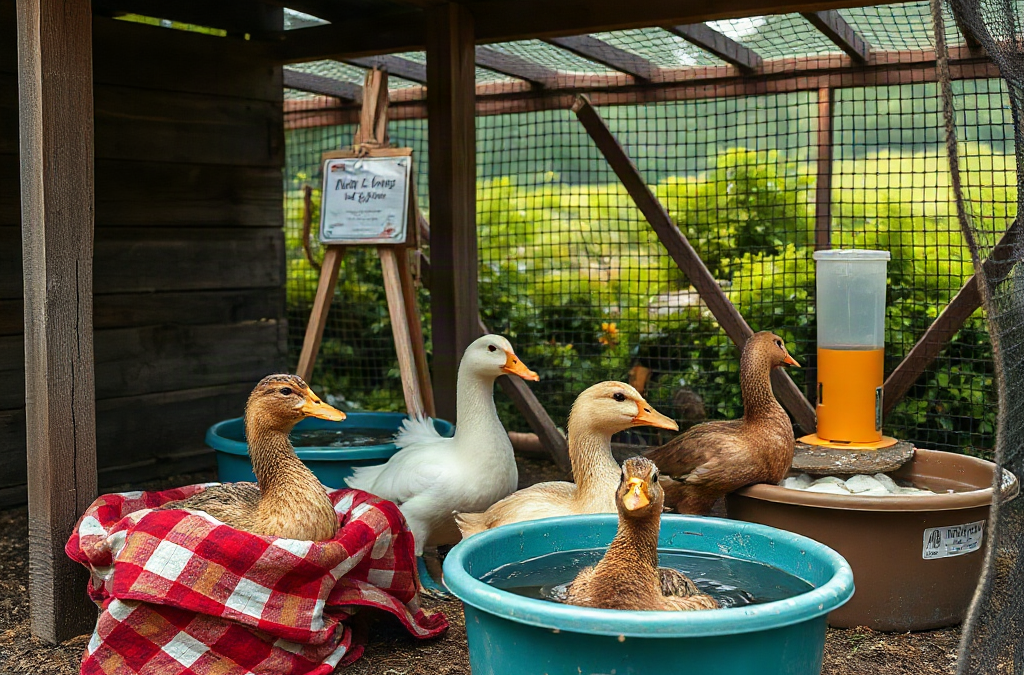
Homestead ducks need clean water deep enough to immerse their heads, a dry and ventilated shelter, and layered predator protection that remains secure after dark. Drinking containers should limit climbing and spilling, while a separate bathing area and intentional drainage keep bedding from becoming saturated. The duck house needs floor-level airflow without exposing resting birds to direct drafts, plus enough usable space to avoid crowding. A roofed nighttime enclosure, small-opening hardware cloth, buried or outward-facing barriers, and secure latches address climbing, digging, and reaching predators. Daily water changes and evening perimeter checks catch problems before dampness, contamination, or weak closures become routine.
What you’ll learn
This guide covers the following practical points:
- Provide Water Without Creating a Mud Pit — Ducks turn poorly managed water stations into wet bedding, contaminated drinking water, and eroded ground.
- Build a Dry, Ventilated Duck Shelter — A useful duck house blocks weather at bird level while allowing humid air to escape above them.
- Use Layered Predator Protection — Predator control works best when the nighttime house, attached run, perimeter, and daily routine do not share a single point of failure.
- Follow a Daily and Seasonal Care Checklist — A consistent inspection routine reveals small failures while they are still easy to correct.
Provide Water Without Creating a Mud Pit
Ducks turn poorly managed water stations into wet bedding, contaminated drinking water, and eroded ground. They scoop feed into water, rinse their bills, splash while bathing, and walk between wet and dry areas. The water system therefore has to serve the birds while controlling where that moisture goes.
Drinking water should be deep enough for a duck to submerge its entire bill and clear its nostrils and eyes. A narrow opening or raised container can reduce the amount of water birds climb into, but the rim must remain reachable without forcing awkward stretching. Young ducklings require shallower, stable containers that do not create an avoidable drowning or chilling hazard.
Bathing water is useful for normal preening and feather maintenance, but it does not need to be a permanent pond. A sturdy tub, stock tank, or small molded pool is easier to empty and scrub. Provide an easy entrance and exit, especially for smaller breeds or birds with limited mobility. Replace foul water rather than trying to keep visibly dirty water usable with occasional topping up.
Place the bathing station outside the sleeping shelter on gravel, coarse wood chips, a movable platform, or another drained surface. Direct discharged water toward vegetation only when runoff will not carry concentrated manure into wells, streams, neighboring property, or food-growing areas. Local environmental and zoning requirements may affect wastewater placement.
A practical small-flock arrangement uses a head-dunking drinker near feed and a separate bathing tub farther from the house. The distance interrupts the direct trail of splashed water into bedding. The common mistake is putting an open basin inside the shelter; even a small container can saturate litter overnight and raise humidity around resting birds.
Build a Dry, Ventilated Duck Shelter
A useful duck house blocks weather at bird level while allowing humid air to escape above them. Ducks release considerable moisture through breathing and manure, so a tightly sealed shed can become damp even when rain never enters. Condensation on the roof, persistent ammonia odor, or litter that mats quickly signals that airflow, drainage, or stocking density needs attention.
Low, protected wall openings can admit fresh air, while screened vents near the roof release warm moisture. Arrange openings so prevailing wind does not blow directly across the sleeping area. Vent covers and wire screening must stay firmly attached; an opening intended for airflow can become a predator entrance if it is merely covered with loose mesh.
The floor should remain above surrounding runoff. A raised wood floor works where flooding is a concern, provided the underside and edges cannot shelter rodents or admit predators. A well-drained earthen or concrete floor can also function when topped with absorbent bedding and maintained regularly. Straw, pine shavings, or another locally suitable litter should be removed or replenished before it becomes compressed and wet.
Ducks generally rest on the floor rather than roosting like chickens. Prioritize unobstructed floor area, broad doorways, and low thresholds over elevated perches. Nesting areas can be simple, quiet, bedded corners that are easy to inspect. If chickens share the building, place roosts where droppings cannot fall onto ducks, water vessels, or nest areas.
Space requirements vary with breed size, time spent outdoors, climate, and how quickly litter becomes damp. Crowding should be judged by conditions rather than a single universal number. Birds should be able to settle without piling, move past one another, and reach doors without congestion. Wet litter, feather damage, persistent odor, and dirty plumage indicate that the usable area or maintenance schedule is inadequate.
Use Layered Predator Protection
Predator control works best when the nighttime house, attached run, perimeter, and daily routine do not share a single point of failure. Ducks are vulnerable on the ground, especially after dusk, and an open pond does not reliably protect them. The most effective first step is closing the flock inside a structurally secure enclosure every evening.
Use small-opening welded hardware cloth on vents and exposed run sections rather than relying on lightweight poultry netting. Poultry wire can contain birds, but it may not resist determined biting, pulling, or reaching. Fasten mesh with screws and washers or secure construction staples appropriate for the framing; loosely attached edges are an invitation to pry.

Digging pressure can be addressed with a buried barrier or an outward-facing wire apron secured flat around the perimeter. An apron is often easier to install in rocky soil and discourages an animal from digging directly at the wall. Roof open runs where climbing predators or birds of prey are a concern, and remove branches or stacked materials that provide access over fencing.
Doors deserve the same attention as walls. Use closures that cannot be lifted or nudged open easily, and check whether warped framing creates gaps at the corners. Raccoons and other dexterous animals may defeat simple slide bolts, so a secondary clip or more complex latch can add useful resistance. Electric fencing may add an outer deterrent where lawful and properly installed, but it should supplement rather than replace a secure sleeping house.
Inspect From a Predator’s Perspective
Walk the enclosure after dark with a flashlight and examine the roofline, door sill, vents, corners, and ground edge. Look for fresh digging, bent wire, hair caught on fencing, droppings, disturbed soil, or tracks. A hypothetical example is a run with strong side fencing but an uncovered corner beneath an overhanging limb: improving the wall does not address the easier route from above.
Livestock guardian animals, lights, noise devices, and cameras have limitations. Cameras identify activity but do not physically stop entry. Lights and sounds may lose effectiveness as wildlife becomes accustomed to them. Guardian animals require species-appropriate training, housing, and management and should not be assumed safe with ducks without careful supervision.
Follow a Daily and Seasonal Care Checklist
A consistent inspection routine reveals small failures while they are still easy to correct. Water use, mud, bedding condition, and wildlife pressure change with weather, flock size, and season, so a setup that worked in summer may fail during freezing temperatures or prolonged rain.
- Morning: Open the secure house, confirm every bird is moving normally, refresh drinking water, and inspect the enclosure for overnight disturbance.
- Midday: Check water depth, heat exposure, drainage, and the condition of bathing water. Replace water when contamination is obvious.
- Evening: Count the ducks inside, remove or secure feed that could attract wildlife, close every door, and test each latch by hand.
- Weekly: Scrub containers, remove saturated bedding, examine wire fasteners, and fill developing erosion around water stations.
- Seasonally: clear snow or vegetation from fence lines, protect water equipment from freezing, inspect roof drainage, and reassess predator signs.
Signs that the system is working include dry resting litter, clean nostrils and eyes, water that remains accessible between checks, and an enclosure without new gaps or digging. Repeatedly empty drinkers, foul odors, mud at the doorway, damaged mesh, or ducks reluctant to enter the house point to a design problem rather than a need for more frequent improvisation.
When a duck shows injury, breathing difficulty, marked weakness, inability to walk normally, or an abrupt behavioral change, isolate it safely from flock pressure and contact a veterinarian experienced with poultry or waterfowl. Housing improvements can reduce hazards, but they are not a substitute for diagnosis or treatment.
Frequently Asked Questions
Do homestead ducks need a pond?
No. Ducks need clean drinking water deep enough to immerse their heads, plus a safe way to bathe. A drainable tub or small pool is often easier to clean and manage than a pond.
Can ducks sleep outside at night?
Leaving ducks in an open yard increases their exposure to ground and aerial predators. A roofed, well-ventilated enclosure with secure walls, doors, and latches provides a safer nighttime arrangement.
Should duck water be kept inside the shelter?
Open water is usually better placed outside the sleeping area because splashing quickly wets bedding. If water must remain indoors, use a controlled-access container over a catchment area and monitor litter closely.
Is chicken wire enough to protect ducks?
Chicken wire is primarily a containment material and may not resist pulling, biting, or reaching. Small-opening welded hardware cloth, firmly attached to sturdy framing, is a stronger choice for vulnerable openings.
How can I tell whether a duck shelter needs more ventilation?
Condensation, persistent ammonia odor, damp walls, and litter that stays wet indicate inadequate moisture control. Add protected high-level ventilation, correct leaks, and reassess crowding without creating direct drafts over resting ducks.
Conclusion
Set up the water area first, because uncontrolled splashing and runoff can undermine both shelter hygiene and fence stability. Keep the sleeping house dry, elevated from runoff, ventilated above bird level, and free of open bathing containers. Then inspect every surface as a possible route for climbing, digging, reaching, or prying. A nightly head count and latch test, paired with regular bedding and perimeter checks, will expose weaknesses sooner than occasional large cleanups or emergency repairs.