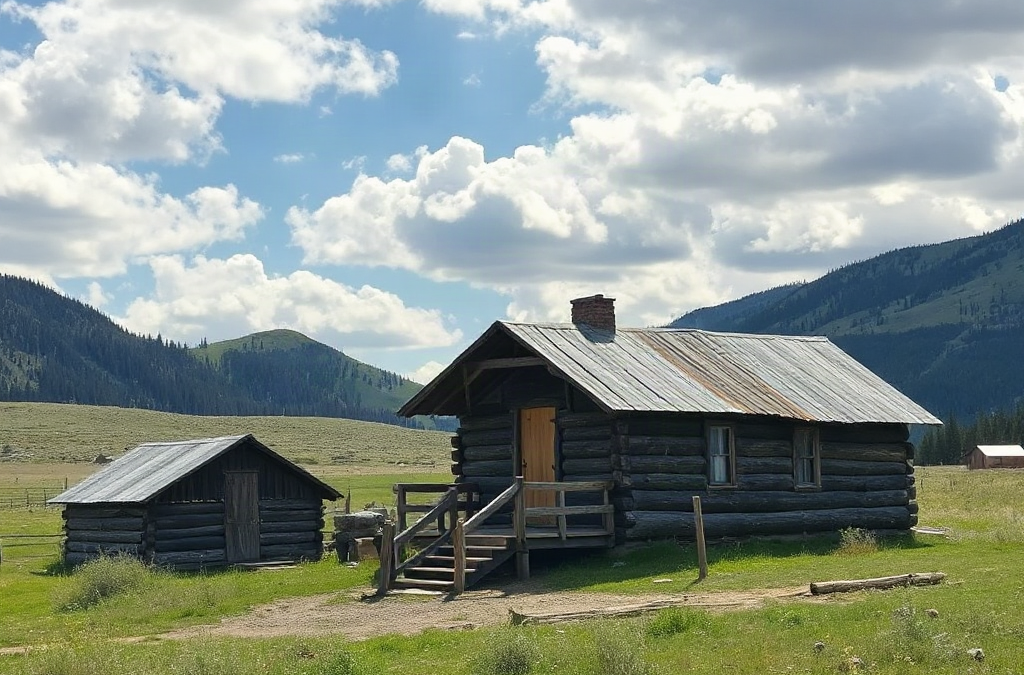
Colorado homesteading free land programs explained: modern Colorado generally does not offer a statewide federal-style free-land program, so prospective settlers must distinguish donated lots, local incentives, and ordinary land sales. A few communities may advertise discounted or incentive-based parcels, but eligibility can involve residency, employment, construction deadlines, zoning approval, utility access, and financing. The word “free” rarely covers surveys, water rights, septic systems, permits, roads, taxes, or a livable house. Verify every opportunity with the municipality, county planning office, assessor, and recorded deed requirements before paying an application fee or making relocation plans.
What “Free Land” Means in Colorado Today
Colorado does not have a broad statewide program that simply gives private applicants rural acreage for a self-sufficient homestead. The historic federal Homestead Act ended long ago, and public land managed by agencies such as the Bureau of Land Management or the U.S. Forest Service is not generally available for private settlement. That distinction matters because online posts often blend historical homesteading with current land-disposition programs.
A modern opportunity labeled “free land” usually means something narrower: a municipality offers a vacant lot at no purchase price, sells it below market value, waives a fee, or provides an incentive tied to a specific public goal. The recipient may have to build a qualifying home, open a business, move into the property by a deadline, or satisfy income and employment requirements. A parcel may therefore be free in the deed transaction while still requiring substantial private spending.
For example, a small town seeking new housing might make a town-owned lot available to a qualified builder. That arrangement is not the same as receiving unrestricted acreage for gardens, livestock, wells, and outbuildings. Zoning could permit only one residence, minimum construction standards may apply, and a recorded reversion clause could return the lot to the municipality if construction does not occur.
The safest interpretation is to treat “free” as a marketing shorthand until the written program rules prove otherwise. Read the deed, development agreement, application criteria, and deadline provisions together. The useful question is not whether the dirt has a zero-dollar purchase price, but whether the complete site can support the household, water system, waste system, access route, and legal residence you intend to create.
Where Legitimate Opportunities May Appear
Potential land incentives are more likely to come from local governments, economic-development organizations, or redevelopment authorities than from a statewide homesteading office. Their goals may include filling vacant lots, attracting workers, supporting downtown housing, or encouraging a particular business. Those objectives shape the eligibility rules, so a person seeking a secluded agricultural homestead may not fit the intended applicant profile.
County and municipal websites are the first places to check, followed by official economic-development pages and public meeting records. Search for terms such as municipal lot disposition, residential development incentive, workforce housing, surplus property, or economic-development land. Do not assume that a social-media post, real-estate advertisement, or homesteading forum has preserved the current terms. Programs can close, change ownership, or apply only to a named subdivision.
There is also a major difference between public land disposal and access to public land. A grazing lease, recreation permit, mining claim, or agricultural lease does not create private ownership, and it does not automatically authorize a residence. Likewise, buying a cheap parcel near public land does not give the owner rights to use neighboring public acreage for a driveway, well, fencing, or livestock.
Compare each opportunity against your actual objective. A workforce-housing lot may suit someone with a local job and a modest building plan. A business incentive may fit an entrepreneur who can meet performance requirements. Neither is necessarily appropriate for an off-grid farm. Readers researching Colorado homesteading free land programs explained should classify the opportunity before evaluating its price: ownership incentive, building incentive, business incentive, lease, or ordinary sale.
Costs and Property Constraints That Matter Most
Site infrastructure usually determines whether a no-cost parcel is affordable. Colorado terrain can produce sharp differences between a level lot near existing utilities and an apparently attractive tract requiring a long driveway, engineered drainage, power extension, cistern, septic design, or specialized foundation. The purchase price says little about those obligations.
Water deserves particular scrutiny. A parcel may have no automatic right to use groundwater simply because it is privately owned. Colorado water rights, well permitting, augmentation requirements, and local restrictions can affect whether a proposed household supply, irrigation system, or livestock operation is lawful. Contact the Colorado Division of Water Resources and obtain parcel-specific information rather than relying on a seller’s phrase such as “water available.”
Wastewater creates a second gating issue. If municipal sewer is absent, the county may require a permitted onsite wastewater system, soil evaluation, reserve area, and minimum setbacks. A rocky or shallow site can make a septic plan costly or impractical. Electricity, internet access, winter road maintenance, wildfire exposure, snow storage, and emergency access also deserve written confirmation.
Property taxes, title work, surveying, insurance, construction materials, permits, and carrying costs remain separate from the land transfer. Some agreements impose a construction deadline or require owner occupancy; others may prohibit resale for a period or reserve a right to reclaim the parcel. A conventional parcel with an established home and verified utilities may cost more upfront but carry less execution risk than a nominally free lot.
Before applying, prepare a simple cost comparison with three columns: required before construction, required during construction, and recurring annual expenses. Include a contingency for site surprises. If the incentive disappears when a deadline is missed, the deadline itself is a financial risk, not a minor administrative detail.
How to Verify a Program Before Relocating
Verification should begin with the government body that owns or administers the property. Ask for the official program rules, parcel number, deed restrictions, application deadline, selection method, construction standards, and a contact responsible for current answers. Request documents in writing. A verbal statement that a lot is “free” cannot establish ownership terms, water availability, zoning permission, or future obligations.
Use the county assessor and recorder to check ownership, assessed status, liens, easements, access, and recorded covenants. Then speak with county planning and building staff about allowed uses, minimum dwelling size, accessory structures, manufactured homes, agricultural activity, setbacks, wildfire rules, and permit sequencing. A parcel can be buildable in general while still failing your specific house or homestead design.
A disciplined review can follow this order:

- Confirm that the offer is active and identify the actual owner.
- Obtain the deed, development agreement, map, and complete eligibility rules.
- Verify legal access, zoning, water supply, wastewater options, and utility extensions.
- Price surveys, engineering, permits, construction, insurance, taxes, and financing.
- Have a Colorado real-estate attorney review unusual restrictions or reversion language.
Red flags include pressure to send money before receiving documents, a promise of unrestricted public acreage, refusal to identify the parcel, unclear water claims, and deadlines that do not allow permits or financing. A legitimate local incentive may still be competitive or bureaucratic, but its administering agency should be identifiable and its conditions should be inspectable.
Use the same scrutiny with listings found through Colorado homesteading free land programs explained searches. Search results can surface historical stories beside current offers, and a town’s old announcement may remain indexed after the land has been awarded. Confirm dates directly before making a move, quitting a job, or ordering construction materials.
A Realistic Homestead Decision
A workable Colorado homestead begins with land-use feasibility, not the promise of free acreage. Decide whether your priority is a legal residence, food production, animal keeping, privacy, income generation, or reduced housing cost. Those goals can conflict. A parcel near jobs and utilities may support a house but offer little agricultural capacity; remote acreage may provide room but impose difficult water, access, and winter-service demands.
Consider a household comparing two options. The first is a town lot transferred under a build requirement, with nearby electricity and paved access but strict residential zoning. The second is inexpensive acreage outside town with no confirmed well, a rough road, and uncertain septic suitability. The first may be the better housing project, while the second may be the weaker homestead despite its larger area. Neither choice can be judged by acreage or purchase price alone.
Match the program to your capacity. Applicants with reliable financing, construction experience, and a local income source may manage a deadline-driven lot. People depending on seasonal work, volunteer labor, or gradual self-building may need a property without a short completion schedule. Off-grid plans require additional research into power storage, water hauling, winter access, and local code; “off-grid” is not a blanket exemption from county requirements.
Prioritize a parcel only after these questions have clear answers: Can you legally live there? Can you obtain an adequate water supply? Can wastewater be handled? Can emergency and construction vehicles reach the site? Can the household afford the required improvements before the program deadline? If any answer is unknown, the opportunity is still in the research stage.
That approach keeps the search grounded. The useful outcome may be a municipal incentive, a conventional property with utilities, a lease that fits a temporary agricultural plan, or no purchase at all until finances improve. The label matters less than the enforceable terms and the site’s ability to support the life you intend to build.
For current parcel and program information, consult the relevant city or county government, the Colorado Division of Water Resources, the county planning and building departments, and the county recorder. These offices can confirm ownership, land-use rules, water documentation, permits, and recorded restrictions more reliably than third-party listings.
Frequently Asked Questions
Does Colorado currently give away free homestead land?
Colorado has no broad statewide giveaway comparable to the historic Homestead Act. Some local governments may offer specific lots or incentives with construction, residency, employment, or business conditions.
Can I claim unused Bureau of Land Management land for a homestead?
No. Public ownership and private homestead settlement are different. Access permits, leases, and recreation use do not normally transfer private ownership or authorize a residence.
What costs remain when a Colorado lot is free?
Potential costs include surveying, legal review, permits, water development, septic installation, utilities, roads, construction, insurance, taxes, and compliance with construction deadlines.
How can I verify a land incentive?
Contact the administering municipality or agency, obtain the written rules and parcel number, review the deed and development agreement, and confirm zoning, access, water, wastewater, and building requirements with county offices.
Are free lots suitable for farming or livestock?
Not necessarily. Many incentive lots are intended for residential or business development and may have zoning, lot-size, water, fencing, or animal restrictions that do not support a working homestead.
Conclusion
Colorado’s legitimate land incentives can be worth investigating, but they are usually targeted development tools rather than unrestricted homesteading grants. Treat the transfer price as only one line in the budget. Water rights, septic feasibility, access, zoning, construction deadlines, deed restrictions, and local employment requirements may determine whether the parcel is usable at all.
Before relocating, identify the administering agency, obtain every written condition, verify the parcel with county offices, and build a full site-improvement budget. Compare the incentive with a conventional property that already has utilities and a residence. A smaller, legally workable site may serve your household better than larger acreage carrying unresolved infrastructure and water risks. Research Colorado homesteading free land programs explained with those tests in mind, and proceed only when the land’s legal and physical realities match your homestead plan.