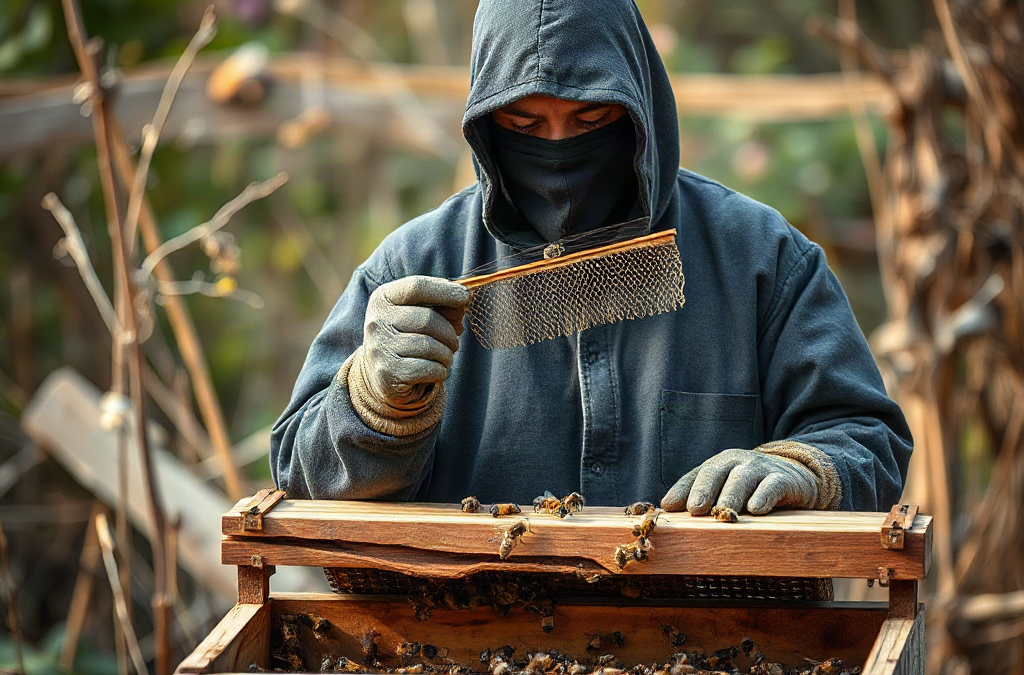
Top-bar beekeeping for beginners combines a simple horizontal hive with colony management that keeps each naturally drawn comb straight, accessible, and adequately covered by bees. Essential equipment includes a level hive, accurately fitted bars, comb guides, protective clothing, a smoker, and a hive tool or sturdy knife. Inspections should focus on brood pattern, food stores, queen activity, available building space, and signs of pests rather than frequent full-hive disruption. Expanding the occupied area one bar at a time helps prevent cross-combing, while entrance reduction and follower-board placement help smaller colonies defend and regulate their space. Harvest only mature capped honey comb that the colony can spare.
What you’ll learn
This guide covers the following practical points:
- Equipment That Makes a Top-Bar Hive Manageable — A workable top-bar hive depends more on accurate dimensions and stable support than on an extensive equipment collection.
- Hive Setup and Straight-Comb Control — Precise leveling is the first operational check after placing the hive.
- A Focused Colony Inspection Routine — A top-bar inspection should answer a short set of colony questions without leaving fragile comb exposed longer than necessary.
- Seasonal Space and Food Management — Colony space should track the number of bars bees can occupy and defend, not the hive’s total capacity.
Equipment That Makes a Top-Bar Hive Manageable
A workable top-bar hive depends more on accurate dimensions and stable support than on an extensive equipment collection. Every bar must sit snugly beside its neighbors without large gaps, and the hive body must hold those bars at a consistent width. Interchangeability matters: if bars vary, moving comb or replacing a damaged bar becomes unnecessarily difficult.
Each bar needs a centered guide that encourages bees to begin one comb in the intended direction. A wooden ridge, securely attached strip, or narrow waxed guide can serve this purpose. A guide influences the starting line, but it cannot compensate for an unlevel hive or poorly managed expansion. Decorative coatings of wax alone are not reliable structural guides.
The hive should also have a weather-resistant roof, stable legs or a stand, an entrance that can be reduced, and at least one follower board. The follower board closes off unused interior space, allowing a new colony to occupy a smaller cavity before it grows. It is a management tool, not merely an end wall.
A practical working kit is compact:
- Protective wear: a veil at minimum, plus gloves and suitable clothing according to colony temperament and beekeeper comfort.
- Smoker: used sparingly to move bees away from contact points and reduce defensive escalation.
- Hive tool or long knife: useful for separating propolis and releasing side attachments.
- Food-safe covered container: needed when removing comb so bees, dirt, and sunlight do not contaminate or soften it.
Buying honey extractors, frame grips, and other equipment designed around framed hives is usually unnecessary. A top-bar colony does not produce rigid, wired combs for a conventional extractor; harvested comb is commonly crushed and strained instead.
Hive Setup and Straight-Comb Control
Precise leveling is the first operational check after placing the hive. Natural comb hangs vertically under gravity, so a side-to-side tilt can bring the lower edge of a comb against the hive wall. Bees may attach it there or continue the comb across adjacent bars, making later inspections difficult and destructive.
Set the stand on firm ground, check the bar-supporting surfaces with a level, and recheck after rain or soil settlement. The hive may have a slight front-to-back slope if its design requires drainage, but the bars must remain level across their length. Secure the roof against wind without blocking ventilation designed into the hive.
New colonies should begin in a restricted compartment near the entrance rather than receiving the entire empty hive. As the colony grows, add one empty bar at the edge of the actively occupied combs. During a strong nectar flow, an empty bar may sometimes be inserted beside straight worker comb to create building room, but placing several empty bars through the brood nest can separate brood from adequate bee coverage.
Correcting a Comb Before It Becomes a Barrier
Inspect newly built comb early enough to see whether its centerline follows the bar. A slight curve can sometimes be guided back while the comb is small. Large combs filled with nectar are fragile, especially in hot weather, and should remain vertical during handling.
Cross-comb is easier to prevent than repair. If comb spans two bars, exposing one bar may tear it and spill brood or honey. Work progressively from a known straight comb, release any side attachment before lifting, and avoid rotating a comb into a horizontal position. A beginner should correct a small deviation promptly rather than assuming the bees will straighten it later.
A Focused Colony Inspection Routine
A top-bar inspection should answer a short set of colony questions without leaving fragile comb exposed longer than necessary. Begin at the follower-board end or another area with workable space, then move toward occupied comb. Separate bars gently, apply only enough smoke to clear contact surfaces, and return every comb in its original orientation unless there is a specific reason to move it.
Look for eggs or very young larvae when practical, an orderly area of brood appropriate to the colony’s stage, pollen near brood, and sufficient nectar or capped honey. Seeing the queen is not required if fresh eggs and normal brood development show that she was recently active. Repeatedly searching every comb for her increases handling time and the chance of rolling bees between bars.
| Inspection finding | Likely interpretation | Practical next check |
|---|---|---|
| Straight new comb with bees covering it | Expansion is proceeding normally | Add space gradually as occupied bars increase |
| Curved comb approaching the next bar | Future cross-combing risk | Correct while the comb remains small and light |
| Little open space beside active comb building | Colony may be crowded | Provide an empty guided bar at the appropriate edge |
| Brood area shrinking unexpectedly | May reflect season, queen trouble, food shortage, or another stressor | Check eggs, stores, pests, weather, and local forage conditions |
| Scattered damaged brood or visible pest signs | Further assessment is warranted | Use locally appropriate monitoring and seek experienced help |
Inspection timing depends on weather, forage, colony strength, and what the previous visit revealed. New comb construction deserves closer observation than a stable, established nest. Opening the hive during cold, wet, very windy, or extremely hot conditions can expose brood or weaken delicate comb, so postpone nonurgent work when conditions are unsuitable.
Keep brief records of occupied bars, brood status, stores, comb problems, and actions taken. Notes such as “added one bar beside straight comb” are more useful at the next visit than a vague judgment that the colony looked good.

Seasonal Space and Food Management
Colony space should track the number of bars bees can occupy and defend, not the hive’s total capacity. Too little room during rapid growth can contribute to congestion, yet too much empty volume leaves a small colony with more space to regulate and protect. Move the follower board outward as bees cover additional combs, keeping unused bars beyond it.
During a strong build-up, watch both ends of the brood area. A solid wall of honey can restrict brood-nest expansion even when unused space exists elsewhere. Creating room beside established straight comb may help, but breaking the brood nest with multiple empty bars can leave developing bees poorly covered during cool nights.
Food decisions require local judgment. A colony needs enough stored honey to bridge periods when forage is absent, and winter requirements differ sharply with climate and colony size. Do not use a universal bar count as a substitute for examining the depth, maturity, and location of stores. Local beekeeping associations or extension educators can provide regional context for seasonal forage and overwintering.
If emergency feeding becomes necessary, use a method compatible with the hive that minimizes robbing and drowning. Feeders should not leak outside the hive, and spilled syrup should be cleaned promptly. Honey from an unknown colony should not be fed because it may carry bee-disease hazards. Feeding can address an energy shortage, but it does not correct queen failure, severe pest pressure, or an unsuitable hive environment.
Entrance size also deserves seasonal attention. A reduced opening may help a small or pressured colony defend against robbing, while an excessively restricted entrance can impede traffic and ventilation during strong activity. Watch behavior at the entrance: orderly two-way movement differs from frantic fighting, bees searching cracks, or wax debris associated with robbing.
Honey Harvest and Comb Renewal
Harvest decisions should begin with colony need rather than visible honey alone. Choose comb that is predominantly capped, located outside the active brood area, and not required for the expected forage gap or winter period. Uncapped nectar contains more moisture and may not store well after extraction.
Remove one suitable comb at a time, brush or gently move bees back into the hive, and place the comb immediately in a covered food-safe container. Leave the top bar available for reuse after cutting away the comb while preserving or restoring its guide. Crush-and-strain processing sacrifices the wax structure, so the colony must spend resources drawing replacement comb.
That tradeoff makes conservative harvesting especially sensible for a first-year colony. Taking every full honey comb because more bars remain empty ignores the energy and seasonal forage needed to rebuild. Dark, repeatedly used brood comb can be removed gradually when it has moved out of brood use, but never dismantle the nest simply to force rapid comb renewal.
A useful worked decision is straightforward: if an outer comb is capped honey but the remaining stores are limited and local forage is ending, leave it. If the colony is strong, multiple mature food combs remain, and dependable forage continues, one surplus comb may be a reasonable harvest. The deciding inputs are colony strength, reserve stores, comb contents, season, and local conditions—not the hive’s apparent fullness.
Frequently Asked Questions
How often should a beginner inspect a top-bar hive?
Inspect often enough to catch crooked new comb and changing space needs, while avoiding unnecessary disturbance. During rapid comb building, checks may need to be closer together; established colonies can often be assessed less frequently according to weather, season, and prior findings.
Why do bees build comb across several top bars?
Cross-combing commonly follows an unlevel hive, inadequate comb guides, excessive empty space, or a curved neighboring comb. Correct the setup and small deviations early because heavy nectar-filled comb is much harder to reposition safely.
Can a top-bar hive use standard Langstroth frames?
Not normally. Top-bar hives are built around suspended natural comb and do not have the rectangular frame rests and dimensions of a Langstroth hive. Equipment compatibility should be confirmed before transferring bees or comb.
How can a beekeeper tell whether the queen is present?
Fresh eggs, young larvae, and a developing brood pattern usually provide more practical evidence than finding the queen herself. If these signs disappear unexpectedly, assess food, season, pests, and colony behavior before deciding what action is appropriate.
When can honey be harvested from a new top-bar colony?
Harvest only after the colony has surplus mature honey beyond its own seasonal needs. First-year colonies often need their stores and drawn comb for establishment, so postponing harvest may be the sounder decision.
Conclusion
Successful top-bar management rests on a level hive, uniform guided bars, early correction of crooked comb, and space matched to the bees actually occupying it. Inspect for actionable evidence—young brood, food reserves, construction direction, pest signs, and congestion—rather than dismantling the nest without purpose. Begin with a restricted cavity, expand gradually, record what changes, and treat honey as surplus only after the colony’s foreseeable needs are covered.