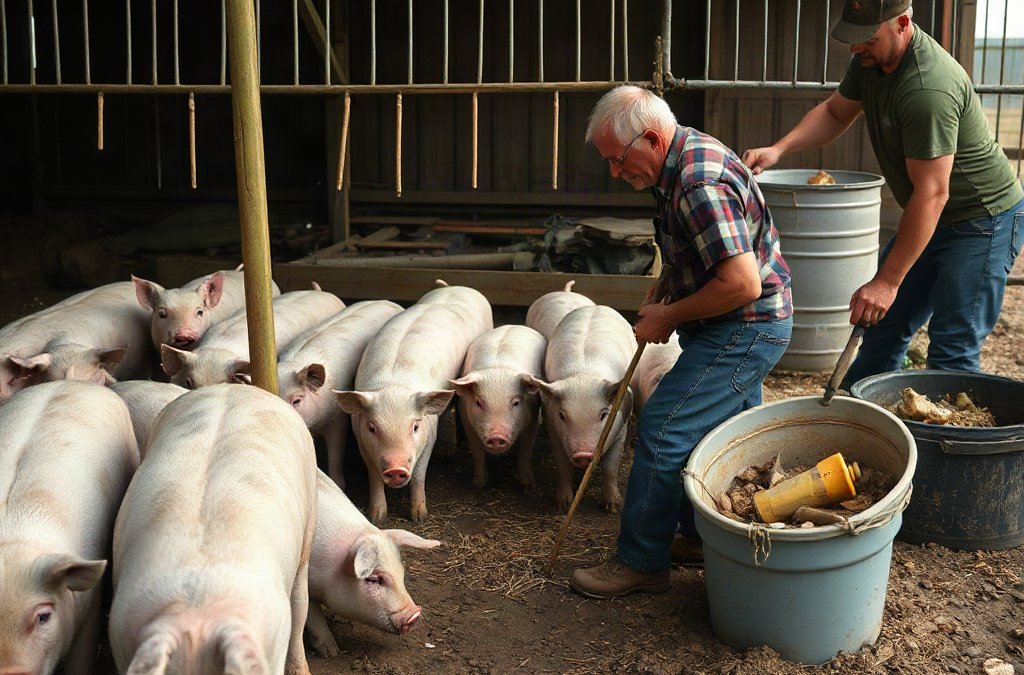
Piggery farming for beginners with sanitation controls requires a layout and daily routine that keep manure, contaminated boots, rodents, and incoming pigs away from clean pens, feed, and water. Divide the piggery into clean and dirty zones, isolate new or sick animals, and move from the youngest or healthiest group toward higher-risk pens during chores. Remove organic waste before applying a label-approved disinfectant because dirt and manure can reduce disinfectant contact with pen surfaces. Keep written records of cleaning, illness, treatments, visitors, and animal movement, and involve a veterinarian promptly when several pigs develop diarrhea, coughing, poor appetite, fever, or unexplained deaths.
What you’ll learn
This guide covers the following practical points:
- Designing Clean and Dirty Zones — A workable piggery separates low-risk activities from places where manure, sick pigs, delivery vehicles, and used equipment may carry contamination.
- Cleaning and Disinfection Routine — Effective sanitation follows a fixed sequence: remove pigs, take out manure and bedding, wash away remaining organic matter, allow appropriate drying, apply a suitable disinfectant at its labeled…
- Manure, Water, Feed, and Pest Controls — Manure management must protect pigs, workers, water sources, neighbors, and the surrounding land.
- New Pigs, Illness, and Daily Monitoring — Incoming pigs should not enter the resident group immediately.
Designing Clean and Dirty Zones
A workable piggery separates low-risk activities from places where manure, sick pigs, delivery vehicles, and used equipment may carry contamination. Pens should drain without sending runoff through feed storage, isolation housing, or clean walkways. Feed and bedding belong in dry, enclosed storage rather than beside manure piles or vehicle lanes.
Mark one controlled entrance for people and supplies. At that point, provide dedicated boots and coveralls, a place to wash hands, and a clear boundary between outside footwear and pig-area footwear. A shallow footbath alone is a weak control when boots enter it covered in mud or manure; footwear must first be scrubbed clean, and the solution must be mixed and replaced according to its product label.
Chore order matters when one person serves every pen. Begin with young, healthy, or otherwise vulnerable groups, continue through established adult groups, and handle isolated or sick pigs last. Do not return to a clean pen afterward without changing contaminated clothing, cleaning footwear, and sanitizing shared tools. Color-coded scrapers, boards, buckets, and hoses make dedicated equipment easier to recognize.
A common beginner mistake is placing an isolation pen immediately beside the main group and then sharing its feeder, water hose, and manure tools. Isolation is a management system, not merely an empty pen. It needs separate equipment, controlled drainage, enough distance or a physical barrier to limit nose-to-nose contact, and a route that does not cross routine clean traffic.
Cleaning and Disinfection Routine
Effective sanitation follows a fixed sequence: remove pigs, take out manure and bedding, wash away remaining organic matter, allow appropriate drying, apply a suitable disinfectant at its labeled concentration and contact time, and let the space dry before restocking. Spraying disinfectant over visible waste wastes product because organic material can shield microorganisms from contact.
Start with dry removal whenever practical. Scrape floors, empty feeders, and take loose bedding out before pressure washing. High-pressure spray can scatter contaminated droplets onto walls, clothing, equipment, and nearby pens, so use it only in an emptied area with runoff controlled. Work from higher surfaces downward and from cleaner areas toward drains and heavily soiled corners.
Choose disinfectants by reading the label rather than selecting solely by price or scent. Confirm that the product is labeled for livestock premises, compatible with the surface, and suitable for the organisms of concern. Never combine cleaning chemicals or disinfectants unless the manufacturer explicitly permits it. Mixing incompatible products may create dangerous fumes or deactivate the ingredients.
| Task | Practical Timing | Failure Sign |
|---|---|---|
| Remove manure and wet bedding | During daily pen checks and whenever buildup appears | Persistent dampness, strong odor, or slippery floors |
| Clean feeders and drinkers | Inspect daily; clean when residue, slime, or contamination is present | Stale feed, algae, sediment, or feces near openings |
| Deep-clean an emptied pen | Between groups or after a disease event under veterinary direction | Organic matter remains in joints, corners, or drains |
| Check sanitation supplies | Before each cleaning session | Unlabeled containers, expired product, or no measuring device |
Drying is an active control rather than idle waiting. Standing moisture supports dirty traffic, makes floors hazardous, and may dilute products applied too soon. Cracks, rough concrete, damaged drinkers, and poorly sloped floors repeatedly defeat cleaning; repairing those defects may produce better long-term sanitation than increasing chemical use.
Manure, Water, Feed, and Pest Controls
Manure management must protect pigs, workers, water sources, neighbors, and the surrounding land. Collect waste before it blocks drainage or contaminates walkways, then store or handle it in a designated area away from wells, feed storage, and clean traffic. Disposal and land application requirements vary, so confirm local environmental, zoning, and nutrient-management rules before selecting a system.
Water systems deserve the same attention as floors. A leaking nipple drinker creates wet bedding and manure slurry, while an obstructed drinker may reduce access to water. Watch pigs use each drinker, check for leaks, and inspect tanks and lines for sediment or slime. Water that looks or smells unusual, or comes from a source of uncertain quality, should be assessed through an appropriate local testing service.
Feed attracts rodents, birds, and insects when bags remain open or spills accumulate. Store feed in secure, moisture-resistant containers or bins, rotate stock, remove spoiled material, and clean spills promptly. Keep vegetation, scrap lumber, and unused equipment away from buildings because they create shelter and concealed travel routes for pests.
Poison placed casually around a piggery can expose pigs, pets, wildlife, or children. A pest-control plan should favor exclusion, sealed feed, prompt spill removal, building repair, and protected traps or bait stations used according to label directions. Record where devices are placed and inspect them consistently. Repeated rodent activity despite baiting usually points to accessible feed or entry gaps that have not been corrected.
New Pigs, Illness, and Daily Monitoring
Incoming pigs should not enter the resident group immediately. Source animals from operations that can provide useful health and treatment information, transport them in a clean vehicle, and place them in a separate arrival area. A veterinarian familiar with local disease risks should help determine the isolation period, testing, vaccination, parasite control, and introduction process.

Observe isolated pigs with dedicated clothing and tools, ideally after caring for the resident herd. Record appetite, water use, manure consistency, coughing, breathing effort, skin changes, movement, and unusual behavior. A pig that lags behind at feeding or stays apart from its group may reveal trouble before severe signs appear.
When illness is suspected, isolate the affected animal if it can be moved safely without spreading contamination. Contact a veterinarian rather than treating several pigs by guesswork, especially when signs spread quickly, multiple age groups are involved, pigs stop eating or drinking, breathing becomes difficult, or deaths are unexplained. Keep treatment and withdrawal records for every animal as required by the product label and applicable rules.
Visitors, borrowed equipment, trailers, and returning show animals can create additional pathways into the piggery. Keep a visitor and vehicle log, limit unnecessary entry, and ask recent contact with other pigs before allowing access. Equipment that cannot be adequately cleaned should not move between farms. The weak assumption is that a visibly clean trailer or pair of boots is sanitary; contamination may remain in seams, mats, wheel wells, and dried residue.
A Beginner Sanitation Plan
A small beginner operation benefits more from a simple routine performed reliably than from an elaborate plan nobody follows. Assign every job to a person, location, and frequency, then post the routine where chores begin. Keep cleaning tools, protective clothing, measuring equipment, labels, and records in a designated station.
For example, consider a hypothetical four-pen setup with two established groups, one nursery pen, and one isolation pen. The caretaker enters through the clean boundary, changes boots, checks the nursery first, visits the established groups next, and handles isolation last. Dedicated isolation tools remain there. Afterward, manure equipment is cleaned in the dirty zone, observations are recorded, and the caretaker exits without walking back through clean pens.
Use this compact startup checklist:
- Map clean entrances, animal routes, manure routes, drainage, and the isolation area.
- Repair leaks, broken concrete, gaps, and surfaces that cannot be cleaned effectively.
- Assign dedicated tools and protective clothing to higher-risk pens.
- Write daily, between-group, and illness-response cleaning procedures.
- Record animals, visitors, symptoms, treatments, mortalities, and sanitation work.
- Arrange veterinary and emergency contacts before pigs arrive.
The plan is working when pens dry as intended, drinkers remain functional, feed stays protected, pest evidence declines, and records show that tasks occur on schedule. Persistent odors, recurring wet areas, frequent cross-pen equipment use, unexplained illness, or missing records indicate system failure. Correct the physical cause first; stronger disinfectant cannot compensate for leaking plumbing, poor drainage, overcrowded housing, or uncontrolled movement.
Frequently Asked Questions
Should pig pens be disinfected every day?
Daily work should remove manure, wet bedding, spoiled feed, and drinker contamination. Full washing and disinfection are usually most practical in emptied pens between groups or when directed during a health problem, because disinfectants require clean surfaces and adequate contact time.
Can bleach be used to disinfect a piggery?
Use only a product labeled for the intended livestock-premises application and follow its dilution, ventilation, contact-time, and safety directions. Never mix bleach with acids, ammonia, detergents, or other chemicals unless the label expressly allows it.
How should new pigs be introduced to the herd?
Keep new pigs in a physically separate arrival area with dedicated equipment before mixing them with resident animals. Ask a veterinarian to set an isolation, testing, vaccination, and introduction plan suited to the source herd and local disease risks.
What is the best floor for easy pig-pen cleaning?
A durable, nonabsorbent floor with safe traction and correctly directed drainage is easier to sanitize than cracked, porous, or uneven material. It must not become dangerously slippery, and its drainage should not carry waste through clean areas.
When should a pig farmer call a veterinarian?
Seek veterinary help when illness spreads, several pigs show similar signs, an animal has breathing difficulty, pigs stop eating or drinking, treatment fails, or deaths are unexplained. Early consultation also helps establish arrival and herd-health protocols.
Conclusion
Begin with the piggery layout, because drainage, isolation space, storage, and traffic routes determine whether daily sanitation can succeed. Build chores around clean-to-dirty movement, thorough waste removal, labeled disinfectant use, protected feed and water, and written observations. Before stocking pigs, correct structural defects and arrange local veterinary support. Review records and pen conditions regularly; recurring moisture, pests, contamination, or illness should trigger a search for the underlying management or building failure.