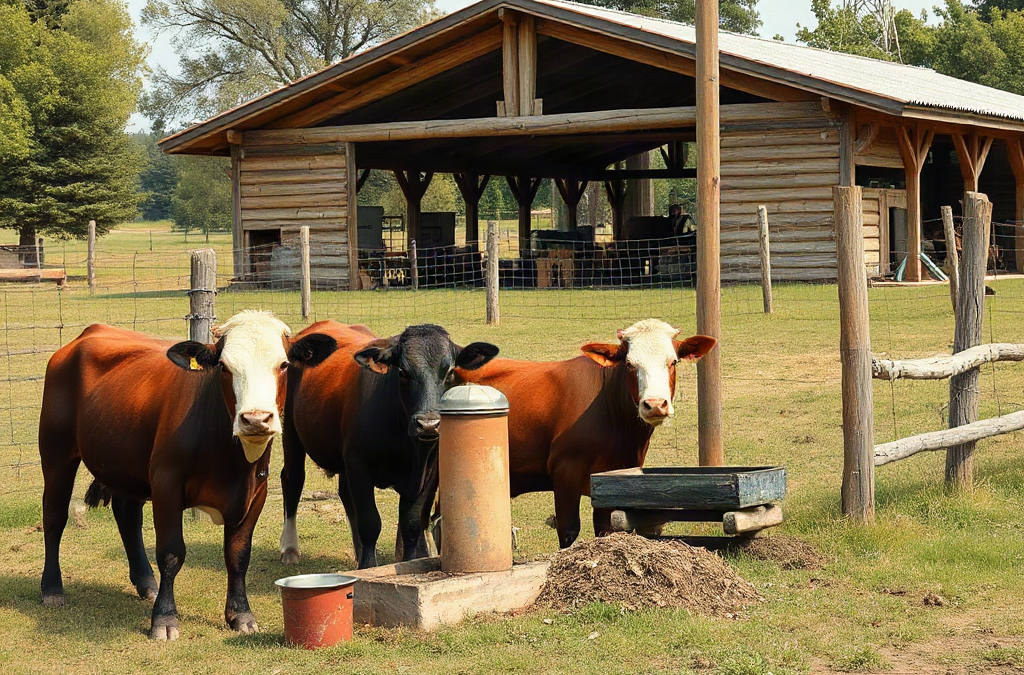
Cow farming for beginners depends on matching daily care to infrastructure that keeps cattle fed, watered, contained, observable, and safely handled. Before animals arrive, establish reliable fencing, an all-weather water source, dry footing, feed storage, shade or shelter, and a pen where one cow can be separated. Each day, check appetite, movement, manure, breathing, water flow, fence condition, and changes in behavior before small problems become emergencies. Pasture alone should not be assumed to meet every nutritional need, and weak gates or improvised handling areas create avoidable risks. New keepers should also arrange veterinary support, winter feed, manure management, and backup water in advance.
What you’ll learn
This guide covers the following practical points:
- Build the Infrastructure Before Cattle Arrive — A beginner cattle setup should be designed around containment, water access, feeding, and safe movement.
- Create a Daily Cow Care Routine — Daily observation is the keeper’s most valuable management tool because cattle often show subtle changes before an obvious crisis develops.
- Manage Feed, Water, and Pasture as One System — Feed planning begins with forage quantity and quality, not with the assumption that green grass is nutritionally complete.
- Plan for Handling, Health Problems, and Manure — Safe cattle handling depends on facilities that guide movement without requiring people to stand in pressure points.
Build the Infrastructure Before Cattle Arrive
A beginner cattle setup should be designed around containment, water access, feeding, and safe movement. Cattle quickly expose weak gates, sagging wire, muddy approaches, and poorly placed troughs. Repairing those failures after animals are on the property is harder and more dangerous than testing the system while the pasture is empty.
Perimeter fencing needs to be physically sound and appropriate for the cattle being kept. Interior electric fencing can divide pasture efficiently, but it should not be treated as a substitute for a dependable boundary until the animals are trained to respect it. Walk the entire fence line, inspect corners and braces, and look for places where vegetation, fallen limbs, erosion, or snow could reduce effectiveness.
Place gates where cattle can approach without being forced through a bog, steep turn, or narrow obstruction. A wide equipment gate and a separate people-access point make routine work easier. Gate latches should be operable from a safe position and resistant to rubbing. A common beginner mistake is installing enough fence but too few gates, which turns pasture rotation, hay delivery, and emergency access into difficult jobs.
Water should remain available under the hottest, coldest, and driest conditions expected on the property. Trough capacity, refill rate, pipe protection, freeze management, and a backup supply all matter. Observe the trough after several animals drink together; a system that works for one cow may refill too slowly for a group. Protect the surrounding surface with gravel, geotextile, concrete, or another site-appropriate base so repeated hoof traffic does not create deep mud.
Shelter needs vary with climate, breed, pasture exposure, and production system. Cattle generally need relief from severe weather, persistent wet conditions, and heat load, but an enclosed barn is not automatically the best answer. A windbreak, shade structure, open-front shed, or naturally protected paddock may work if it stays ventilated and accessible. Buildings still need a dry lying area, drainage away from bedding, and enough room to prevent dominant animals from trapping timid ones.
Create a Daily Cow Care Routine
Daily observation is the keeper’s most valuable management tool because cattle often show subtle changes before an obvious crisis develops. Check the herd at close enough range to identify each animal rather than confirming only that every cow is standing in the field.
| Check | What to Observe | Warning Sign |
|---|---|---|
| Water | Flow, cleanliness, access, leaks, ice | Empty trough, crowding, weak refill, contamination |
| Feed | Availability, quality, refusal, feeder access | Sudden appetite loss, spoiled feed, bullying |
| Cattle | Gait, posture, breathing, manure, alertness | Isolation, lameness, straining, unusual discharge |
| Facilities | Fence voltage or condition, gates, footing | Broken wire, open latch, sharp edge, deep mud |
Use a consistent route through the farm, but do not reduce the check to a drive-by habit. Watch cattle rise and walk when possible. Compare an animal with its own normal behavior and with the rest of the herd. A cow hanging back from feed, repeatedly shifting weight, or standing alone deserves a closer look even if no diagnosis is apparent.
Morning and evening checks are practical for many small farms, with additional observation during extreme weather, calving, illness, equipment failure, or a feed change. Dairy cows require a tightly controlled milking schedule and additional udder and milk observations. Beef cows on pasture may need less hands-on work, but their water, fences, feed supply, and physical condition still require regular attention.
Keep a simple record of feed changes, treatments directed by a veterinarian, breeding dates, calving events, escapes, and facility repairs. Records reveal patterns that memory misses. Repeated loose manure after opening a new paddock, for example, may point to an abrupt forage change rather than an isolated event. The failure mode to avoid is recording only major emergencies; small deviations often provide the more useful management history.
Manage Feed, Water, and Pasture as One System
Feed planning begins with forage quantity and quality, not with the assumption that green grass is nutritionally complete. Requirements change with body size, growth, pregnancy, lactation, weather, and forage maturity. A local extension professional, experienced livestock nutrition adviser, or veterinarian can help interpret forage tests and identify suitable mineral or supplemental feed for the herd and region.
Pasture should be monitored by plant height, regrowth, soil condition, and grazing pressure. Leaving cattle in one area too long can weaken desirable plants, expose soil, and concentrate manure around water and shade. Rotational grazing can improve control, but more paddocks do not fix insufficient forage. When regrowth slows, the appropriate response may be a sacrifice area and stored feed rather than repeatedly shortening the rotation.
Hay needs protected storage or careful outdoor management that limits weather loss and spoilage. Inspect bales for heating, mold, foreign material, and excessive dust before feeding. Feeders can reduce trampling, but their design must not create head traps or sharp contact points. Position them where a tractor can reach without crossing saturated ground.
Any feed change should be gradual where practical. Sudden access to unfamiliar grain, lush forage, or a large amount of dropped fruit can create digestive risk. Secure grain bins and feed rooms because cattle can push through surprisingly weak barriers. If an animal overeats concentrate or develops abdominal swelling, distress, weakness, or abnormal breathing, contact a veterinarian promptly rather than relying on an improvised treatment.
Mineral selection is location- and ration-specific. More is not necessarily safer, and products intended for another livestock species may be inappropriate. Keep mineral dry, place it where all cattle can reach it, and track consumption. The common mistake is buying a generic product without considering forage analysis, local deficiencies, antagonists, or the ingredients already present in supplemental feed.
Plan for Handling, Health Problems, and Manure
Safe cattle handling depends on facilities that guide movement without requiring people to stand in pressure points. At minimum, a small farm needs a way to gather the herd, separate one animal, and restrain it for examination or veterinary work. A sturdy pen, crowd area, alley, and suitable restraint device are safer than ropes, loose panels, or a corner of the pasture.

Walk through the handling path from the animal’s perspective. Remove protruding hardware, loose boards, slippery transitions, deep shadows, and dead ends that encourage balking. Solid sides can reduce visual distractions in some alleys, while non-slip footing helps cattle maintain confidence. Calm movement usually takes less time than chasing, and it reduces the chance of damaged facilities or injured people.
Establish a working relationship with a livestock veterinarian before an urgent problem occurs. Discuss vaccination, parasite management, reproductive plans, biosecurity, and local disease concerns for the specific herd. New animals should have known health and treatment histories where possible, and a planned separation area allows closer observation before they join resident cattle. Exact protocols depend on location, herd purpose, age, and risk; they should not be copied blindly from another farm.
Know which observations justify prompt professional advice: a cow unable to rise, severe breathing difficulty, major injury, suspected poisoning, rapidly increasing abdominal distension, difficult calving, or marked neurological changes. Less dramatic changes such as reduced appetite, persistent cough, lameness, weight loss, or unusual manure also deserve timely assessment. Waiting until an animal collapses is not a cost-saving health strategy.
Manure management belongs in the infrastructure plan. High-traffic areas around feeders, troughs, shelters, and gates need drainage and periodic cleaning. Stored manure should be located where runoff does not move toward wells, streams, neighboring land, or animal housing. Local environmental and land-use rules may apply, so confirm requirements with the relevant local authority. A frequent mistake is calculating space for cattle while ignoring where bedding and manure will go during a wet winter.
Choose a Manageable First Herd
The best first herd is smaller than the maximum number the land appears able to hold. Stocking capacity changes with rainfall, soil, pasture species, irrigation, winter length, and how much stored forage the owner can purchase and handle. Acre-per-cow rules borrowed from another region can therefore create serious feed shortages.
Start by deciding whether the farm’s purpose is beef, family milk, breeding stock, grazing management, or another defined use. A dairy cow adds milking, sanitation, breeding, and calf-management demands. A small beef group may have a simpler daily routine, but cattle are social animals and keeping a lone animal can create management and welfare concerns. Seek local advice about an appropriate group and compatible classes of cattle.
Consider temperament, age, horn status, handling history, mature size, and adaptation to local weather. Quiet, accustomed-to-people cattle are generally more suitable for a novice than unhandled animals purchased solely because they are inexpensive. Avoid mixing animals with major size differences or adding an intact mature bull unless facilities, experience, and a specific breeding plan justify the added risk.
A useful pre-purchase test is to imagine seven days of bad weather with a frozen or failed water line. Identify the backup water source, feed supply, tractor access, bedding storage, isolation pen, and person who can cover chores. If any answer relies on buying materials after the cattle arrive, delay the purchase. Beginners commonly budget for animals and fencing while underestimating hay equipment, veterinary visits, mineral, bedding, repairs, and emergency transport.
Signs that the operation is ready to expand include stable pasture condition, manageable winter feed costs, reliable records, calm handling, and enough labor to complete checks without shortcuts. Repeated escapes, chronic mud, thin cattle, frequent water failures, or delayed manure removal indicate that infrastructure should improve before herd size increases.
Frequently Asked Questions
How often should cattle be checked?
Check cattle at least daily, and many small farms use morning and evening rounds. Increase observation during calving, extreme weather, illness, feed changes, or water-system problems.
Do cows need a barn?
Not every herd needs an enclosed barn. Climate-appropriate shade, wind protection, ventilation, dry footing, and a sheltered lying area may be more useful than a poorly ventilated building.
Can one cow be kept alone?
Cattle are social herd animals, so solitary housing may lead to stress and difficult behavior. Plan for a compatible companion or small group, while avoiding more animals than the land and budget can support.
What fencing is suitable for beginner cattle keepers?
Use a strong perimeter fence with secure gates, then add interior electric divisions if desired. Fence type should reflect cattle size, horn status, terrain, local conditions, and the keeper’s ability to inspect and maintain it.
What should be ready before buying cows?
Prepare fencing, gates, water, feed and mineral storage, weather protection, a handling and isolation area, manure space, veterinary contact information, and contingency plans for power, water, or equipment failure.
Conclusion
Successful beginner cow keeping is largely determined before the livestock trailer enters the property. Finish the perimeter, test water under realistic demand, secure feed, create dry high-traffic areas, and make sure one animal can be safely separated and restrained. Then build daily checks around individual behavior rather than a distant head count. Start with a conservative herd size, document what changes, and correct recurring failures in pasture, footing, water, or handling before adding cattle.