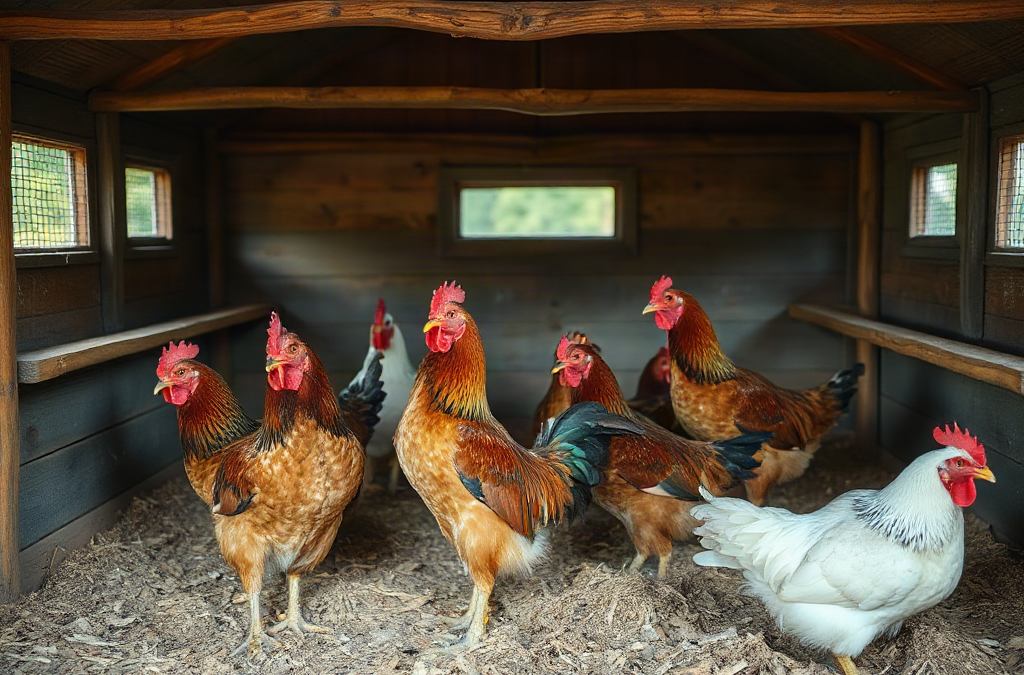
Chicken farming for beginners without overcrowding or waste depends on matching flock size to usable coop and run space, then controlling feed, water, bedding, and manure at their sources. Count only floor area the birds can actually occupy, allow enough feeder and roost access to reduce competition, and expand capacity before adding hens. Use covered feeders, raised waterers, dry litter, and a planned manure-composting area so spilled inputs do not become pests or odors. Watch feather condition, nighttime roosting, litter moisture, and competition around resources; these signs reveal crowding or poor management sooner than the flock count alone.
What you’ll learn
This guide covers the following practical points:
- Set Flock Size From Usable Space — A beginner flock should be sized from the smallest limiting area, not from the maximum number of birds that could physically fit inside a coop.
- Design the Coop Around Chicken Behavior — Usable space works only when chickens can reach food, water, nests, and roosts without being trapped or repeatedly displaced.
- Control Feed, Water, and Bedding Waste — Most routine waste begins with poorly positioned equipment rather than careless birds.
- Manage Manure Without Odor or Pests — Chicken manure becomes difficult when moisture, concentrated droppings, and inadequate carbon accumulate faster than they are removed.
Set Flock Size From Usable Space
A beginner flock should be sized from the smallest limiting area, not from the maximum number of birds that could physically fit inside a coop. Measure unobstructed floor space after accounting for nest boxes, feeders, waterers, storage, and any section birds cannot enter. Then consider whether the run, roost, ventilation, and daily labor can serve the same number of chickens.
A commonly used starting allowance for standard-size laying hens is roughly 4 square feet of usable indoor floor per bird and about 10 square feet per bird in an outdoor run. These are planning figures rather than universal welfare or legal standards. Large breeds, long periods of confinement, hot or damp weather, and mixed flocks may require more room. Local ordinances or animal-care rules may impose different requirements.
For an illustrative calculation, a coop with 48 square feet of measured floor might appear to hold 12 hens at 4 square feet each. If equipment occupies 8 square feet, however, only 40 square feet remains usable, suggesting a starting ceiling of 10 standard hens. If the attached run provides only 80 square feet, an eight-hen flock would be the more conservative choice using the 10-square-foot outdoor allowance.
| Planning Input | Illustrative Amount | Interpretation |
|---|---|---|
| Total coop floor | 48 square feet | Measure inside the walls |
| Equipment footprint | 8 square feet | Subtract inaccessible space |
| Usable coop floor | 40 square feet | Supports about 10 hens at the example allowance |
| Run area | 80 square feet | Limits the example flock to about 8 hens |
Starting below the calculated ceiling leaves room for weather-related confinement, flock disputes, or an unexpectedly large bird. Buying extra chicks to compensate for possible losses often creates the opposite problem: healthy juveniles mature into a flock the housing cannot comfortably support.
Design the Coop Around Chicken Behavior
Usable space works only when chickens can reach food, water, nests, and roosts without being trapped or repeatedly displaced. A wide coop with a single narrow doorway can still create congestion. Place resources so a dominant bird cannot control every route, and avoid dead-end corners where a lower-ranking hen can be pinned.
Roosts should offer enough linear space for the flock to settle without piling, while remaining positioned above the general floor and away from drafts. Staggered or separated roost sections can give subordinate birds another place to sleep. Nest boxes belong in a darker, accessible area but should not reduce walking space or become the preferred sleeping site. Birds that sleep in nests soil bedding and eggs, increasing cleaning work.
Ventilation must remove moisture without directing a cold stream of air across roosting chickens. Condensation, an ammonia-like smell, or damp surfaces indicate that moisture production is outpacing airflow and litter management. Adding birds to a poorly ventilated coop intensifies the problem because each chicken adds droppings and respiratory moisture.
Outdoor areas need shade, dry footing, and opportunities to scratch or dust bathe. A bare run does not necessarily mean the flock is too large, but it shows that vegetation cannot recover under current use. Rotating between two run sections, adding a deep layer of coarse carbon material, or reducing flock size is usually more workable than repeatedly reseeding an area birds use every day.
Control Feed, Water, and Bedding Waste
Most routine waste begins with poorly positioned equipment rather than careless birds. Chickens naturally rake feed with their beaks and scratch loose material with their feet. A shallow open pan invites both behaviors, while a feeder with a lip or restricted openings keeps more feed contained.
Set the feeder near the birds’ back height and adjust it as young chickens grow. It should remain easy to reach without sitting directly on litter. Fill only enough to prevent the flock from running out between checks; an overfilled trough is easier to scatter. Store reserve feed in a dry, secure container, and discard feed that smells musty, has become wet, or shows pest contamination.
Waterers should stand on a stable platform high enough to limit scratching debris but low enough for every bird to drink comfortably. Check the area beneath them each day. Persistent wet litter may indicate a leaking seal, an unstable base, crowding at the drinker, or birds splashing from an open vessel. Adding bedding without correcting the water source only hides the moisture temporarily.
A simple daily priority list keeps small problems from becoming expensive ones:
- Confirm that every bird can approach feed and water.
- Remove wet bedding around drinkers and entrances.
- Collect eggs before breakage or soiling increases.
- Inspect stored feed for moisture, insects, or rodents.
- Record how quickly feed is being used so sudden changes are visible.
Feed use can change with age, weather, laying activity, and access to forage, so a single expected quantity should not be treated as a guarantee. A sharp unexplained change deserves investigation: spilled feed, rodents, a blocked feeder, illness, or a measurement error may be responsible.

Manage Manure Without Odor or Pests
Chicken manure becomes difficult when moisture, concentrated droppings, and inadequate carbon accumulate faster than they are removed. Odor is therefore a management signal, not an unavoidable feature of keeping hens. Pay particular attention beneath roosts, around waterers, and beside the pop door, where waste and dampness concentrate.
Dry absorbent bedding such as suitable wood shavings or chopped plant material can hold moisture between cleanings. Replace saturated patches promptly rather than stirring them through the entire floor. Very fine or dusty material may irritate birds and make the coop unpleasant to work in, while long, matted bedding can be hard to turn and remove.
A droppings board beneath the roost can capture much of the overnight manure in one accessible place. Scraping it regularly reduces the amount mixed into floor litter and makes it easier to notice unusual droppings. The board must not block airflow or create a surface birds can contact while roosting.
Designate a composting location before the first cleanout. Combine manure-rich litter with additional dry carbon when the pile is wet or strongly odorous, protect it from excessive rain, and keep it inaccessible to chickens and pests. Fresh manure can be too concentrated for direct contact with garden plants. Compost maturity and safe garden use depend on the materials, moisture, temperature, and handling method, so seek local extension guidance when using poultry waste around food crops.
Monitor the Flock and Adjust Capacity
Bird condition and resource access provide a more useful capacity check than dimensions alone. Observe the flock at several points: when doors open, during feeding, near dusk, and after all birds have taken their roosts. Calm distribution around the coop is encouraging; repeated pileups, blocked access, or birds sleeping on the floor suggest the layout or capacity needs attention.
Watch for worsening feather damage, persistent pecking, dirty plumage, weight differences, and hens that remain apart from the group. These signs are not proof of overcrowding because parasites, nutrition, illness, mating pressure, and social conflict can produce similar changes. Separate an injured bird when needed and consult a poultry-experienced veterinarian or local animal-health resource when illness or unexplained injuries are suspected.
Use a weekly capacity check rather than waiting for an obvious crisis:
- Space: Can birds move between resources without bottlenecks?
- Air: Is the coop dry and free from persistent ammonia-like odor?
- Access: Are timid birds eating, drinking, nesting, and roosting?
- Waste: Are feed spills, wet bedding, and manure manageable on schedule?
- Condition: Are feathers, feet, behavior, and body condition stable?
If several indicators worsen together, adding another feeder may relieve local competition but will not create more floor area or ventilation. Reduce the flock, enlarge the usable enclosure, or add a genuinely separate housing area before acquiring more chickens. Expansion should be completed and tested before new birds arrive.
Frequently Asked Questions
How much coop space should a beginner allow per chicken?
About 4 square feet of usable indoor floor per standard-size hen is a common planning starting point, with more space for large breeds, extended confinement, or difficult weather. Subtract equipment footprints and check local requirements.
How can I tell if my chickens are overcrowded?
Look for resource guarding, repeated pileups, severe feather damage, dirty or damp bedding, birds unable to roost, and persistent odor. Because disease or parasites can cause similar signs, assess health as well as space.
What feeder reduces chicken-feed waste?
A raised feeder with a lip or restricted feeding openings usually contains feed better than a shallow pan. Keep it level, avoid overfilling it, and confirm that lower-ranking birds can still eat.
Can chicken manure go directly into a vegetable garden?
Fresh poultry manure is concentrated and may damage plants or create food-safety concerns. Compost it using a managed process and follow local extension guidance for handling and application around edible crops.
Should beginners buy extra chicks in case some do not survive?
Do not buy beyond the housing capacity you can support if every chick matures. It is safer to begin with a smaller flock and expand only after space, ventilation, equipment, and manure handling are proven adequate.
Conclusion
Set the flock limit from usable space, run capacity, ventilation, and access to resources rather than coop dimensions alone. Build waste control into daily routines by containing feed, stabilizing waterers, removing wet bedding, and collecting manure where it concentrates. Begin below maximum capacity, observe the birds at feeding and roosting time, and treat persistent odor, competition, or dampness as a reason to correct the system before adding hens.