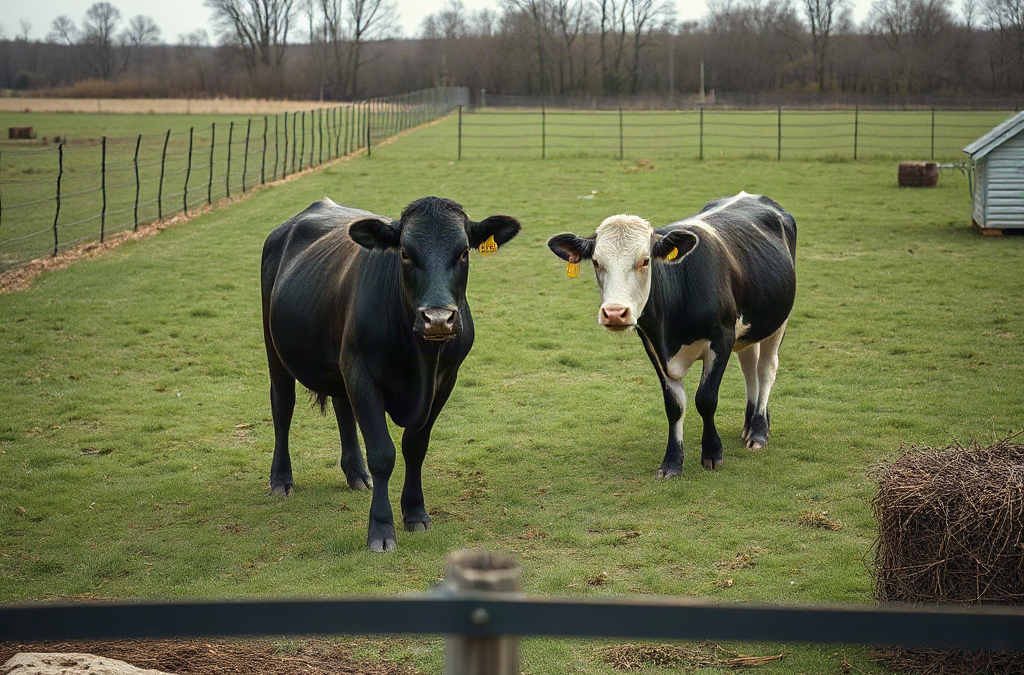
Raising beef cattle for beginners on limited acreage works best when herd size is based on forage production rather than a fixed acres-per-cow rule. Begin with a small number of calm, healthy animals, secure perimeter fencing, dependable water, a handling area, and a plan for buying hay before pasture runs short. Divide grazeable land into several paddocks so plants can recover, but do not expect rotation to create forage that soil, rainfall, and growing conditions cannot produce. Monitor pasture height, body condition, manure, water use, and ground cover; declining condition or exposed soil means stocking pressure or feeding plans need prompt adjustment.
What you’ll learn
This guide covers the following practical points:
- Calculate Forage Before Buying Cattle — Usable forage, not the deeded acreage, determines how many cattle a small property can support.
- Choose Cattle Suited to a Small Property — A small, manageable starter group is safer than attempting to build a breeding herd immediately.
- Build Fencing, Water, and Handling Systems — Perimeter security comes before rotational grazing.
- Manage Grazing and Supplemental Feed — Rotational grazing controls where and when cattle eat; it does not increase the land’s biological ceiling by itself.
Calculate Forage Before Buying Cattle
Usable forage, not the deeded acreage, determines how many cattle a small property can support. A five-acre parcel may contain a house, barn, driveway, woods, wet ground, or steep slopes, leaving much less grazeable land than its advertised size. Pasture output also changes with soil fertility, plant species, rainfall, temperature, and previous grazing pressure.
A fixed acres-per-cow figure is therefore a weak purchasing rule. Ask a local Cooperative Extension office or USDA service center for help identifying the pasture plants, estimating seasonal forage production, and interpreting a soil test. Local guidance is more useful than a national average because a productive humid pasture and drought-prone rangeland have fundamentally different carrying capacities.
Map the property before selecting animals. Mark grazeable paddocks, water points, shade, gates, sacrifice areas, hay storage, and places too fragile or inaccessible to use. Then estimate how much forage is available during the active growing season and how many months will require stored feed. Keep a margin for drought, slow spring growth, and delayed hay deliveries rather than budgeting around ideal weather.
| Property Check | What to Measure | Decision It Informs |
|---|---|---|
| Grazeable area | Acres excluding buildings, lanes, woods, and protected ground | Realistic herd size |
| Forage condition | Plant density, species, weeds, bare soil, and seasonal growth | Grazing days and renovation needs |
| Winter feed period | Likely nongrazing months and secure hay storage | Annual feed budget |
| Wet-weather capacity | Firm feeding and holding surface | Protection against mud and pasture damage |
The common failure is buying cattle first and trying to make the land fit them afterward. If the forage estimate is uncertain, begin below the estimated capacity. Purchasing hay is usually easier than repairing compacted, eroded, or weed-dominated pasture, but routine hay feeding can erase the economic advantage of keeping cattle on grass.
Choose Cattle Suited to a Small Property
A small, manageable starter group is safer than attempting to build a breeding herd immediately. Two or more compatible cattle allow normal social contact, while a lone animal may become stressed or difficult to manage. The exact number must remain below the property’s forage and winter-feed capacity.
Beginners often have a simpler first season with healthy, weaned feeder steers from one reputable source. Steers avoid calving, bull management, and reproductive decisions, although they still require sound fencing, daily observation, nutrition, and veterinary care. A cow-calf enterprise adds breeding timing, calving risk, newborn care, and the need to manage cows through periods of changing nutritional demand. Keeping a bull for only a few cows is rarely the simplest use of limited land or infrastructure.
Temperament matters as much as breed label. Look for cattle that move calmly, respect fences, walk soundly, breathe normally, and show no obvious discharge, diarrhea, or severe loss of condition. Ask the seller for age, weight, feeding history, health records, identification, and whether the animals are accustomed to electric fencing. Arrange a relationship with a livestock veterinarian before purchase and discuss locally appropriate vaccination, parasite control, testing, and biosecurity rather than copying an undifferentiated treatment schedule.
Do not choose miniature or small-framed cattle solely because they appear to solve an acreage problem. Smaller animals may consume less than larger animals, but genetics, mature weight, reproductive efficiency, market access, purchase price, and local demand still matter. The correct comparison is total feed demand and enterprise fit, not appearance alone.
Build Fencing, Water, and Handling Systems
Perimeter security comes before rotational grazing. A durable boundary fence should contain cattle even when temporary interior wires fail, forage becomes scarce, or animals are newly introduced. Fence design must fit local terrain and animal type; calves, mature cows, and newly purchased cattle may challenge different weaknesses.
Temporary electric fencing can create flexible paddocks inside a secure perimeter. It works only when the energizer, grounding system, conductor, and vegetation control function together. Train cattle to electric wire in a controlled area rather than assuming they understand it. Check voltage with a fence tester and walk the boundary routinely; visual inspection alone will not reveal every grounding or connection fault.
Water must be clean, dependable, and reachable without forcing cattle to damage streambanks or crowd a muddy gateway. Required volume changes with animal size, weather, diet, lactation, and water temperature, so size the system with local livestock guidance rather than relying on a single consumption figure. Confirm that the source and refill rate can meet peak demand, and provide a contingency for pump failure, frozen lines, or power loss.
A basic handling setup needs a gathering area, secure alley, and suitable restraint system that lets routine work occur without chasing cattle around a field. Arrange gates so one person can move animals while retaining an escape route. Cattle typically move more willingly through a quiet, visible path than toward sharp shadows, loose equipment, or dead ends.
Trying to save money by postponing handling facilities creates risk during illness, loading, identification, or veterinary work. A veterinarian cannot safely perform every procedure on an unrestrained animal. Even a modest operation needs a planned way to separate and confine one animal before an urgent problem occurs.
Manage Grazing and Supplemental Feed
Rotational grazing controls where and when cattle eat; it does not increase the land’s biological ceiling by itself. Moving animals between paddocks can reduce repeated grazing of favorite plants and provide recovery time, but rest periods must follow plant growth. Fast spring regrowth may support shorter recovery intervals, while heat, drought, or cool weather can slow recovery sharply.

Set moves by observing residual leaf area, regrowth, soil exposure, and animal behavior rather than following an inflexible calendar. Cattle returning to bite fresh regrowth soon after a paddock was grazed indicate that the rotation is too tight. Widespread bare soil, hoof damage, and increasing weeds signal that stock density, grazing duration, or wet-weather management needs correction.
A sacrifice area is a deliberately designated lot or firm feeding zone used when pastures are saturated, dormant, or depleted. Concentrating damage in a manageable location can protect the remaining acreage, but the area needs drainage, manure management, water, and enough space to avoid chronic mud. It is not a substitute for adequate feed.
Hay quality varies widely, so evaluate it rather than buying on bale count alone. Bale weight, moisture, storage loss, plant maturity, and nutrient content affect actual value. A forage test gives a better basis for matching hay to the cattle than color or smell alone. Mineral supplementation must be selected for the forage, water, animal class, and local deficiencies; use advice from a veterinarian, livestock nutrition professional, or Extension specialist.
Make feed transitions gradually. Sudden changes in hay, grain, lush pasture, or supplements can disrupt intake and digestion. Grain is not an automatic remedy for inadequate acreage, and careless feeding introduces additional health and management risks. When forage runs short, reduce stocking pressure, supply appropriate stored feed, or move animals rather than expecting the pasture to recover while it is still being grazed.
Monitor Health, Soil, and Operating Costs
Daily observation is the first line of cattle management on restricted acreage. Watch animals eat, walk, drink, ruminate, and interact from a distance before entering the group. A separated animal, sudden appetite change, abnormal breathing, persistent diarrhea, lameness, bloating, or unusual posture warrants prompt assessment and may require veterinary attention.
Keep written records for animal identification, purchases, weights when available, treatments, feed, pasture moves, breeding status, and sales. Records reveal whether costs are rising because of an unusually long feeding season, repeated fence repairs, poor forage utilization, or health problems. They also prevent reliance on memory when a veterinarian asks when a symptom began or what product was administered.
Track the land with the same discipline. Take repeat photographs from fixed points, note grazing and rainfall dates, and compare ground cover at the beginning and end of each season. Success looks like adequate residual forage, recovering plants, limited bare soil, stable animal condition, and manageable purchased-feed use. Failure appears as shrinking recovery periods, cattle reaching under fences, persistent mud, more weeds, declining body condition, or hay use exceeding the budget.
Build an operating budget before animals arrive. Include the purchase price, freight, fencing, energizer, troughs, plumbing, handling equipment, veterinary work, minerals, hay, bedding where used, equipment fuel, repairs, mortality risk, and marketing costs. Limited acreage may support household beef production or a modest direct-market enterprise, but it should not be assumed to generate profit simply because the land is already owned.
Review the stocking decision whenever forage conditions or cattle size changes. Growing feeders consume more over time, and mature cows do not impose identical nutritional demands throughout the year. Selling or relocating animals before pasture is exhausted is sound management, not failure; delayed destocking often converts a temporary forage shortage into longer-lasting land damage.
Frequently Asked Questions
How many acres does one beef cow need?
No universal acreage figure is reliable. Local forage production, rainfall, soil, grazing season, animal size, and supplemental feed determine capacity. Ask a local Extension or USDA service center to help estimate carrying capacity for the usable pasture.
Can one beef animal be kept alone?
Cattle are social animals, so keeping one alone is generally undesirable. A compatible pair or small group is preferable, provided the property can supply enough forage, water, shelter, and winter feed for every animal.
Are feeder steers easier for a beginner than breeding cows?
Feeder steers often provide a simpler starting point because they remove breeding, calving, and newborn care from the first season. They still require secure facilities, appropriate nutrition, routine monitoring, and a veterinary health plan.
Does rotational grazing let a property carry more cattle?
Rotation may improve forage use and recovery when moves match plant growth, but it cannot compensate for inadequate rainfall, poor soil, or excessive stocking. More paddocks do not create feed when pasture production is insufficient.
What should be ready before cattle arrive?
Finish the perimeter fence, test the water supply, prepare secure handling and unloading areas, obtain suitable feed and minerals, identify hay storage, and establish veterinary and emergency contacts before delivery day.
Conclusion
Limited-acreage cattle keeping succeeds when the land’s forage limits control the herd plan. Measure usable pasture, start below estimated capacity, and install reliable fencing, water, and restraint facilities before purchasing animals. Favor a simple starter group over an immediate breeding enterprise, then use pasture condition, cattle body condition, feed records, and seasonal costs to guide adjustments. If grass recovery slows or bare ground expands, provide feed and reduce pressure early rather than waiting for visible animal decline.