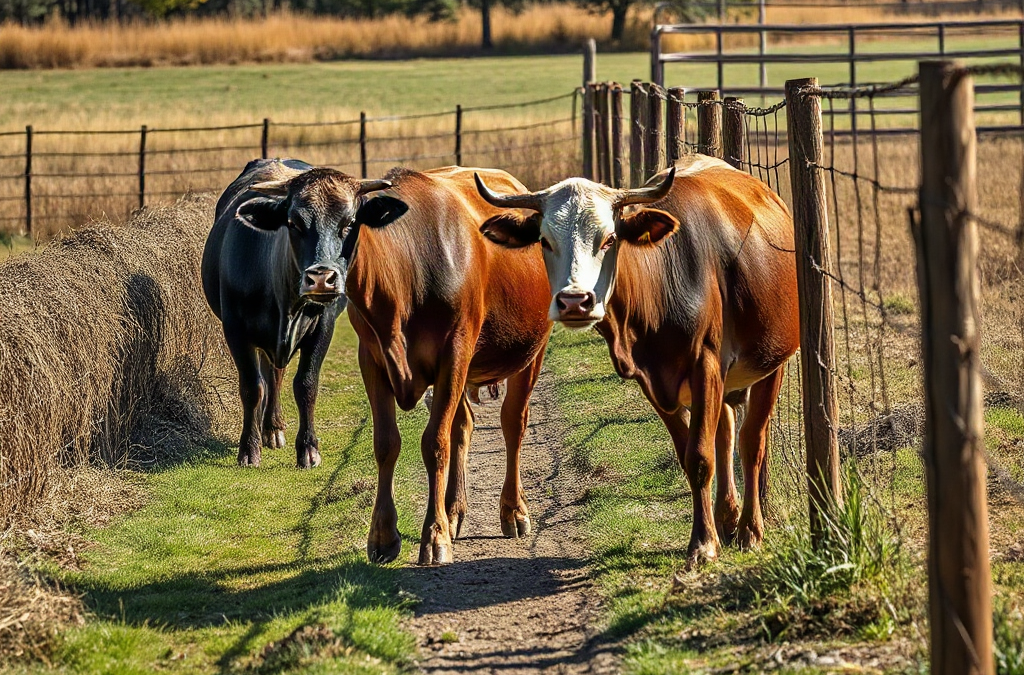
Raising cattle for beginners means coordinating fencing, feed, and handling so animals remain contained, maintain suitable body condition, and move without unnecessary pressure. Build and inspect a dependable perimeter before cattle arrive, then use cross-fencing only where it improves grazing control or access. Base the ration on tested forage, reliable water, cattle class, weather, and seasonal pasture supply rather than assuming grass alone is adequate. Design alleys, gates, pens, and a restraint area around cattle’s natural movement, and arrange veterinary guidance, mineral selection, hay reserves, and an emergency plan before problems force rushed decisions.
What you’ll learn
This guide covers the following practical points:
- Plan the Herd Before Cattle Arrive — The property should be evaluated from the gate inward before any animals are purchased.
- Build Fencing That Matches the Herd — A secure perimeter is the first fencing priority; interior paddocks cannot compensate for an unreliable boundary.
- Match Feed to Cattle and Seasons — Forage quality, not pasture color alone, determines whether grazing meets the herd’s needs.
- Provide Water and Minerals Reliably — Water availability can limit intake before a feed shortage becomes obvious.
Plan the Herd Before Cattle Arrive
The property should be evaluated from the gate inward before any animals are purchased. Walk every boundary, identify loose wire and washed-out areas, test gates, locate dependable water, and determine where cattle can be confined for examination or treatment. A pasture that looks adequate from the road may contain weak corners, poisonous plants, boggy ground, broken posts, or no practical route for moving animals.
Choose cattle that fit the acreage, forage base, facilities, and purpose of the homestead. A small group of calm, healthy animals with similar nutritional needs is easier to manage than a mixed group of cows, calves, bulls, and growing stock. Beginners should be especially cautious about keeping a mature bull; breeding plans, stronger fencing, separate containment, and handling risk can make outside breeding services or artificial insemination more practical where available.
Establish relationships with a large-animal veterinarian, hay supplier, livestock transporter, and experienced local cattle producer before they are urgently needed. Ask the veterinarian about locally appropriate vaccination, parasite-control, biosecurity, and identification practices. Requirements for animal movement, identification, and disease testing vary by location, so confirm them with the relevant agriculture authority rather than relying on a seller’s assumptions.
Build Fencing That Matches the Herd
A secure perimeter is the first fencing priority; interior paddocks cannot compensate for an unreliable boundary. Fence design should reflect cattle temperament, terrain, roadside exposure, wildlife pressure, and whether calves or breeding bulls will be present. Woven wire offers a visible physical barrier and can contain young calves, while properly constructed high-tensile electric fencing can cover long runs efficiently. Barbed wire remains common in cattle country but is a poor choice beside cramped handling areas where animals may be forced against it.
Electric fence performance depends on more than the wire. The energizer must suit the fence load, grounding must be effective for local soil conditions, vegetation must not continually drain the charge, and connections must resist corrosion. Train cattle to respect an electric boundary in a secure enclosure rather than turning unfamiliar animals directly into a lightly fenced pasture.
UF/IFAS Extension’s beginner cattle guidance treats good fencing as an investment, emphasizing secure, regularly inspected perimeter fences and cross-fencing for pasture control. Cross-fences can improve grazing distribution, but adding paddocks before water access and livestock movement are solved creates awkward chores. Place gates where cattle naturally travel, make openings wide enough for equipment, and avoid dead-end corners that invite bunching.
Inspect fences after storms, fallen limbs, flooding, and changes in herd behavior. Repeated pacing, leaning, or reaching through wire may indicate poor forage, isolation stress, an attractive feed source outside the field, or a failed electric circuit. Repair the cause as well as the visible damage.
Match Feed to Cattle and Seasons
Forage quality, not pasture color alone, determines whether grazing meets the herd’s needs. Nutritional demand differs among dry cows, lactating cows, growing calves, finishing animals, and mature bulls. Plant maturity, drought, frost, mud, and grazing pressure can reduce useful intake even when vegetation remains in the field.
Begin with a forage inventory: usable pasture by season, stored hay, expected winter length, and a reserve for delayed spring growth or drought. A laboratory forage test gives a better basis for supplementation than appearance or smell. A veterinarian, extension livestock specialist, or qualified livestock nutritionist can interpret results for the class of cattle being fed. Sudden feed changes can disrupt rumen function, so introduce new hay, concentrates, or lush pasture gradually.
| What to assess | What it reveals | Practical response |
|---|---|---|
| Forage test | Energy, protein, fiber, and mineral information | Match supplements to measured gaps |
| Body condition trend | Whether intake is meeting needs over time | Adjust before animals become excessively thin or fat |
| Hay waste | Loss from trampling, weather, or poor feeder design | Improve storage, placement, or feeding method |
| Manure and appetite changes | Possible ration, health, or water problems | Review recent changes and seek veterinary help when warranted |
Buying feed by bag price alone is a common mistake. Compare the nutrients delivered, transport and storage losses, and whether the product is suitable for the animals. Moldy or contaminated feed should not be treated as a bargain. Keep cattle away from feed rooms and bulk storage because unrestricted access to grain can create a veterinary emergency.
Provide Water and Minerals Reliably
Water availability can limit intake before a feed shortage becomes obvious. Troughs need sufficient capacity and refill rate for the group, plus placement that does not create chronic mud or crowding. Check water every day for flow, cleanliness, leaks, ice, algae, and damaged floats. Natural ponds and streams may be unreliable or difficult to protect, and their suitability depends on water quality, bank stability, access, and local environmental rules.
Mineral programs should be selected for the forage, water, region, and cattle class. A generic block or loose mineral is not automatically appropriate, and mineral products intended for other livestock can contain ingredients or concentrations unsuitable for cattle. Place an approved cattle mineral where it stays dry and monitor consumption rather than merely checking whether the feeder is empty.
Salt, minerals, and supplements do not correct poor-quality forage or inadequate water. Unexpectedly high or low mineral use can reflect weather, palatability, feeder placement, competing salt sources, or formulation. Record how quickly product disappears and discuss persistent abnormalities with a veterinarian or livestock nutrition professional instead of adding several products at once.

Handle Cattle With Safer Facilities
Good handling facilities let cattle move from pasture to restraint with fewer sharp turns, distractions, and escape opportunities. A basic system commonly includes a gathering area, sorting gates, a single-file alley, and a cattle restraint device suited to the animals. Posts, latches, hinges, and panels must withstand the force of the largest animal likely to use them; lightweight temporary panels are not substitutes for a properly anchored working facility.
Cattle tend to move away from pressure and toward openings they can see. A handler who approaches the edge of an animal’s flight zone and releases pressure when it steps correctly can often create steadier movement than someone who shouts or crowds from directly behind. Close gates quietly, limit the number of people in the pen, and remove visual distractions such as flapping material, deep shadows, hanging chains, or equipment blocking the route.
Never put a person in a narrow alley without an escape route, stand directly behind an animal in kicking range, or enter a pen assuming a familiar cow cannot become defensive. Newly calved cows, isolated animals, injured cattle, and bulls require added caution. Children and untrained visitors should remain outside working areas.
Practice moving the herd through pens before the first urgent treatment or loading day. If animals repeatedly turn back, stop at the same point, or pile into a corner, inspect the facility from their eye level. Fix footing, glare, protrusions, noise, or poor gate position rather than applying more force.
Use a Daily and Seasonal Checklist
Consistent observation catches small changes before they become expensive or dangerous. Check cattle from far enough away to see normal group behavior, then look more closely for animals that lag behind, separate themselves, breathe abnormally, limp, stop eating, or show abrupt changes in manure or posture. These signs do not identify a diagnosis, but they justify closer assessment and may warrant prompt veterinary contact.
A compact operating routine keeps the most consequential tasks visible:
- Daily: verify every animal, water function, appetite, general movement, gates, and obvious fence damage.
- Weekly: walk fence lines, inspect mineral use, check stored feed, and examine high-traffic footing.
- Seasonally: inventory hay, review pasture recovery, service water systems, clear electric-fence vegetation, and prepare for heat, cold, storms, or mud.
- Before working cattle: test latches, clear alleys, plan sorting groups, prepare supplies, and assign each person a position.
Keep records of purchases, identification, breeding, calving, treatments, forage tests, feed changes, and pasture moves. Records expose trends that memory misses, such as recurring fence pressure in one paddock or declining condition during a particular forage gap. A system is working when cattle remain contained, approach feed and water normally, maintain suitable condition, and move through facilities without repeated refusals. Recurring escapes, excessive hay loss, mud around troughs, or escalating handling pressure are signals to revise the setup.
Frequently Asked Questions
What type of fence is best for beginner cattle owners?
A strong physical perimeter, such as well-built woven wire or an appropriate cattle fence for local conditions, is a dependable starting point. High-tensile electric wire can be effective when correctly energized, grounded, maintained, and introduced to cattle in a secure area.
Can cattle live on grass alone?
Sometimes good pasture can meet the needs of a particular cattle class, but grass should not be assumed adequate year-round. Forage testing, body-condition monitoring, seasonal hay planning, water, and a locally suitable mineral program clarify whether supplementation is needed.
How often should cattle be checked?
Check cattle, water, feed access, and visible fence conditions every day. Storms, calving, extreme temperatures, new arrivals, illness, or a recent feed change justify more frequent observation.
Do beginners need a cattle chute?
Cattle need a safe method of restraint for examinations and routine procedures. Whether that means owning a chute or using suitable shared or professional facilities depends on herd size, access, and frequency of use; makeshift restraint is a poor substitute.
Why do cattle keep testing a fence?
Common causes include a weak electric charge, scarce forage, water problems, isolation, breeding behavior, or attractive feed across the boundary. Inspect the fence, energizer, ground system, pasture supply, and herd conditions instead of repeatedly patching one spot.
Conclusion
Successful first-time cattle keeping is built before the herd unloads. Secure the perimeter, confirm year-round water, test the forage, reserve enough suitable hay, and establish veterinary and transport contacts. Then make daily observation and calm facility use routine rather than emergency responses. Start with a manageable group, record what the pasture and cattle are showing, and correct weak fences, declining condition, water failures, or handling bottlenecks while they are still small problems.

Additional Resources
Authoritative Sources
- Livestock Launchpad: A Beginner's Guide to Raising Cattle
blogs.ifas.ufl.eduOct 2, 2026 — Good fencing is another important investment. Perimeter fences should be secure and regularly inspected, while cross-fencing can be used for ... Read more