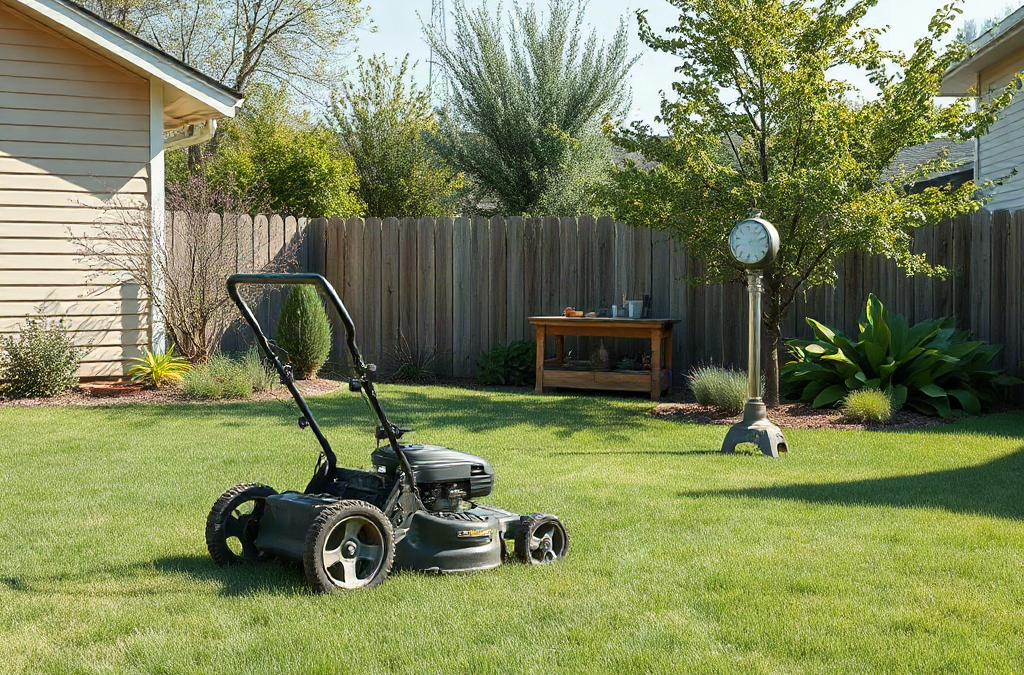
Lawn care for beginners with low-input maintenance routines centers on mowing at the proper height, watering only when grass shows stress, and feeding according to actual soil needs. Leaving grass clippings in place returns nutrients, while a taller canopy shades soil and reduces weed germination. Deep, occasional irrigation is generally more useful than frequent shallow sprinkling because it encourages roots to explore a larger soil volume. The routine should also match the grass species, season, rainfall, soil drainage, and acceptable appearance; a resilient working lawn needs less fertilizer, water, and intervention than a uniformly green show lawn.
What you’ll learn
This guide covers the following practical points:
- Define a Practical Low-Input Lawn — A low-input lawn is managed for durable ground cover rather than constant color, flawless uniformity, or golf-course density.
- Mow for Stronger Grass and Fewer Weeds — Mowing height and frequency influence lawn resilience more than an elaborate product schedule.
- Water Only When the Lawn Needs It — Water according to plant and soil signals rather than a daily timer.
- Feed, Weed, and Repair Selectively — Fertilizer should correct a need, not serve as a default response to every color change.
Define a Practical Low-Input Lawn
A low-input lawn is managed for durable ground cover rather than constant color, flawless uniformity, or golf-course density. That distinction controls nearly every later decision. Grass that may become temporarily dull during heat or contain a modest amount of clover can still protect soil, tolerate foot traffic, and provide a usable outdoor surface.
Begin by identifying whether the yard contains cool-season or warm-season grasses. Cool-season types grow most actively in spring and fall, while warm-season types concentrate growth in warmer months. Local university extension guidance can help with identification because mowing height, fertilization timing, and dormancy differ by species and region.
Next, inspect conditions instead of assuming every thin area needs fertilizer. Grass commonly struggles beneath dense tree canopies, beside compacted paths, on slopes that dry quickly, or in low spots that remain wet. Adding seed and fertilizer without correcting shade, drainage, or traffic wastes material. A mulched bed may be more practical under a mature tree, while stepping stones can protect a frequently crossed route.
Set an appearance threshold before buying products. Decide whether scattered broadleaf plants, seasonal dormancy, and slight color variation are acceptable. Greater tolerance usually means fewer herbicide applications, less watering, and less pressure to stimulate growth that must then be mowed.
Mow for Stronger Grass and Fewer Weeds
Mowing height and frequency influence lawn resilience more than an elaborate product schedule. Grass blades manufacture energy for the roots, so repeated close cutting reduces the plant’s ability to withstand drought, heat, and traffic. A higher canopy also casts more shade at the soil surface, making conditions less favorable for some weed seedlings.
Use a height appropriate for the grass species and avoid removing more than roughly one-third of the blade in a single mowing. That principle matters more than following a rigid weekly calendar. During rapid spring growth, mowing may be needed more often; during drought or dormancy, the mower may remain parked for weeks.
Keep the blade sharp enough to leave a clean edge. Frayed, pale tips after mowing indicate tearing rather than cutting. Sharpening frequency depends on lawn size and contact with sticks, stones, and soil, so inspect the cut instead of relying only on a date.
Leave short clippings where they fall unless they form wet piles or smother the surface. Clippings break down and return nutrients without creating thatch under ordinary conditions. If the lawn became overgrown, make two higher passes several days apart rather than scalping it in one session. The common failure is mowing very short to delay the next cut; this trades a few days of convenience for weaker grass and more exposed soil.
Water Only When the Lawn Needs It
Water according to plant and soil signals rather than a daily timer. A lawn that retains footprints, develops folded blades, or takes on a muted blue-green cast may be running short of moisture. Local watering restrictions and current rainfall should always override a preset irrigation routine.
When irrigation is warranted, wet the root zone and then allow the surface to begin drying before watering again. Frequent shallow sprinkling keeps the upper soil damp while deeper layers remain dry, encouraging roots to stay near the surface. Heavy clay may need water delivered in shorter cycles so it can soak in without running onto pavement. Sandy soil accepts water faster but may dry sooner.
Check delivery with several straight-sided containers placed across the sprinkler pattern. Uneven amounts reveal blocked heads, poor overlap, or wind drift. A screwdriver pushed into the soil after watering provides a simple comparison of moist depth in different locations. Stop if water begins flowing down the driveway or collecting in puddles.
Early morning is generally the most efficient watering period because evaporation is lower than during midday and foliage has time to dry. Evening irrigation may leave blades wet for an extended period, while windy afternoon watering often misses the intended area. A low-input household may also choose to let an established lawn enter normal seasonal dormancy where the grass type and local conditions permit it, although newly seeded areas require more attentive moisture management.

Feed, Weed, and Repair Selectively
Fertilizer should correct a need, not serve as a default response to every color change. Dormancy, dull mower blades, poor drainage, shade, compaction, and pet urine can all produce symptoms that extra nutrients will not fix. A soil test from a regional laboratory or extension service provides a better basis for decisions about pH and nutrient additions.
If fertilizer is appropriate, apply it during the active growth period for the grass type and follow the product label carefully. Excess nitrogen creates fast, soft growth that requires additional mowing and water. Sweep granules from pavement back onto the lawn rather than washing them toward drains or waterways.
Manage weeds by deciding whether the problem is isolated or widespread. Hand removal works well for a few tap-rooted plants when soil is moist. Dense weeds across a large area often signal thin turf, unsuitable light, compacted soil, or repeated mowing too low. Treating the plants without changing those conditions leaves open spaces for new weeds to occupy. Where a pesticide is considered, identify the weed first, use a product labeled for that site and species, and follow all label restrictions.
Repair bare areas during the establishment season suited to the grass. Loosen the surface, improve seed-to-soil contact, and keep the seeded layer consistently moist until germination and early establishment. Seeding into hard soil or scattering seed beneath dense shade commonly fails. Aeration may help genuinely compacted, heavily trafficked soil, but it is not an annual requirement for every yard.
| Lawn symptom | Check first | Low-input response |
|---|---|---|
| Brown during hot weather | Soil moisture and grass dormancy | Water only if stress and local rules justify it |
| Thin beneath trees | Daily light and root competition | Use shade-tolerant grass or replace turf with mulch |
| Weeds in open patches | Mowing height and bare soil | Correct the cause, then reseed at the proper season |
| Puddles after irrigation | Application rate and compaction | Use shorter watering cycles and address drainage |
A Simple Seasonal Lawn Care Routine
A manageable schedule follows grass growth rather than filling every month with a task. Weather shifts the exact dates, so use seasonal cues and regional recommendations instead of treating a national calendar as precise.
- At active growth: Resume mowing at the species-appropriate height, inspect sprinkler coverage, and note thin or compacted areas.
- During peak heat or dryness: Raise mowing height where suitable, reduce traffic on stressed turf, and irrigate only after checking soil and grass signals.
- During the main establishment period: Patch bare soil, overseed compatible turf where appropriate, and correct compaction before adding seed.
- Before dormancy: Remove heavy leaf accumulations, complete regionally appropriate feeding if a soil-informed plan calls for it, and store the mower with a clean deck and sound blade.
Track only a few observations: mowing date, rainfall or irrigation, visible stress, and any product applied. This short record prevents duplicate treatments and exposes patterns. For example, a strip that browns every summer beside a driveway may be suffering from reflected heat and shallow soil rather than a lack of fertilizer.
Signs the routine is working include steady coverage, fewer bare patches, clean mowing cuts, water soaking in without runoff, and acceptable recovery after normal traffic. Repeated scalping, persistent puddles, rapidly returning weeds, or escalating fertilizer and water use indicate that the underlying site problem remains unresolved.
Frequently Asked Questions
How often should a beginner mow the lawn?
Mow when growth would require removing no more than about one-third of the blade. That may mean frequent cutting during active growth and little or none during drought or dormancy.
Should grass clippings be collected?
Short, evenly dispersed clippings can remain on the lawn and return nutrients as they decompose. Collect or redistribute them when wet piles would block light and smother grass.
Does a lawn need to be watered every day?
Established turf generally should not receive automatic daily sprinkling. Check rainfall, soil moisture, grass stress, local restrictions, and species needs before irrigating.
Is fertilizer necessary every year?
Not automatically. Base fertilizer decisions on grass condition, growth pattern, regional timing, and preferably a soil test rather than color alone.
What is the easiest way to reduce lawn weeds?
Maintain dense grass by mowing at a suitable height and repairing bare soil. Remove scattered weeds directly, then correct shade, compaction, drainage, or irrigation problems that favor their return.
Conclusion
Low-input lawn care works best when maintenance responds to growth, weather, and site conditions instead of a crowded product calendar. Set the mower for the grass you have, irrigate only after checking for stress, and investigate thin areas before adding fertilizer or seed. Begin by observing the yard for one growing cycle and recording mowing, rainfall, and recurring trouble spots. Those notes will show which tasks earn a permanent place in the routine and which can be dropped.

Additional Resources
Authoritative Sources
- FS102: Your Lawn and Its Care (Rutgers NJAES)
njaes.rutgers.eduWhether your lawn interests include low-input maintenance, enhanced pest resistance, better traffic tolerance, or high aesthetic quality, the proper use and ... Read more
- Lawn Maintenance - Wisconsin Horticulture
hort.extension.wisc.eduThis article describes the basics of lawn maintenance in Wisconsin, including mowing, fertilizing, watering, irrigating, common lawn problems, and more.