
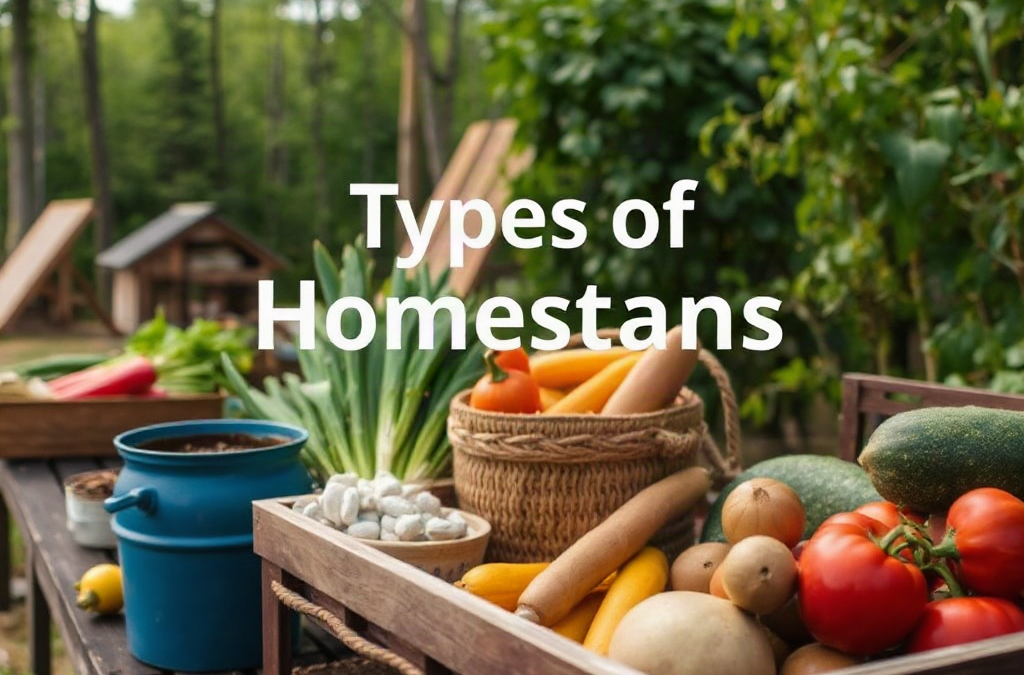
Types of homesteading should be matched to available resources by choosing food-production methods that fit the household’s usable space, reliable water, weekly labor, budget, climate, and local rules. Apartments and small lots favor containers, herbs, sprouts, preservation, and compact composting, while larger parcels may support field crops, orchards, poultry, or grazing animals. Water supply and daily chore capacity usually impose firmer limits than acreage alone. A sound choice leaves enough money and time for soil improvement, fencing, feed, storage, repairs, and seasonal absences rather than committing every resource to initial production.
Assess the Resources That Set Your Limits
Usable capacity matters more than the label attached to a property. Two households with the same acreage may need entirely different systems because one has a productive well, level ground, flexible work hours, and existing outbuildings while the other has seasonal water, heavy shade, a long commute, and no secure storage. Acreage describes area; it does not reveal how much production the household can sustain.
Begin by separating fixed resources from adjustable ones. Climate, slope, solar exposure, legal access, and dependable water are difficult or expensive to change. Skills, tools, soil fertility, storage, and production volume can usually be developed in stages. A windy, dry parcel should not be treated like a blank canvas simply because it is large. Its water delivery, wind protection, and soil cover may deserve attention before livestock or an expanded garden.
Review six constraints before selecting a type of homesteading:
- Space: Count sunny, accessible, legally usable ground rather than total parcel size.
- Water: Identify the source, seasonal reliability, delivery method, and cost.
- Time: Estimate ordinary weekday labor as well as harvest, kidding, brooding, or processing peaks.
- Money: Include recurring inputs and repairs, not merely startup purchases.
- Infrastructure: Check fencing, shelter, electricity, drainage, refrigeration, and storage.
- Rules and neighbors: Verify zoning, animal limits, structures, nuisance provisions, and food-sale requirements with the relevant local authorities.
A common mistake is counting optimistic resources: rainfall that is not captured, relatives who may occasionally help, pasture that is edible only part of the year, or weekend hours already occupied by maintenance. Base capacity on resources available during a difficult but foreseeable week. If animals cannot be watered during a power outage or cared for during illness, the proposed system has a resilience gap.
Create a one-page inventory with firm limits, current assets, and missing infrastructure. The resulting profile makes Types of homesteading matched to available resources a practical selection process rather than a collection of appealing ideas. Signs of a good fit include manageable routines, stable input costs, healthy crops or animals, and enough reserve capacity to handle weather or equipment trouble.
Match Small-Space and Urban Methods to Household Capacity
Small-space homesteading works best when it concentrates on high-use products, rapid feedback, and activities that do not require broad acreage. Containers, window herbs, microgreens, sprouts, patio berries, seed starting, food preservation, sewing, household repair, and modest composting can all increase self-provisioning without pretending that a balcony functions like a farm.
Light and water determine what the space can produce. A sunny patio with an outdoor tap may support several large containers of tomatoes, peppers, greens, and culinary herbs. A shaded apartment with no convenient water access is better suited to purchased seasonal produce, indoor sprouts handled with careful sanitation, pantry storage, and preservation skills. Carrying water through a living area can quickly turn an attractive container setup into an abandoned one.
Container volume affects both plant health and labor. Tiny pots dry rapidly and restrict roots, so fewer adequately sized containers may outperform a crowded arrangement. Their potting mix, drainage, structural weight, and summer watering needs must be considered together. Renters should obtain permission before attaching trellises, installing rain capture, or placing heavy containers on elevated surfaces. Indoor composting also needs a controlled method; an oversized or poorly managed system can create moisture, odor, or pest problems.
Urban food production is often strongest when cultivation is paired with purchasing and preservation. A household might grow herbs and salad greens, buy a box of tomatoes from a local grower, and preserve only the amount it can safely process and store. That arrangement can deliver more useful food than attempting low-yield staple crops in limited soil. Community gardens offer more growing room, but travel time, shared rules, water schedules, and theft or wildlife exposure become part of the resource equation.
Small-space methods are failing when watering is repeatedly skipped, containers remain unharvested, indoor humidity rises, or supplies cost more than the household is willing to maintain. Reduce the number of projects before buying automated equipment to preserve an oversized setup. A compact system that produces foods used every week is more durable than a dense collection of experiments competing for light and attention.
Use Suburban and Small-Acreage Systems for Mixed Production
Suburban lots and small acreages can support integrated production, but every added enterprise competes for the same sun, water, storage, and labor. A kitchen garden, dwarf fruit trees, berry bushes, compost, rain capture where permitted, and laying hens where allowed may fit together well. Adding all of them in the first season usually creates simultaneous demands before the soil, routines, and infrastructure are proven.
Vegetable-centered homesteading suits households with sunny ground, irrigation access, and seasonal time. Intensive beds can produce useful amounts of fresh food, yet they also generate short periods of heavy work for bed preparation, weeding, harvesting, and preservation. Perennial foods reduce annual planting but are not maintenance-free. Fruit trees need appropriate siting, pruning, pest observation, and several years of establishment; berries may require netting or bird-tolerant harvest expectations.
Poultry-centered systems exchange daily care and purchased feed for eggs, manure, and animal experience. Hens do not convert a small lawn into free food. Secure housing, predator resistance, feed storage, winter water, manure handling, and vacation coverage matter more than an attractive coop design. Garden access also requires control because chickens can disturb mulch, seedlings, and ripening produce. Where ordinances prohibit poultry, composting plant residues and sourcing manure or finished compost locally is a more realistic alternative.
Consider a household with one sunny quarter-acre lot and two adults working away from home. Four modest beds, a drip system, culinary herbs near the kitchen, and a few well-sited berry plants may remain productive during a busy month. A large flock, extensive annual garden, orchard, and roadside sales project would introduce daily chores, processing pressure, and regulatory questions at once. The smaller arrangement can be expanded after a full seasonal cycle reveals actual water use and labor peaks.
The recurring misconception is that mixed production automatically creates a closed loop. Garden scraps cannot replace balanced poultry feed, manure requires suitable handling, and household-scale compost seldom supplies every fertility need immediately. Integration reduces some waste and inputs, but it does not erase biological requirements. Track purchases, harvests, losses, and chore time for each enterprise. Keep the parts that provide valued food or function without consuming the reserve needed for maintenance.
Choose Rural and Land-Based Systems Without Overextending
Rural homesteading expands the range of possible enterprises, but distance and infrastructure can make each failure more consequential. Market gardens, orchards, woodlots, poultry, dairy animals, meat animals, and grazing systems each need a different combination of soil, water, fencing, shelter, machinery, skill, and access. A large property is not evidence that all of those uses belong on it.

Grazing-based homesteading requires forage assessment rather than a simple acres-per-animal assumption. Productive capacity changes with soil, rainfall, plant species, slope, season, and management. Land that appears lush in spring may provide little winter feed, while wet ground may be damaged by concentrated hoof traffic. Prospective keepers should consult local extension or conservation professionals for site-specific forage and soil information, then budget for purchased hay, mineral, veterinary care, handling facilities, and secure fencing.
Livestock also converts optional gardening work into nonnegotiable daily responsibility. A failed crop may be disappointing; a failed water system during hot or freezing weather can become an animal-welfare emergency. Beginners often fare better with a limited number of animals whose housing, feed supply, and backup care are established before arrival. Dairy animals impose tighter milking and breeding routines than a seasonal garden or a small laying flock, making them a poor match for frequent travel even when the land is suitable.
Crop-focused rural systems have their own constraints. A market-sized planting needs dependable irrigation, harvest handling, pest management, cold storage, transport, and a realistic destination for perishable produce. A household seeking primarily pantry food may gain more from potatoes, dry beans suited to the local season, winter squash, storage onions, and a manageable garden than from a broad crop catalog. Orchard or nut production offers perennial value but delays returns and locks the site into long-lived plantings.
Remote access changes repair and inventory decisions. Spare fittings, stored feed, fuel management, snow or mud access, and backup power may deserve funding before expansion. Warning signs include deferred fence repairs, routine emergency purchases, declining pasture cover, spoiled harvests, or dependence on one person who cannot leave. At that point, reduce numbers or production area rather than treating exhaustion as a normal cost of rural life.
Build a Resource-Matched Starting Sequence
A staged sequence reveals whether a chosen method fits before its costs become difficult to reverse. Start with one food-producing activity and one supporting system. A garden might be paired with composting; a small flock with secure feed storage; an orchard planting with irrigation and protection from browsing. Supporting infrastructure should operate before production reaches full scale.
Use the scarcest dependable resource as the first filter. If water is limited, choose a compact growing area, improve soil organic matter, mulch appropriately, and postpone thirsty expansion. If weekday time is scarce, favor perennials, storage crops, automated irrigation with regular inspection, or preservation using purchased local produce. If cash is tight but time and suitable ground are available, begin with a small annual garden and simple hand tools rather than animals carrying continuous feed and housing costs.
- Measure: Record sun, water delivery, weekly hours, available cash, storage, and applicable rules.
- Select: Choose one enterprise that produces something the household already uses.
- Prepare: Install the bed, irrigation, shelter, fencing, or storage needed to prevent predictable losses.
- Run a full cycle: Include the busiest season, not just the easy establishment period.
- Review: Compare harvest or household value with labor, purchases, waste, and maintenance.
- Expand selectively: Increase only the part whose inputs and routines remained stable.
For example, a family interested in broad self-sufficiency could spend its first year on six vegetable beds and pantry organization. Records may show that summer irrigation is easy but preserving large harvests conflicts with work schedules. The next improvement should then be succession planting or fewer storage crops, not a larger garden. Another household may find that gardening is inconsistent but has dependable daily time for hens; local rules, secure housing, and a backup caretaker would determine whether that shift is sensible.
Evaluate success through operational signals rather than novelty. Soil coverage improves, watering becomes predictable, stored food is consumed before it deteriorates, animal body condition and housing remain sound, and routine expenses fit the household budget. Repeated missed chores, excessive purchased inputs, unused harvests, or repairs postponed to fund expansion indicate a mismatch. Revisit the Types of homesteading matched to available resources after moving, changing work schedules, losing a water source, or adding caregiving responsibilities; capacity is not permanent.
Frequently Asked Questions
What type of homesteading is best for a beginner?
A small vegetable or herb plot, basic food preservation, and organized pantry storage provide quick feedback without creating year-round animal obligations. Choose one activity tied to food your household regularly uses.
Can homesteading work without owning land?
Yes. Renters can use permitted containers, community garden plots, sprouts, preservation, repair skills, and bulk pantry storage. Lease restrictions, light, water access, and safe storage determine the workable combination.
How much time should be budgeted for livestock?
Budget for care every day plus cleaning, feed collection, health checks, repairs, and seasonal work. Test the proposed routine on busy weekdays and arrange competent backup care before obtaining animals.
Should a homestead begin with a garden or chickens?
A garden is generally easier to pause or resize. Chickens may fit when local rules allow them and the household already has secure housing, feed funds, daily availability, manure management, and absence coverage.
How can someone tell when a homestead is too large?
Frequent missed chores, declining soil or pasture condition, unused harvests, emergency input purchases, neglected repairs, and inability to take necessary time away all indicate that production exceeds dependable capacity.
Conclusion
The strongest homestead is not the one with the longest project list; it is the one whose daily and seasonal demands remain supportable. Inventory dependable water, usable ground, routine labor, cash reserves, infrastructure, climate exposure, and local restrictions before selecting enterprises. Then choose a modest activity that supplies food or function the household values and build its support system first.
Operate that choice through a full growing or care cycle and record its purchases, workload, losses, and useful output. Expand when chores remain consistent, maintenance is current, and backup capacity exists. Reduce or change direction when production relies on skipped tasks, optimistic weather, or money reserved for repairs. Matching methods to actual resources produces a homestead that can adapt as household circumstances and site conditions change.


