
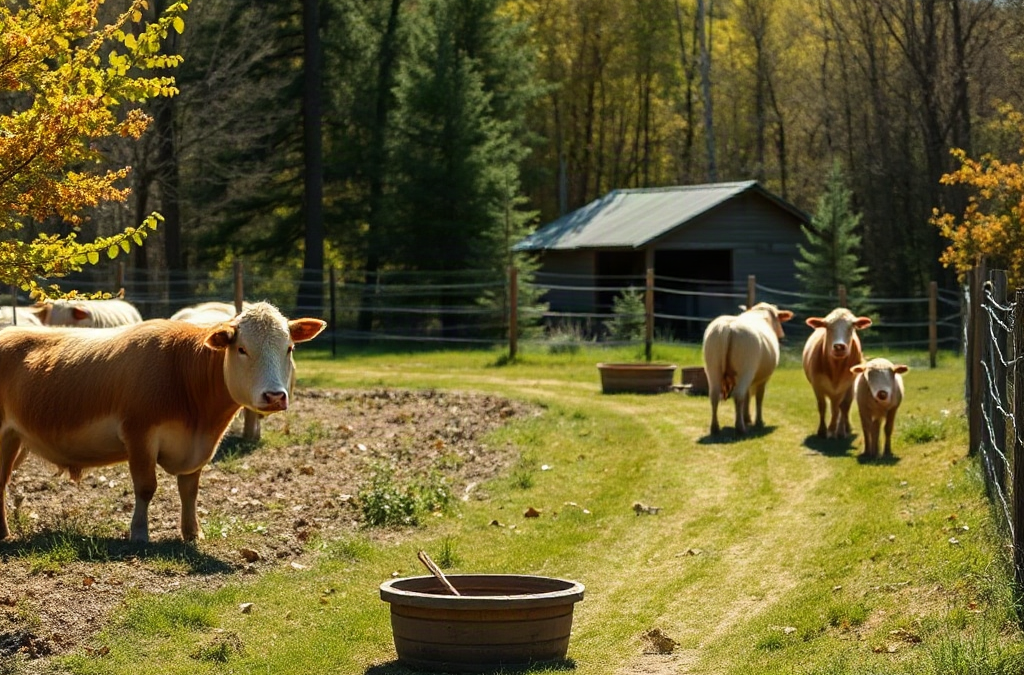
Small-farm acreage matched to homesteading goals should be sized from the usable ground, water supply, livestock needs, growing space, and workload rather than the parcel’s advertised total. A productive garden and laying flock may fit comfortably on one to three usable acres, while grazing animals usually require more room or purchased feed. Steep slopes, wetlands, setbacks, poor soil, and inaccessible corners can sharply reduce working acreage. Before choosing a parcel, map each planned enterprise, reserve space for buildings and access, verify local restrictions, and test whether the household can afford and maintain the resulting fencing, water lines, equipment, and seasonal workload.
Size the Usable Acreage, Not the Listing Acreage
A parcel’s deeded acreage rarely equals the area available for gardens, pasture, buildings, and animal yards. Woods may be valuable for privacy, firewood, or shade, but dense woodland is not immediately equivalent to open grazing ground. Wet areas, steep slopes, utility easements, drainage channels, road frontage, and required building setbacks can further reduce the working area.
Begin with a rough land-use map rather than an acreage target. Mark the home, septic field, well or water connection, driveway, existing structures, property boundaries, and any areas that remain wet after rain. Then identify reasonably level, sunny, accessible ground. A five-acre parcel with two acres of dry, open ground may offer less production capacity than a compact three-acre parcel with good soil and an efficient layout.
The shape of the parcel matters as much as its total size. A long, narrow property can consume substantial fencing while leaving awkward corners that are difficult to graze or cultivate. A more compact parcel shortens walking routes, water lines, and perimeter fencing. It may also allow the garden, compost area, poultry housing, and storage shed to share a central work zone.
Do not automatically classify wooded or rough ground as wasted. It can provide wind protection, wildlife habitat, managed firewood, mushroom-growing sites, or seasonal livestock shelter where local conditions and tree species are suitable. The mistake is counting that ground twice: once as woodland and again as future pasture without including the cost, time, erosion risk, and permitting questions associated with clearing it.
A useful initial test is to divide the property into three categories: ready for production, usable after improvement, and unlikely to support the intended enterprise. Base the first-year setup on the first category. Treat the second as future capacity rather than guaranteed capacity. This approach makes Small-farm acreage matched to homesteading goals a question of functional layout instead of an arbitrary minimum lot size.
Match Acreage to Crops and Livestock
Each homesteading enterprise places a different demand on land. Intensive vegetables need relatively little area but require suitable sun, irrigation, soil preparation, paths, crop rotation, compost handling, and frequent attention. Grazing livestock can occupy far more ground while demanding less daily cultivation, although fencing, winter feed, manure management, and pasture recovery become major constraints.
A household focused on vegetables, berries, culinary herbs, laying hens, and a small orchard may be able to use one to three workable acres effectively. The house and utilities will claim part of that space, so success depends on compact placement and realistic production goals. A large vegetable plot is not automatically better: neglected beds produce weeds, pest habitat, and unfinished harvest work. Expanding after one well-managed season is usually less costly than preparing more ground than the household can maintain.
Goats, sheep, cattle, and other grazing animals cannot be assigned a universal acres-per-animal figure. Pasture productivity changes with rainfall, soil fertility, plant species, slope, growing season, stocking period, and management. Ground that supports grazing during spring growth may provide little feed during drought or winter dormancy. If animals remain too long in one enclosure, they repeatedly graze preferred plants, expose soil, and increase parasite pressure around feeding and resting areas.
Consider two contrasting properties. A family keeping hens and growing produce can benefit from a small parcel near the house, where water and harvest routes are short. A family hoping to maintain breeding goats needs separate areas for rotation, quarantine, kidding, hay storage, and manure handling. The second operation may need more acreage, but it also needs a workable subdivision plan; one large field without interior fencing does not provide controlled rotation.
Pigs and poultry can obtain forage outdoors, yet forage should not be assumed to replace balanced feed. Concentrating animals on a small area can quickly remove vegetation and create mud around gates, shelters, and waterers. Buyers comparing acreage should calculate the ongoing cost of purchased feed and bedding, not use extra land as a vague promise of self-sufficiency. A sound enterprise list specifies what the land must produce, what will be purchased, and how animal pressure will be moved or contained.
Account for Water, Soil, Climate, and Terrain
Productive capacity is determined by site conditions before it is determined by acreage. Reliable water can make a smaller parcel more useful, while an expansive dry parcel may require costly storage, pumping, or irrigation. Verify the source, legal access where applicable, seasonal reliability, delivery rate, and distance to every proposed growing or animal area. A functioning household tap does not prove that the system can supply an orchard, garden, and livestock during hot weather.
Soil evaluation should separate garden suitability from pasture suitability. A garden can often be amended intensively within a defined footprint, but correcting poor drainage or severe compaction across several acres is a different undertaking. Soil tests can guide fertility and pH decisions, while test pits and site observation reveal drainage behavior. Visit after sustained rain if possible; standing water, gray mottled subsoil, erosion channels, or vehicle ruts can expose limitations hidden during dry conditions.
Sun exposure and frost movement deserve equal attention. A south-facing opening may warm early, whereas a low pocket can collect cold air and damage blossoms. Trees on the southern edge can shade beds during the low winter sun, and western exposure can increase summer heat and water demand. For an orchard, note air drainage, wind exposure, and access for pruning and harvest rather than simply counting how many trees fit on paper.
Climate changes how much stored feed, protected growing space, and all-weather access the operation requires. A long dormant season shifts acreage needs toward hay storage and sacrifice areas where livestock can be kept off vulnerable pasture. In a dry region, irrigation capacity and fire-safe placement may carry more weight than an additional acre of marginal ground. Local extension offices, soil and water conservation districts, and USDA soil mapping tools can help interpret the parcel, but field observation remains necessary because mapped soil boundaries are not precise at the scale of a garden bed.
The common failure is purchasing for an ideal season. Evaluate the site under the limiting season instead: midsummer drought, prolonged winter wetness, deep snow, or the local period when pasture growth slows. The parcel is working when water remains manageable, soil stays covered, and production areas remain reachable. Persistent mud, recurring erosion, emergency water hauling, or repeated crop failure signals that the layout or stocking level exceeds what the site can support.
Reserve Space for Infrastructure and Daily Movement
Infrastructure consumes acreage without appearing prominently on a production wish list. The home, septic reserve area, driveway, parking, barn apron, equipment turns, feed storage, composting area, utility corridors, and fire or emergency access all need room. These uses can fragment the remaining ground, especially on smaller lots where every gate and path competes with a bed, paddock, or tree row.

Plan movement before placing permanent structures. Feed should travel from storage to animals without crossing the vegetable garden. Manure should move toward composting or field application without passing through household gathering areas. Water lines should follow routes that can be inspected and repaired. Gates need enough width for the largest vehicle or implement likely to use them, not merely enough width for a person carrying a bucket.
Distance becomes a recurring labor charge. A poultry house placed far from the home may seem harmless on a site sketch, but the route must be walked in darkness, rain, ice, or heat. A garden beyond the reach of a convenient hose is more likely to receive irregular watering. Conversely, placing every activity beside the house can create odor, flies, noise, drainage problems, and conflict with wells or septic components.
Use zones based on visit frequency. Daily chores such as hens, seedlings, tools, and kitchen-garden harvests usually belong close to the house. Orchards, seasonal storage, managed woodland, and rotational paddocks can occupy farther zones if access remains reliable. Keep incompatible uses apart: livestock runoff should not drain toward produce beds or water sources, and machinery routes should not cut through grazing subdivisions.
Extra acreage does not correct a poor circulation pattern. It can increase fence length, mowing, invasive-plant control, and the time spent moving supplies. Before treating a larger parcel as safer, compare the annual cost of maintaining unused ground with the cost of buying selected inputs. The most efficient Small-farm acreage matched to homesteading goals often leaves deliberate reserve space without requiring the household to manage every corner immediately.
Use a Parcel-Sizing Checklist Before Buying
A parcel decision should survive a written capacity test. Start with the first three years of activity rather than the fully developed dream. New owners commonly underestimate the overlap between construction, fencing, soil improvement, animal care, preservation, and ordinary employment. Choosing enough room for staged growth is sensible; paying for acreage that forces immediate equipment purchases and constant vegetation control is not.
Walk the property with a scaled map or aerial image and assign approximate footprints. Include buffers and working lanes rather than drawing buildings and paddocks edge to edge. Verify boundaries through appropriate records and professional services when needed. Planning from a real survey is more reliable than treating a fence, tree line, or mowed edge as the legal boundary.
- Define outputs: List the vegetables, fruit, eggs, meat, fiber, firewood, or grazing the household actually expects from the property.
- Calculate usable ground: Remove buildings, access, septic areas, steep slopes, persistent wet spots, and protected or restricted areas from the working estimate.
- Test limiting resources: Check water delivery, soil condition, sunlight, drainage, winter access, and feed-storage capacity.
- Map infrastructure: Place fences, gates, shelters, compost, equipment storage, utility routes, and vehicle turns.
- Price the operating model: Estimate fencing, water distribution, feed, bedding, soil amendments, repairs, taxes, and equipment.
- Confirm permissions: Review zoning, animal limits, structure rules, setbacks, access rights, water restrictions, and nuisance provisions with the relevant local authorities.
Stress-test the map with a failure scenario. If a pasture rests for several weeks, where will animals go? If the well or pump is unavailable, how will drinking water reach them? If one household member cannot perform chores, can the remaining person manage the distances and gates? These questions expose designs that function only when weather, equipment, and labor all cooperate.
A good match shows clear signs: core chores fit the available weekly hours, vegetation recovers between grazing periods, production areas have dependable water, and reserve ground has a defined future use. Warning signs include relying on immediate land clearing, assuming livestock will live mostly from forage, overlooking winter feed storage, or needing several expensive improvements before any enterprise can begin. Use the checklist to compare parcels consistently rather than allowing one attractive feature to dominate the decision.
Frequently Asked Questions
How many acres does a beginner homestead need?
A beginner focused on gardens, fruit, and laying hens may use one to three workable acres well. The usable area, water access, local rules, and available labor matter more than a universal minimum.
Can one acre produce a meaningful amount of food?
Yes. Sunny, well-watered ground can support intensive vegetables, herbs, berries, dwarf fruit trees, and a modest poultry setup, although the household will still purchase many inputs and foods.
How much acreage is needed for grazing animals?
No single stocking figure applies everywhere. Forage growth, rainfall, soil, species, rotation, winter conditions, and purchased-feed plans must be evaluated locally before deciding how many animals the ground can carry.
Should wooded acreage count toward homestead size?
Count woodland according to its intended use. It may supply shade, habitat, firewood, or specialty crops, but it should not be counted as ready pasture or garden ground without a realistic conversion assessment.
Is buying extra acreage for future expansion worthwhile?
Reserve acreage can be useful when it is affordable and manageable. Include its taxes, fencing, mowing, invasive-plant control, and access costs before treating unused ground as inexpensive future capacity.
Conclusion
Choose acreage by drawing the operation on the actual parcel and testing it against the least favorable season. Measure dry, accessible, legally usable ground; verify water and soil conditions; and leave room for utilities, storage, gates, lanes, manure handling, and pasture recovery. Then compare the cost of owning and maintaining additional ground with the cost of purchasing feed, compost, or other inputs.
The next step is a three-year enterprise list paired with a scaled site map. Walk each candidate property after difficult weather when possible, confirm restrictions with local authorities, and price the improvements needed before production begins. A smaller, well-arranged site can outperform a larger fragmented one, while livestock ambitions may justify more room only when forage, rotation, winter management, and labor have been addressed honestly.


