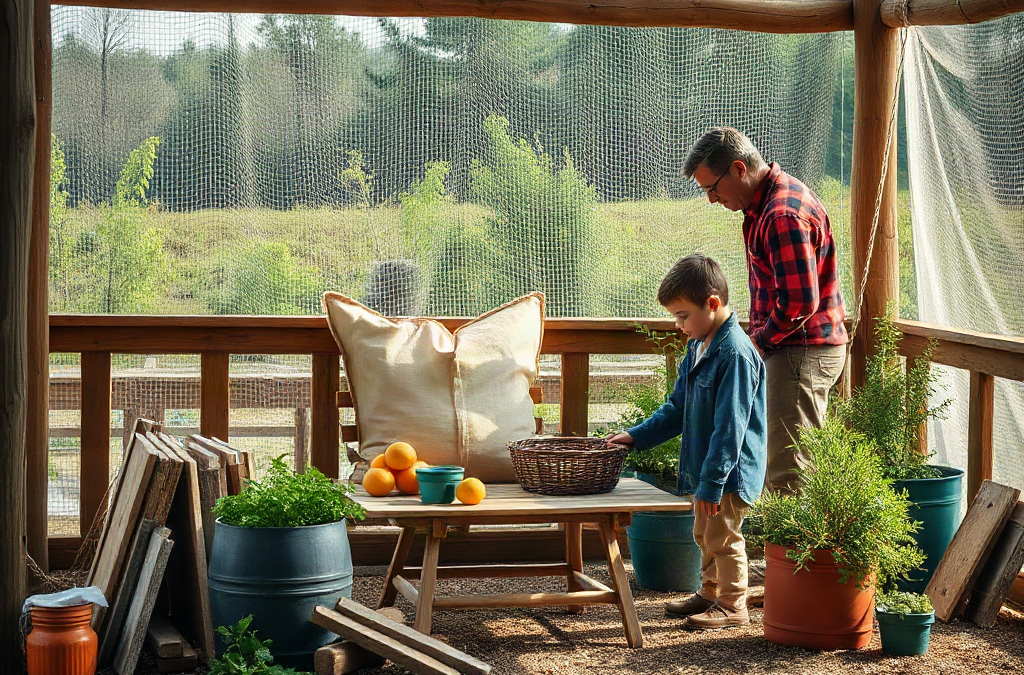
Practical homesteading topics for skill building are best organized into a 12-month sequence that moves from observation and soil preparation to food production, preservation, animal care, repairs, and emergency readiness. Begin with low-risk skills such as garden planning, tool maintenance, compost management, and basic cooking so mistakes cost little and results are easy to measure. Add preserving only after learning tested methods for acidity, heat processing, sanitation, and storage conditions. Livestock, chainsaw use, electrical work, and structural repairs deserve supervised practice because poor technique can injure people, damage property, or create food-safety problems. A written project log showing time, supplies, failures, and improvements turns scattered chores into durable competence.
Choose Skills That Build on Each Other
Skill building works better when each project supplies knowledge, materials, or confidence for the next one. A beginner who starts with a large orchard, several animals, and a full preservation schedule is managing multiple failure points at once. A smaller sequence—mapping sunlight, maintaining hand tools, growing a few dependable crops, and cooking from stored ingredients—creates useful feedback without overwhelming the household.
Sort potential projects by risk, repetition, and seasonal timing. Garden observation and tool sharpening can be practiced frequently and cheaply. Poultry care, pressure canning, roofing, and electrical work have higher consequences when technique is poor. Those subjects may still belong in a long-term learning plan, but they should follow basic instruction, appropriate protective equipment, and hands-on supervision where needed.
A practical first-year sequence might look like this:
- Late winter: site mapping, seed planning, soil testing, knife and tool care, and basic cooking.
- Spring and summer: bed preparation, direct sowing, transplanting, irrigation checks, weed control, and harvest records.
- Late summer and autumn: drying, freezing, fermentation, tested canning methods, seed collection, and pantry rotation.
- Winter: equipment repair, budgeting, emergency water planning, and review of the season’s results.
The common mistake is choosing projects because they look impressive rather than because they fit available time. A household with only a few weekend hours may gain more from a compact kitchen garden and freezer inventory than from an ambitious livestock setup. Use Practical homesteading topics for skill building as a menu, then select one primary project and one supporting habit for each season.
Build a Productive Garden and Soil System
Garden skill begins with reading the site, not buying the largest collection of seeds. Record several days of sunlight, note standing water, identify likely frost pockets, and observe where paths remain usable after rain. These details determine whether a crop fails because of variety, planting time, drainage, or simple lack of light. A soil test can add useful information about pH and nutrient levels, but it does not replace observing compaction, moisture, and how quickly beds dry.
Start with crops that show progress clearly and have several uses. Bush beans, leafy greens, radishes, herbs, potatoes, and determinate tomatoes can teach sowing depth, spacing, harvest timing, and pest observation without requiring an entire field. Compare one crop grown in a mulched bed with the same crop in bare soil. The comparison reveals how quickly moisture is lost and whether the mulch introduces weeds, pests, or cold soil in early spring.
Soil improvement is a gradual biological and physical process. Compost can add organic matter, but unfinished material may contain weed seeds or tie up nitrogen temporarily. Excess amendments can also create nutrient imbalances or runoff. Apply only what the test and crop needs, keep paths from being compacted, and avoid working wet soil when it smears rather than crumbles.
Keep a simple crop record with sowing date, variety, weather notes, harvest weight or container count, and visible problems. If seedlings are tall and pale, light or temperature may be the issue rather than fertilizer. If mature plants wilt repeatedly, check roots, drainage, and irrigation coverage before adding more water. The weak assumption is that every garden problem is solved with more inputs; often the better fix is improved timing, spacing, airflow, or site selection. Seasonal experiments should be small enough that a failed bed does not threaten the household’s food supply.
Practice Food Preservation Without Guesswork
Preservation is a chain of controls: sound produce, clean preparation, the correct method, reliable processing, suitable storage, and regular inspection. Each method handles different hazards and qualities. Freezing usually preserves texture better for some vegetables when they are blanched first, while drying reduces water available for spoilage but depends on consistent dryness. Fermentation relies on salt, acidity, time, and temperature; casual substitutions can change the result.
Use tested recipes and instructions from sources such as university extension programs or the USDA when canning. Acidity, jar size, processing time, and altitude can affect safety, so changing ingredients or reducing processing steps is not a harmless shortcut. Water-bath canning is not a universal method for low-acid foods, and a sealed lid alone does not prove that the contents are safe.
A useful beginner project is to preserve one crop in two ways, such as freezing green beans and drying herbs. Label every package with the product, date, method, and any preparation note. This creates a direct comparison between labor, storage space, texture, and how often the food is actually used. A large batch that remains untouched is not a successful preservation system, even if it was processed correctly.
Storage conditions matter after processing. Heat, light, moisture, pests, and fluctuating temperatures shorten quality and may damage packaging. Rotate older items forward and inspect for leaking containers, mold, bulging, broken seals, or unusual odors. Do not taste questionable food to decide whether it is safe. A common failure is preserving more than the household can use; planning quantities around ordinary meals is safer and more economical than treating every harvest as a challenge to fill every jar.
For related planning ideas, connect pantry work with Practical homesteading topics for skill building by tracking which ingredients reduce store trips and which simply accumulate.
Add Animals, Repairs, and Emergency Readiness
Animal care should be added only when daily routines, housing, feed storage, and veterinary access are realistic. Chickens may provide eggs and manure, but they also require predator-resistant housing, clean water, protection from weather, and a plan for illness or declining production. Goats, rabbits, and larger livestock add different fencing, handling, feed, and sanitation demands. The useful question is not whether an animal fits the homestead image; it is whether someone can provide care every day, including during travel, illness, or severe weather.
Begin with observation and infrastructure rather than purchasing animals immediately. Walk the proposed fence line, test gates, measure feed storage, and identify where manure and bedding will go. A weak latch or muddy water area becomes a recurring operational problem. Compare the cost of purchased feed and infrastructure with the value of eggs, meat, fiber, or manure before committing.

Repair skills are similarly practical when taught in a controlled order. Learn to identify fasteners, shut off water, replace a washer, patch a screen, clear a gutter, and safely use a drill before attempting structural or electrical work. Photograph assemblies before disassembly and keep replacement parts labeled. For work involving live electrical circuits, gas, major structural loads, or hazardous machinery, use qualified instruction rather than improvising.
Emergency readiness links these skills together. Store water, basic food, lighting, first-aid supplies, weather-appropriate clothing, and backup cooking options according to household needs. Test equipment during ordinary conditions instead of waiting for an outage. The common misconception is that self-reliance means doing every task alone; knowing when to call a veterinarian, electrician, mechanic, or building professional is part of responsible homestead management.
Measure Progress and Plan the Next Season
Progress becomes visible when each project has a defined result. “Improve the garden” is too broad to evaluate, while “grow three salad crops and record four harvest dates” gives a clear finish line. Use a notebook or spreadsheet to record hours, purchases, quantities produced, discarded materials, and problems encountered. These records reveal whether a project saves money, improves resilience, or simply consumes time that could be used elsewhere.
Review projects by separating technique from conditions. A poor tomato harvest may reflect late planting, low light, disease pressure, or unsuitable weather rather than faulty pruning. A failed batch of dried fruit may result from pieces cut at inconsistent thicknesses or storage in a humid room. Write down what was changed, what happened, and what evidence supports the next adjustment.
Prioritize the next season using three questions: Does the skill meet a real household need? Can it be practiced safely with current resources? Will the result be used often enough to justify the labor? If the answer is no, defer it. A household that consistently cooks from frozen vegetables may benefit more from expanding freezer organization than from learning a new preservation method.
Build a small maintenance calendar for sharpening, seed ordering, fence checks, pantry rotation, and equipment inspection. Revisit Practical homesteading topics for skill building after each seasonal review, not before every new purchase. The strongest learning plan is iterative: keep methods that produce dependable results, modify those affected by local conditions, and stop projects that create more risk or waste than value.
Frequently Asked Questions
What homesteading skill should a beginner learn first?
Begin with a low-risk, repeatable skill such as garden planning, tool care, cooking from basic ingredients, or pantry inventory. Choose one that fits your current time and equipment.
How can I practice homesteading without owning land?
Use containers, windowsill herbs, food preservation, sewing, repairs, cooking, fermentation, and balcony composting where permitted. These skills transfer well to a larger property.
Should food preservation be part of a first-year plan?
Yes, but begin with freezing or drying and follow tested instructions for canning. Preserve quantities that match normal meals, storage space, and your ability to rotate supplies.
When should beginners add livestock?
Add animals after housing, fencing, feed storage, daily care, predator control, and veterinary arrangements are ready. The routine must remain workable during illness and travel.
How do I know whether a homesteading project is worthwhile?
Track labor, expenses, output, waste, and household use. Keep projects that meet a real need or build a valuable skill without creating disproportionate safety, financial, or time costs.
Conclusion
Choose homesteading projects by usefulness and sequence rather than novelty. Site observation, basic gardening, tool maintenance, cooking, and simple storage practices create a dependable base for more demanding work. Add canning, livestock, structural repairs, and powered equipment only when the necessary knowledge, safety controls, infrastructure, and time are available. Keep records that show what worked under your soil, weather, schedule, and budget; those local observations are more valuable than copying a system designed for another property. Set one measurable seasonal goal, review the result, and carry only the most useful lessons forward. Practical self-reliance grows through repeated, carefully evaluated work—not through attempting every skill at once.