
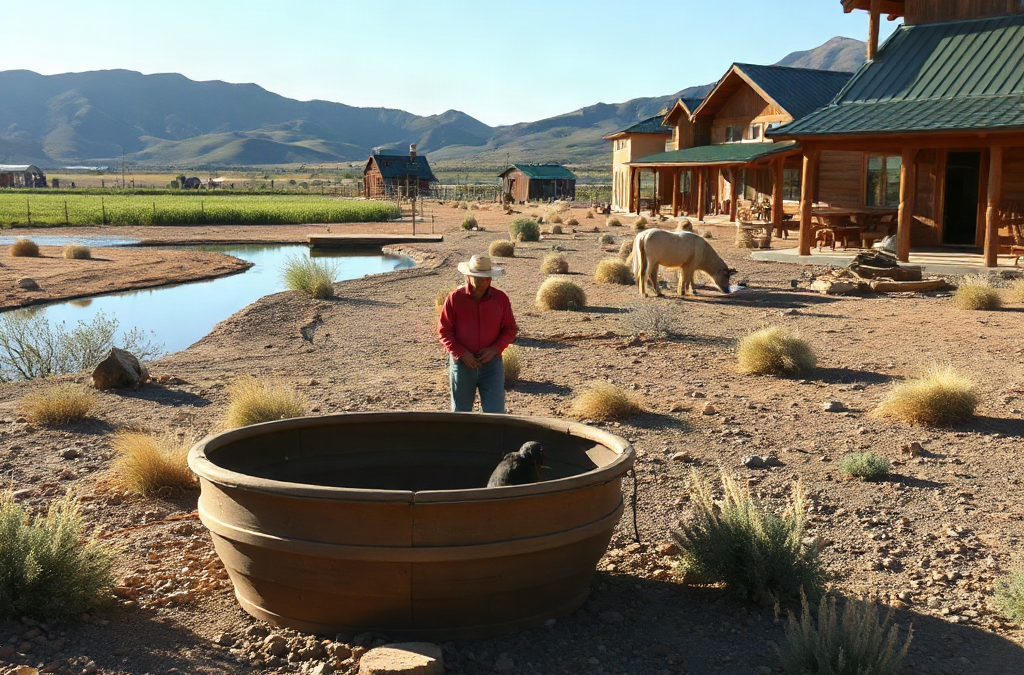
Nevada homestead land water and climate concerns center on proving dependable water access, matching the property to its heat and cold exposure, and confirming that the land can support the intended use. A parcel may look affordable yet fail because a well is too deep, hauling water is impractical, flash flooding reaches the building site, or alkaline soil limits crops. Before buying, verify water rights and well records with the relevant Nevada authorities, inspect drainage and access, test soil, and review wildfire, wind, drought, and winter conditions. Favor a smaller parcel with documented water, usable soil, and year-round access over more acreage with uncertain infrastructure.
Water Availability and Legal Access
Water should be the first filter for any Nevada homestead parcel, not a detail to resolve after closing. Desert and high-desert landscapes can receive limited precipitation, and nearby vegetation does not prove that a property has a dependable domestic or agricultural supply. A listing that says “water available” may refer to a well, a shared system, a water-hauling arrangement, or a water right that does not cover the use you intend.
Separate three questions before treating a parcel as viable: Is water physically present, is its use legally authorized, and can it be delivered reliably? A private well needs more than a drilled hole. Ask for well-construction records, depth, production information, pump details, water-quality tests, and repair history when available. A low-producing well may serve a small household but become inadequate when livestock, gardens, evaporative cooling, or orchard irrigation are added.
Water rights are a separate issue from well ownership. Nevada regulates water appropriation, and rights may vary by basin and intended use. Domestic use, irrigation, stock watering, and commercial activity should not be assumed to share the same authorization. Confirm the status of any claimed right through the Nevada Division of Water Resources and ask a qualified local professional to interpret records for the specific parcel. County planning and building offices may also identify requirements that affect wells, septic systems, and occupied structures.
Compare the cost of a documented supply with the apparent savings of an inexpensive parcel. Water hauling can work for a seasonal cabin, but tanks, roads, storage capacity, delivery scheduling, and backup arrangements become household infrastructure. A 2,500-gallon tank may sound substantial until it is used for drinking, washing, livestock, and garden establishment during a long dry period. Rain capture can supplement a system, but it should not be treated as the primary source without checking local rules, roof area, storage needs, and actual precipitation patterns.
A common mistake is to budget for the house while treating water as a utility connection. Price the complete system instead: well work, pump and electrical service, pressure equipment, storage, filtration, water testing, hauling, and contingency repairs. Readers comparing parcels can use the Nevada homestead land water and climate concerns checklist as a reminder that a water claim must be verified, not inferred from a map or seller statement.
Land, Soil, Drainage, and Site Design
Usable homestead land is more than acreage. The productive portion must have suitable soil, a buildable location, access for supplies, and drainage that remains manageable during intense storms. Nevada properties may contain shallow soils, gravel, caliche, alkaline conditions, exposed rock, or uneven terrain. Each condition changes the cost of gardens, fencing, septic installation, roads, and foundations.
Test soil before planning field crops or an orchard. A laboratory report can identify texture, salinity, pH, and nutrient levels, but the result still needs to be read alongside irrigation water quality and the proposed crop. Salty irrigation water can create a long-term root-zone problem even when a soil amendment initially improves the test result. Raised beds, imported soil, drip irrigation, shade structures, and drought-tolerant perennial plantings may be more realistic than trying to convert every acre into conventional garden ground.
Drainage deserves an inspection during or soon after a storm if possible. Dry washes, alluvial fans, culverts, and low crossings can carry fast-moving water even when the parcel appears dry for most of the year. Avoid placing a home, wellhead, animal shelter, or equipment pad where runoff naturally concentrates. A driveway that is passable in June may become unusable after a summer thunderstorm or winter freeze-thaw cycle.
Topography also creates a tradeoff. A level parcel may simplify construction and vehicle movement but offer little natural separation from cold-air pooling or wind exposure. A sloped parcel may provide better drainage and passive solar opportunities while increasing grading, erosion, retaining-wall, and access costs. Walk the property rather than relying only on satellite imagery. Look for sediment deposits, scoured channels, leaning fence posts, salt crusts, stressed vegetation, and places where snow or water would collect.
Septic feasibility should be checked before assuming that remote land can support a residence. Soil depth, slope, groundwater conditions, and available reserve area may limit system placement. A failed assumption here can force an expensive redesign or eliminate the preferred building site. Treat a professional site evaluation as part of land due diligence, not as a construction formality.
Nevada Heat, Cold, Wind, and Drought
Nevada does not have one homestead climate. Elevation, basin position, mountain exposure, and distance from developed areas create sharp local differences. Lower desert locations may impose intense summer heat and high cooling demand, while northern and elevated properties can face hard freezes, snow, short growing seasons, and difficult winter access. Wind is a separate design pressure that affects structures, greenhouses, livestock shelters, dust, and water loss.
Climate planning begins with the daily operating burden rather than an average temperature. Heat can reduce garden performance, stress animals, increase water consumption, and make outdoor work unsafe during the afternoon. Shade cloth, windbreaks, insulated water lines, reflective roofing, protected feed storage, and timed irrigation may reduce strain, but each addition requires maintenance and sometimes more water or power. A greenhouse can extend the season, yet it may overheat quickly without ventilation and shade.
Cold creates different failure points. Exposed plumbing, pressure tanks, livestock waterers, and pump equipment need freeze protection. A remote road may become inaccessible just when a repair visit is most urgent. High-elevation gardeners may need to choose short-season crops and use season-extension structures instead of planning around low-desert planting dates. The right comparison is not “desert versus snow”; it is how the property’s climate affects water demand, labor, infrastructure, and the timing of essential tasks.
Drought also changes the value of land over time. A parcel that can support a large irrigated garden during a favorable year may become expensive to operate when water levels, restrictions, or delivery costs change. Prioritize systems that reduce exposure: efficient irrigation, mulch, carefully selected plantings, shaded storage, leak monitoring, and a realistic livestock count. Native or regionally adapted plants can lower establishment demands, but they still need irrigation while roots develop.

Wildfire and smoke exposure should be assessed where vegetation, terrain, and seasonal winds create risk. Defensible space, access for emergency vehicles, noncombustible areas near structures, and protected water or power equipment can improve resilience, but no single measure removes wildfire risk. A common mistake is designing only for the most visible season. Visit the parcel in hot, windy, and cold conditions when possible, and ask nearby residents what breaks first: the road, the pump, the power supply, or the fencing.
A Before-Purchase Investigation Plan
A disciplined investigation prevents an attractive landscape from becoming an expensive experiment. Begin with the intended use in writing: full-time residence, seasonal retreat, garden, orchard, livestock, workshops, or some combination. Water demand, road standards, septic needs, electrical loads, and climate exposure all change when the use changes. A parcel suitable for a weekend cabin may not support a full-time household with animals.
Review records before scheduling a final inspection. Check county zoning and permitted uses, parcel access, easements, flood information, recorded water documents, well records, utility availability, and any association or shared-road obligations. Then inspect the ground with a map, measuring tools, photographs, and notes. Mark possible building sites, drainage paths, garden areas, tank locations, turnaround space, and routes for emergency or delivery vehicles.
Use a priority order that reflects irreversible risk:
- First: verify legal water access, well performance, water quality, and realistic supply costs.
- Next: confirm access, drainage, septic feasibility, zoning, and a buildable site.
- Then: estimate climate-related infrastructure for heat, freezing temperatures, wind, wildfire, and drought.
- Ultimately: compare garden systems, livestock capacity, renewable power, and other improvements against the remaining budget.
Ask for estimates rather than relying on broad regional averages. A local driller, septic evaluator, soil laboratory, electrician, or experienced contractor can identify costs that a general land calculator misses. Their opinions are not guarantees, especially where subsurface conditions vary, but several independent estimates can expose an unrealistic plan. Keep written contingencies for a failed water test, a longer driveway, additional grading, tank installation, or seasonal access work.
The most misleading assumption is that more acreage creates more resilience. Extra land may increase fencing, irrigation, road maintenance, wildfire exposure, and water demand without adding productive capacity. A smaller parcel with confirmed water, good access, a manageable building site, and a sheltered growing area may support a stronger homestead than a remote tract with uncertain rights. For related planning, use Nevada homestead land water and climate concerns alongside parcel-specific professional checks, rather than treating general advice as a substitute for due diligence.
Begin with the Nevada Division of Water Resources for water-right records and state guidance, the county planning and building department for land-use and septic requirements, and the Natural Resources Conservation Service for soil information. NOAA climate records and local emergency-management materials can add useful context on temperature, storms, drought, and wildfire, but parcel-level inspection remains necessary.
Frequently Asked Questions
Can a Nevada homestead rely on a private well?
It may, but the well’s production, water quality, legal status, pump condition, and seasonal reliability should be verified. A well serving a household may not support substantial irrigation or livestock.
Is rainwater enough for a Nevada homestead?
Rainwater may supplement other sources, especially for limited landscape uses, but roof area, storage, precipitation timing, regulations, and dry periods make it an uncertain sole supply for most full-time homesteads.
What soil problems are common on Nevada land?
Shallow soil, gravel, caliche, alkaline conditions, and salinity can limit crops and raise improvement costs. Test both soil and irrigation water before selecting a garden or orchard system.
How should elevation affect a homestead decision?
Elevation influences frost dates, snow, heating needs, growing-season length, road access, and freeze protection. Confirm local conditions rather than applying planting dates or climate assumptions from another Nevada region.
What should be checked before buying remote acreage?
Confirm water rights and well records, legal access, zoning, septic feasibility, flood and drainage conditions, utility costs, wildfire exposure, winter access, and the true cost of preparing the building site.
Conclusion
A Nevada homestead decision should be built around verified water, workable land, and the property’s actual climate burden. Confirm the supply and legal use of water before becoming attached to acreage, then inspect soil, drainage, septic feasibility, access, and potential building locations. Heat, freezing temperatures, wind, drought, and wildfire each affect infrastructure and daily labor in different ways, so a seasonal visit is not enough to reveal every weakness. Write down the intended household, garden, and livestock demands, obtain parcel-specific estimates, and preserve a contingency budget. If the numbers work only when the well produces more than documented, the road never needs repair, or every acre becomes productive immediately, the parcel is not yet proven. Choose dependable function over impressive acreage.


