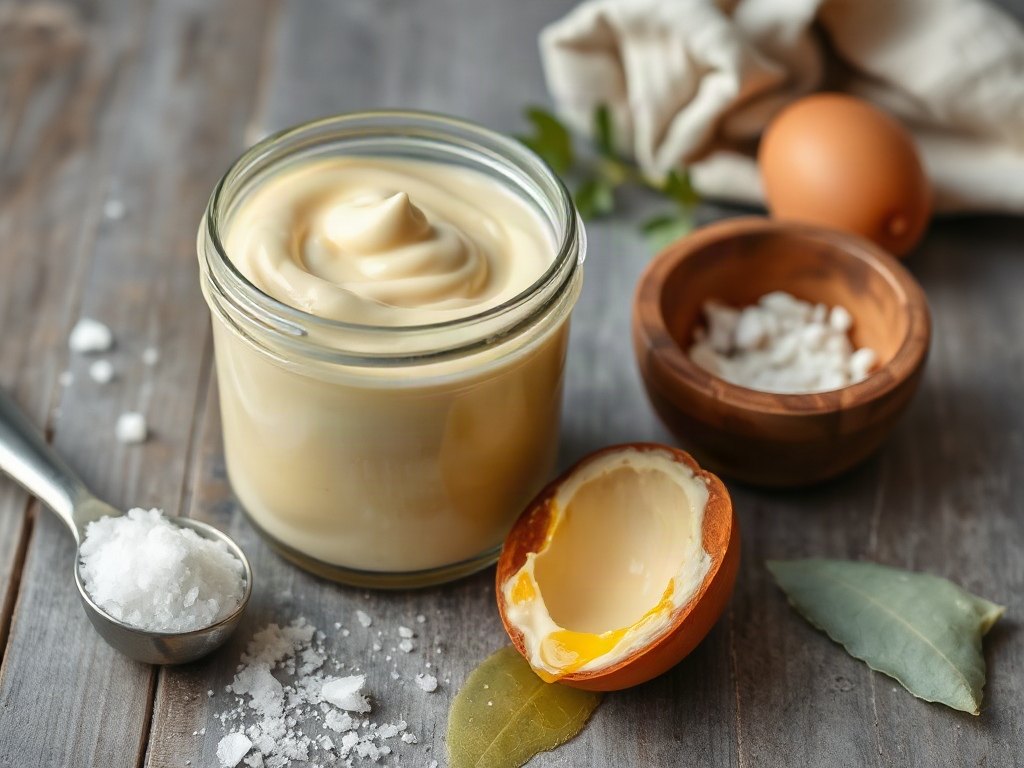
Homesteading family mayonnaise from basic ingredients is made by slowly combining a fresh egg, mild oil, acid, mustard, and salt until the mixture forms a stable emulsion. Room-temperature ingredients, a narrow blending container, and gradual oil incorporation reduce the chance of a thin or separated sauce. Neutral oils preserve a familiar mayonnaise flavor, while olive oil can become bitter if overworked. Because homemade mayonnaise contains raw egg, refrigerate it promptly, use clean equipment, and make only the amount your family can consume quickly. If the mixture breaks, a fresh egg yolk or a teaspoon of water can often help rebuild the emulsion.
What you’ll learn
This guide covers the following practical points:
- Ingredients That Make Family Mayonnaise Work — Homemade mayonnaise depends on an emulsion: tiny droplets of oil remain dispersed through a water-based mixture instead of floating apart.
- A Dependable Emulsion Method — The most dependable approach for a family-sized batch is immersion blending in a narrow, tall container.
- Fixing Separation and Adjusting Flavor — Separated mayonnaise is usually recoverable because the ingredients have not spoiled simply because the emulsion failed.
- Safe Storage and Practical Homestead Uses — Homemade mayonnaise should be treated as a perishable food because the usual recipe contains raw egg and does not receive a cooking step that makes it shelf-stable.
Ingredients That Make Family Mayonnaise Work
Homemade mayonnaise depends on an emulsion: tiny droplets of oil remain dispersed through a water-based mixture instead of floating apart. The egg yolk supplies lecithin, a natural emulsifier that helps hold those droplets together. Lemon juice or vinegar adds acidity and a bright flavor, while mustard contributes taste and modest emulsifying support. Salt brings the ingredients into balance rather than merely making the spread taste salty.
A basic batch needs one egg yolk or whole egg, about a cup of mild oil, one to two tablespoons of lemon juice or vinegar, a small spoonful of mustard, and salt. A whole egg creates a slightly lighter, softer mayonnaise because the white adds water; a yolk-only version is richer and often thicker. For a family that uses mayonnaise in sandwiches and salads, the whole-egg method is forgiving and efficient. For a dense dip or dressing base, extra yolk can produce a more substantial texture.
Oil choice changes the result more than many first-time makers expect. Canola, avocado, sunflower, or another neutral oil leaves the egg and acid flavors recognizable. Extra-virgin olive oil may taste harsh or bitter when rapidly blended, especially if used alone. A practical compromise is to use mostly neutral oil with a small portion of olive oil for character. Cold ingredients can also slow emulsification, so let the egg and acid lose their refrigerator chill before mixing, while still handling the egg with good food-safety habits.
Measure the acid before blending, but reserve a little for final adjustment. Too much vinegar at the beginning can make the mixture sharp and thin. A restrained starting amount gives you room to correct the flavor after the texture is established. Keep the basic mayonnaise ingredients simple during the first attempt; garlic, herbs, smoked paprika, and sweeteners are easier to judge after the emulsion is stable.
A Dependable Emulsion Method
The most dependable approach for a family-sized batch is immersion blending in a narrow, tall container. Add the egg, acid, mustard, and salt first, then pour the oil over them. Place the blender head directly over the egg yolk and hold it still for several seconds. Once the bottom turns pale and thick, slowly raise the blender so the remaining oil is drawn into the forming emulsion.
This method works because the blade begins by creating a concentrated emulsion around the yolk rather than scattering oil across a wide bowl. A wide container makes the ingredients harder to combine and may leave a layer of oil beneath the blade. A whisk can produce excellent mayonnaise, but it demands a slow, steady drizzle and continuous movement. A food processor is useful for larger batches, although its bowl may be too broad for a single small serving.
For a whisked batch, place the yolk, mustard, acid, and salt in a bowl and whisk until smooth. Add oil one drop at a time at first. After the mixture thickens, change to a thin, steady stream while whisking continuously. Pouring a cup of oil quickly into an unformed base is the common failure point: the oil droplets remain too large and the sauce separates.
Use a measured sequence rather than relying on visual guesses:
- Bring the egg and acid to a similar, moderate temperature.
- Blend the non-oil ingredients until uniform.
- Incorporate oil gradually while the mixture visibly thickens.
- Taste only after the texture is established, then adjust acid and salt.
A successful mayonnaise becomes pale, glossy, and thick enough to cling to a spoon. If the blender sounds as though it is spinning through loose oil, pause instead of adding more ingredients. The texture at that moment tells you more than the recipe clock: a stable base should look creamy before the last portion of oil goes in. The family mayonnaise method is easiest to repeat when you record the oil brand, egg size, and acid used, since those small differences affect thickness.
Fixing Separation and Adjusting Flavor
Separated mayonnaise is usually recoverable because the ingredients have not spoiled simply because the emulsion failed. The oil has escaped from the water-and-egg network, often because it was added too quickly, the container was too wide, or the base was unusually cold. Do not keep blending a broken mixture and hope it will suddenly correct itself; that can disperse more oil without rebuilding the emulsion.
Set the failed mayonnaise aside and place a fresh egg yolk or a teaspoon of water in a clean container. Blend or whisk that new base, then add the broken mayonnaise a little at a time. The new liquid gives the oil droplets another opportunity to become suspended. A teaspoon of lemon juice can also help with a stiff, heavy mixture, but acid alone will not repair a large amount of free oil.
Thin mayonnaise may need more oil only if it already looks smooth and cohesive. Adding oil to a visibly separated mixture makes the imbalance worse. If the sauce is thick but bland, correct salt first, then add acid in small increments. Mustard can deepen flavor and slightly firm the texture, but too much will dominate a sandwich spread. Garlic, chopped herbs, chipotle, or grated horseradish should be mixed in after the plain mayonnaise is finished so their water content does not complicate the initial emulsion.
Flavor also depends on the intended use. A potato salad benefits from a sharper vinegar profile because potatoes mute acidity. Coleslaw may need a thinner, sweeter dressing, while egg salad usually works better with a restrained acid level and a little mustard. A neutral base lets one batch serve several meals: use it plain at lunch, thin it with water for vegetables, or season a small portion with herbs instead of changing the entire jar.

Do not assume thicker always means better. Very dense mayonnaise can feel greasy and overpower delicate vegetables; a slightly softer batch spreads more easily and mixes into dressings. If the sauce tastes oily, the oil may be too strongly flavored, the acid may be insufficient, or the emulsion may contain larger droplets from rushed blending. Correcting the balance is preferable to masking the problem with extra salt.
Safe Storage and Practical Homestead Uses
Homemade mayonnaise should be treated as a perishable food because the usual recipe contains raw egg and does not receive a cooking step that makes it shelf-stable. Use clean hands, a clean blender head, and a sanitized storage jar. Refrigerate the finished mayonnaise promptly and keep it cold when serving. Make a modest batch rather than preparing a large jar simply because the ingredients are inexpensive.
Egg freshness and handling matter, but freshness does not make raw egg risk-free. Families with young children, older adults, pregnant people, or anyone with reduced immune defenses may prefer pasteurized eggs or a cooked-yolk mayonnaise method. A cooked method changes the texture and takes longer, yet it can be a more suitable choice for a household prioritizing additional control over raw-egg exposure. Follow dependable food-safety guidance for the eggs available in your area rather than assuming homemade means automatically safer.
Mark the jar with the preparation date and use a clean spoon each time. Discard the batch if it develops an off odor, unusual discoloration, mold, or a texture that suggests spoilage. Separation by itself is a quality failure, not a reliable safety test. Avoid leaving the jar on a picnic table or beside a warm stove; chilled mayonnaise can warm quickly in a small container.
The practical value of this condiment is flexibility. A spoonful can bind chopped eggs, leftover chicken, or garden vegetables into a quick salad. It can become a dip with yogurt and herbs, a sandwich spread with pickles, or a dressing with water and vinegar. Homemade mayonnaise also helps use eggs and pantry oil without relying on a commercial jar, but it is not automatically cheaper once premium oil or wasted failed batches are counted. Compare the cost of ingredients with how quickly your family uses the sauce.
For a homestead kitchen, the best routine is to make a small plain batch, test it with one meal, and season only what will be served. That approach limits waste, makes flavor corrections easy, and keeps storage shorter. The homesteading mayonnaise recipe becomes genuinely useful when it fits the household’s egg supply, preferred oil, refrigeration capacity, and weekly meal pattern.
Frequently Asked Questions
Can I make mayonnaise with a whole egg?
Yes. A whole egg produces a lighter, often softer mayonnaise than a yolk-only recipe. Immersion blending in a narrow container makes the whole-egg method especially convenient.
Why did my homemade mayonnaise stay thin?
The oil may have been added too quickly, the mixture may be cold, or the container may be too wide. Re-emulsify it with a fresh yolk or a small amount of water before adding more oil.
Which oil is best for family mayonnaise?
Neutral oils such as sunflower, canola, or avocado preserve a familiar flavor. Strong olive oil can taste bitter when aggressively blended, so use it partially or choose a milder style.
How should homemade mayonnaise be stored?
Keep it in a clean, covered container in the refrigerator, use a clean utensil, and prepare only a quantity your household will use promptly. Raw-egg mayonnaise should not be treated as shelf-stable.
Can I flavor the mayonnaise during blending?
Begin with a plain emulsion, then stir in herbs, garlic, paprika, pickles, or other additions. Delaying flavor additions makes texture and seasoning easier to control.
Conclusion
Reliable family mayonnaise comes from controlling the emulsion rather than collecting complicated ingredients. Use a fresh egg, mild oil, measured acid, and a narrow container; let the blender build a thick base before incorporating the remaining oil. If the mixture separates, rebuild it with a fresh yolk or a little water instead of discarding it immediately. Flavor the finished sauce for its specific use, since potato salad, sandwiches, and vegetable dips need different balances of acid and salt. Treat the mayonnaise as perishable, refrigerate it promptly, and consider pasteurized eggs or a cooked method when raw-egg exposure is a concern. Start with a small batch, note what worked, and adapt the proportions to your household’s eggs, oil, meals, and storage habits.